We use Google Analytics to understand how visitors use this site. Analytics cookies are only activated with your consent. For details, read our Privacy Policy.
Profile lensThe same player, read from a different angle.
Athletic83
Acceleration
81
Pace
78
Agility
77
Strength
80
Balance
80
Jumping
84
Stamina
90
Fitness
94
Technical84
Dribbling
85
Short Passing
86
Long Passing
84
Finishing
86
Shot Accuracy
81
Shot Power
90
Shooting Technique
76
Heading
83
Tackling
77
Crossing
82
Free Kick
79
Penalties
78
First Touch
83
Mental87
Composure
84
Aggression
77
Consistency
88
Creativity
73
Leadership
88
Work Rate
96
Tactical86
Vision
86
Off the Ball
85
Defensive Positioning
78
Teamwork
93
Anticipation
86
Marking
62
Player Traits
Attacking83
Crossing
82
Finishing
86
Heading Accuracy
83
Shot Accuracy
81
Off the Ball
85
Technique82
Dribbling
85
Free Kick
79
Short Passing
86
Long Passing
84
First Touch
83
Shot Technique
76
Movement79
Acceleration
81
Pace
78
Agility
77
Balance
80
Physicality88
Shot Power
90
Jumping
84
Stamina
90
Strength
80
Fitness
94
Defending72
Marking
62
Tackling
77
Def. Positioning
78
Mentality & Game Reading85
Aggression
77
Composure
84
Penalties
78
Vision
86
Leadership
88
Work Rate
96
Teamwork
93
Anticipation
86
Consistency
88
Creativity
73
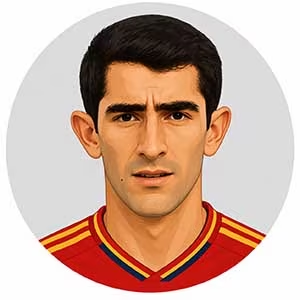
Spain - Centre MidfielderPirri
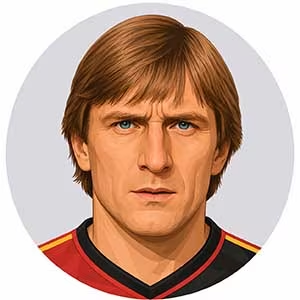
A fractured arm strapped tightly to his chest in the 1971 European Cup Winners' Cup final and a broken clavicle with a spiking fever in the 1972 Copa del Generalísimo final were merely routine shifts at the office for José Martínez Sánchez. Known universally as Pirri, the Ceuta-born warrior became the definitive symbol of Real Madrid's Yé-yé generation and the club's eternal soul across sixteen glorious seasons. Beginning his career as an explosive, late-arriving box-to-box midfielder before reinventing himself as a visionary sweeper (líbero), Pirri combined relentless cardiovascular endurance with exceptional aerial timing and a venomous, clean strike off his right boot. Over 561 official matches for Los Blancos, he netted an astonishing 172 goals—a staggering tally for a defensive player—while capturing ten La Liga championships, four Copas del Rey, and the 1965–66 European Cup against Partizan Belgrade. For Spain, across 41 caps and 16 goals, he played in both the 1966 and 1978 World Cups, cementing his standing as one of the most prolific, versatile, and respected leaders in Iberian football history.
Structurally, however, Pirri's maximalist game carried clear physical constraints. He was not a delicate, unhurried orchestrator capable of freezing time in the center circle; his forward passing was direct and functional rather than nuanced, and his recovery sprinting in wide-open transitions suffered noticeably in his latter years as a sweeper after absorbing endless bone fractures and muscle tears. Furthermore, his uncontainable urge to charge forward into the penalty box occasionally left vast spatial voids behind him that demanded disciplined covering from his defensive partners.
Unflinching, stoic, and carrying an almost religious devotion to the white shirt, Pirri was the player for whom Santiago Bernabéu literally invented the La Laureada—Real Madrid's highest, rarest decoration for supreme valor. He did not lead through loud theatrical screams or cheap bravado; his authority was forged in blood, sweat, and absolute physical self-sacrifice. On the pitch, his body language was resolute and dignified: he absorbed brutal hacks from opponents, shook off severe injuries without a grimace, and organized his backline with the calm authority of a field commander. Inside the Chamartín dressing room, he was an untouchable patriarch and moral standard-bearer, bridging the gap from the legendary Alfredo Di Stéfano era to the modern age with monastic professionalism. Referees viewed him with immense respect for his clean, honest competitive spirit, while generations of opposing attackers dreaded his relentless, late-game surges, leaving behind an immortal legacy as the ultimate personification of furia española and Madridista pride.


 All Time Real MadridClub