We use Google Analytics to understand how visitors use this site. Analytics cookies are only activated with your consent. For details, read our Privacy Policy.
Profile lensThe same player, read from a different angle.
Athletic84
Acceleration
77
Pace
80
Agility
82
Strength
76
Balance
86
Jumping
83
Stamina
92
Fitness
93
Technical84
Dribbling
84
Short Passing
85
Long Passing
84
Finishing
82
Shot Accuracy
81
Shot Power
87
Shooting Technique
83
Heading
77
Tackling
74
Crossing
80
Free Kick
78
Penalties
77
First Touch
87
Mental90
Composure
89
Aggression
75
Consistency
89
Creativity
78
Leadership
89
Work Rate
95
Tactical87
Vision
87
Off the Ball
83
Defensive Positioning
76
Teamwork
95
Anticipation
86
Marking
68
Player Traits
Attacking81
Crossing
80
Finishing
82
Heading Accuracy
77
Shot Accuracy
81
Off the Ball
83
Technique84
Dribbling
84
Free Kick
78
Short Passing
85
Long Passing
84
First Touch
87
Shot Technique
83
Movement81
Acceleration
77
Pace
80
Agility
82
Balance
86
Physicality86
Shot Power
87
Jumping
83
Stamina
92
Strength
76
Fitness
93
Defending73
Marking
68
Tackling
74
Def. Positioning
76
Mentality & Game Reading86
Aggression
75
Composure
89
Penalties
77
Vision
87
Leadership
89
Work Rate
95
Teamwork
95
Anticipation
86
Consistency
89
Creativity
78
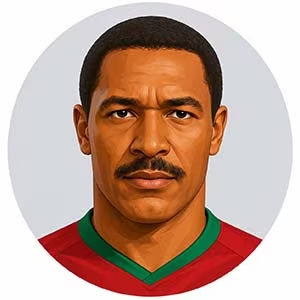
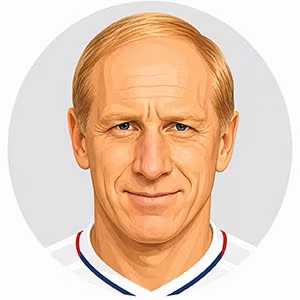
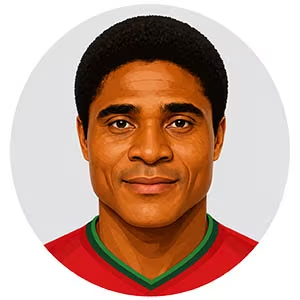
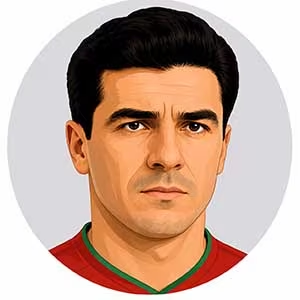
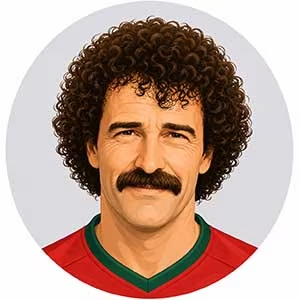
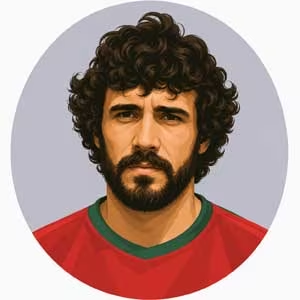
Portugal - Centre MidfielderColuna, Mário
Before the dynamic box-to-box midfielder became a formalized tactical concept, the Mozambique-born engine room commander known as O Monstro Sagrado (The Sacred Monster) provided the physical power, tactical intellect, and spiritual backbone for the legendary Benfica and Portugal teams of the 1960s. Moving from an early role as an inside-left forward into a deep-lying midfield general, Mário Esteves Coluna possessed an imposing, broad-shouldered physique paired with explosive athletic endurance and an extraordinary panoramic vision of the pitch. His technical repertoire was built on absolute authority: ferocious, long-range shooting mechanics that unleashed heavy, swerving drives from thirty-five yards, crisp short-passing combinations that broke opposition pressing lines, and long, laser-guided diagonal switches to unleash wide runners like Simões and Cavém. As the captain and tactical axis of Béla Guttmann’s revolutionary Benfica side, Coluna scored in both the 1961 and 1962 European Cup finals—defeating Barcelona and Real Madrid to conquer the continent—and later served as the on-field general for Portugal’s historic third-place run at the 1966 World Cup in England.
Mentally and emotionally, Coluna radiated an almost paternal, unquestioned authority that commanded instant obedience and reverence across every dressing room he entered. On the field, he was an uncompromising field marshal who governed match tempo with a stern look or a single pointed gesture, organizing defensive covers and demanding absolute tactical discipline from every player on the pitch. Within the squad, he held a unique, patriarchal role: it was Coluna who took a young, timid Eusébio under his personal wing upon his arrival from Lourenço Marques, shielding the young prodigy from media hysteria, managing his integration into European life, and providing the steady emotional platform upon which Eusébio’s genius could flourish. Under maximum high-stakes pressure—whether facing brutal physical targeting from foreign defenses or leading a famous comeback from 3–0 down against North Korea in 1966—Coluna’s composure remained granite-solid, using his physical bravery and tactical clarity to rally demoralized teammates. Toward referees and opponents, he carried himself with an aristocratic, intimidating dignity; he was ferocious in legitimate physical duels, yet entirely above cheap gamesmanship, cynical fouls, or undignified protests, leaving an eternal legacy as the ultimate pillar of Portuguese football's golden age.