We use Google Analytics to understand how visitors use this site. Analytics cookies are only activated with your consent. For details, read our Privacy Policy.
Profile lensThe same player, read from a different angle.
Athletic81
Acceleration
75
Pace
75
Agility
89
Strength
77
Balance
81
Jumping
93
Stamina
72
Fitness
87
Technical44
Dribbling
55
Short Passing
55
Long Passing
60
Shot Accuracy
52
Shot Power
76
Shooting Technique
51
Heading
48
Free Kick
42
Penalties
44
First Touch
54
Mental84
Composure
84
Consistency
85
Leadership
84
Goalkeeping89
Reflexes
96
Positioning
88
Handling
86
Kicking
86
Goalkeeping89
Reflexes
96
Positioning
88
Handling
86
Kicking
86
Attacking50
Heading Accuracy
48
Shot Accuracy
52
Technique53
Dribbling
55
Free Kick
42
Short Passing
55
Long Passing
60
First Touch
54
Shot Technique
51
Physicality81
Shot Power
76
Jumping
93
Stamina
72
Strength
77
Fitness
87
Movement80
Acceleration
75
Pace
75
Agility
89
Balance
81
Mentality & Game Reading74
Composure
84
Penalties
44
Leadership
84
Consistency
85
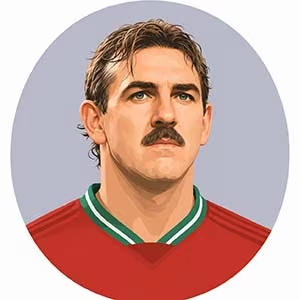
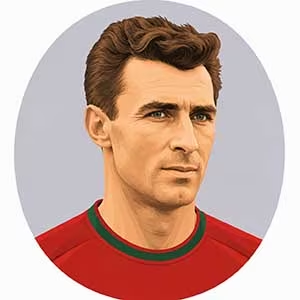
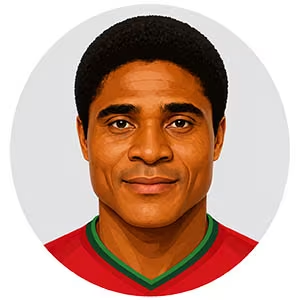
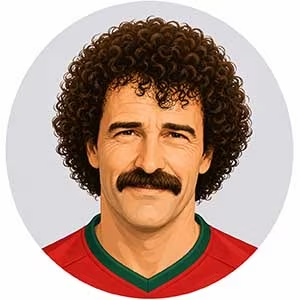
Portugal - GoalkeeperBento, Manuel
The mud and rain of the Stade Vélodrome on June 23, 1984, produced a legendary international masterclass when a 36-year-old Portuguese shot-stopper pulled off a staggering succession of reflex saves against Michel Platini and Jean Tigana, almost single-handedly dragging Portugal to the Euro '84 final. Manuel Galrinho Bento was the fearless, acrobatic guardian who anchored SL Benfica across two decades as one of the most beloved and dominant figures in Portuguese football history. Standing five-foot-nine with a stocky, powerful frame, Bento compensated for his modest height with explosive vertical leap, razor-sharp anticipation, and an almost reckless bravery on low dives directly at the studs of forwards. Across 465 official appearances for Benfica between 1972 and 1992, he collected eight Primeira Liga championships, six Taças de Portugal, and reached the 1982–83 UEFA Cup final, earning the Portuguese Footballer of the Year award in 1977. For Portugal, across 63 caps between 1976 and 1986, he captained the national side through their historic Euro '84 bronze medal campaign, before a tragic broken fibula in training at the 1986 World Cup in Mexico abruptly ended his international career.
Naturally, his small physical stature brought unavoidable structural vulnerabilities on set pieces. Against towering British or Northern European target men who crowded his six-yard box, Bento could not rely on pure physical height, forcing him to punch through bodies or rely on aerial protection from stoppers like Humberto Coelho. Furthermore, his aggressive, sweeping charges outside his area occasionally led to violent collisions and heavy physical knocks that took a toll on his body over time.
Passionate, warm, and possessing an unyielding street-fighter spirit forged in the working-class grounds of Golegã, Bento was a folk hero who played with immense heart. He never hid his emotions: celebrating miraculous double-saves with wild fist pumps, shouting encouragement to his defenders, and absorbing heavy kicks without complaint. On the pitch, his body language was pure kinetic urgency, bouncing on his toes and daring strikers to test his reflexes. Inside the Estádio da Luz and Portuguese dressing rooms, he was an untouchable patriarch and revered leader whose humility, courage under fire, and immense longevity inspired generations of Portuguese shot-stoppers, leaving behind an immortal legacy as the most athletic, heroic, and iconic goalkeeper in Benfica history.


 All Time PortugalNT