We use Google Analytics to understand how visitors use this site. Analytics cookies are only activated with your consent. For details, read our Privacy Policy.
Profile lensThe same player, read from a different angle.
Athletic78
Acceleration
73
Pace
69
Agility
83
Strength
81
Balance
77
Jumping
87
Stamina
65
Fitness
91
Technical43
Dribbling
50
Short Passing
55
Long Passing
55
Shot Accuracy
44
Shot Power
83
Shooting Technique
42
Heading
45
Free Kick
45
Penalties
48
First Touch
49
Mental85
Composure
85
Consistency
85
Leadership
86
Goalkeeping91
Reflexes
96
Positioning
91
Handling
89
Kicking
87
Goalkeeping91
Reflexes
96
Positioning
91
Handling
89
Kicking
87
Attacking45
Heading Accuracy
45
Shot Accuracy
44
Technique49
Dribbling
50
Free Kick
45
Short Passing
55
Long Passing
55
First Touch
49
Shot Technique
42
Physicality81
Shot Power
83
Jumping
87
Stamina
65
Strength
81
Fitness
91
Movement76
Acceleration
73
Pace
69
Agility
83
Balance
77
Mentality & Game Reading76
Composure
85
Penalties
48
Leadership
86
Consistency
85
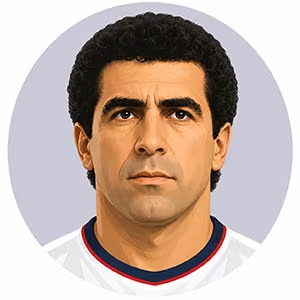
Germany - GoalkeeperMaier, Sepp
Beneath the oversized, knee-length shorts, loose-hanging jerseys, and the cheerful public persona of Die Katze von Anzing (The Cat from Anzing) lived an obsessive, hyper-athletic pioneer who fundamentally modernized the mechanics of elite goalkeeping. Anchoring the defensive spine of Bayern Munich and West Germany throughout their imperial conquests of the 1970s, Josef Dieter Maier transformed shot-stopping through an unprecedented blend of explosive feline elasticity, lightning-fast ground recovery, and extraordinary hand strength. Rather than remaining glued to his goal-line like traditional keepers of his era, Maier was a proactive sweeper-keeper prototype: charging off his line to intercept through-balls, claiming crosses with clean, double-handed catching mechanics under heavy physical duels, and initiating lethal counter-attacks through immediate, pinpoint 40-meter throws to Franz Beckenbauer. Across a legendary unbroken streak of 442 consecutive Bundesliga appearances—a testament to his astonishing physical resilience—Maier lifted four Bundesliga titles, four DFB-Pokals, three consecutive European Cups (1974–1976), the 1972 European Championship, and the 1974 FIFA World Cup, where his miraculous point-blank saves against the Netherlands in the final preserved global glory for his country.
Psychologically, Maier weaponized humor, clowning, and eccentricity as a sophisticated psychological buffer against the soul-crushing isolation and immense pressure of the goalkeeping craft. Whether playfully diving to catch a wandering duck on the pitch during an Olympiastadion league match or entertaining teammates on team buses, his lighthearted demeanor was an intentional mechanism to keep the dressing room relaxed amidst the suffocating expectations of FC Hollywood. Beneath that jovial exterior, however, resided a fiercely competitive technician who held an uncompromising pride in keeping clean sheets and pioneered specialized goalkeeper training regimens and innovative foam-padded glove designs long before they became professional standards. Under maximum tournament pressure, his focus was unshakeable and laser-sharp, using his agile footwork and imposing presence to shrink the net in one-on-one standoffs. Toward referees and opposition forwards, Maier maintained a joyful, sportsmanlike, yet assertive posture; he avoided cynical fouls and malicious confrontations, using theatrical acrobatic flair and sheer athletic supremacy to psychologically disarm opposing strikers, leaving an immortal legacy as Germany’s original goalkeeping icon.