We use Google Analytics to understand how visitors use this site. Analytics cookies are only activated with your consent. For details, read our Privacy Policy.
Profile lensThe same player, read from a different angle.
Athletic79
Acceleration
73
Pace
73
Agility
77
Strength
86
Balance
78
Jumping
88
Stamina
68
Fitness
91
Technical46
Dribbling
54
Short Passing
57
Long Passing
63
Shot Accuracy
44
Shot Power
84
Shooting Technique
42
Heading
50
Free Kick
43
Penalties
48
First Touch
60
Mental82
Composure
84
Consistency
77
Leadership
88
Goalkeeping91
Reflexes
95
Positioning
94
Handling
86
Kicking
87
Goalkeeping91
Reflexes
95
Positioning
94
Handling
86
Kicking
87
Attacking47
Heading Accuracy
50
Shot Accuracy
44
Technique53
Dribbling
54
Free Kick
43
Short Passing
57
Long Passing
63
First Touch
60
Shot Technique
42
Physicality83
Shot Power
84
Jumping
88
Stamina
68
Strength
86
Fitness
91
Movement75
Acceleration
73
Pace
73
Agility
77
Balance
78
Mentality & Game Reading74
Composure
84
Penalties
48
Leadership
88
Consistency
77
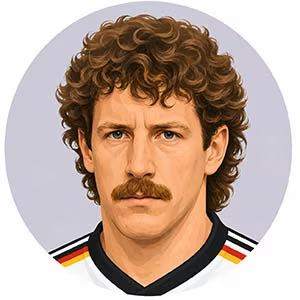
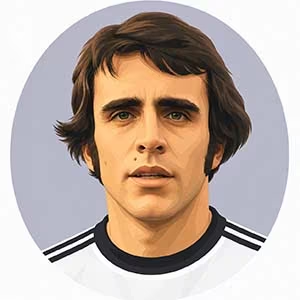
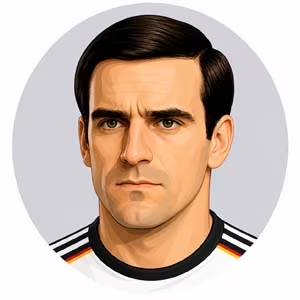
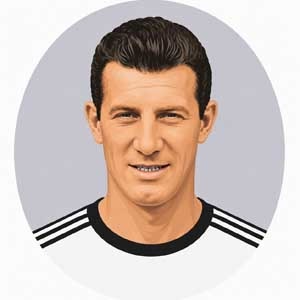
Germany - GoalkeeperSchumacher, Toni
July 8, 1982, in Seville’s Ramón Sánchez Pizjuán stadium, etched Harald Anton Schumacher permanently into the darkest folklore of World Cup history when his flying, mid-air collision with French defender Patrick Battiston sparked global outrage. Yet behind the villainous notoriety stood arguably the most athletic, fearless, and physically intimidating shot-stopper of the 1980s. Emerging as the undisputed defensive cornerstone of 1. FC Köln—where he won the 1977–78 Bundesliga title and three DFB-Pokals—Toni was a pioneer of hyper-aggressive, modern goalkeeping: possessing lightning-fast reflexes on the goal line, extraordinary spring on horizontal dives, and a vicious, spring-loaded underarm throw that launched instant 50-yard counter-attacks. For West Germany, across 76 caps, he backstopped Die Mannschaft to the Euro 1980 championship and reached back-to-back World Cup finals in 1982 and 1986, earning the Silver Ball as the second-best player of the 1986 World Cup in Mexico after a string of miraculous penalty shootout saves against the hosts and France.
Yet Schumacher's high-wire, explosive approach walked a razor's edge. His handling on wet, skidding long-range drives could be erratic, often prioritizing explosive punching or parrying over clean catching in crowded six-yard boxes. Moreover, his hyper-aggressive charges outside his area left his goal completely exposed if his timing was compromised by agile, half-turn strikers, while his sudden rushes created massive penalty risks that frequently rattled his own back four.
Unapologetic, ferocious, and fueled by a thick skin against universal hostility, Schumacher actively weaponized stadium hatred to supercharge his focus. He feared absolutely nothing and no one; boos, whistles, and hostile terrace crowds only caused him to puff his chest out and pull off even more improbable acrobatic saves. On the pitch, his presence was explosive and authoritarian: he barked merciless commands at his central defenders, glared down penalty-takers with cold, unblinking eyes, and patrolled his box like an armed fortress. Inside the West German and Köln dressing rooms, he was an intense, outspoken alpha who demanded maximum physical output from teammates, clashing openly with administrators and managers whenever he felt preparation standards were slipping. Confronted by towering center-forwards on high crosses, Schumacher attacked the aerial ball with flying knees and total disregard for personal safety or opposition limbs. Match officials found him an exhausting, formidable presence to control, cementing an immortal legacy as one of the most athletic, clutch, and notoriously indomitable goalkeepers in European football history.