We use Google Analytics to understand how visitors use this site. Analytics cookies are only activated with your consent. For details, read our Privacy Policy.
Profile lensThe same player, read from a different angle.
Athletic79
Acceleration
78
Pace
73
Agility
86
Strength
77
Balance
77
Jumping
92
Stamina
66
Fitness
80
Technical44
Dribbling
55
Short Passing
53
Long Passing
60
Shot Accuracy
44
Shot Power
86
Shooting Technique
44
Heading
48
Free Kick
44
Penalties
44
First Touch
53
Mental85
Composure
84
Consistency
88
Leadership
85
Goalkeeping91
Reflexes
95
Positioning
92
Handling
89
Kicking
89
Goalkeeping91
Reflexes
95
Positioning
92
Handling
89
Kicking
89
Attacking46
Heading Accuracy
48
Shot Accuracy
44
Technique52
Dribbling
55
Free Kick
44
Short Passing
53
Long Passing
60
First Touch
53
Shot Technique
44
Physicality80
Shot Power
86
Jumping
92
Stamina
66
Strength
77
Fitness
80
Movement79
Acceleration
78
Pace
73
Agility
86
Balance
77
Mentality & Game Reading75
Composure
84
Penalties
44
Leadership
85
Consistency
88
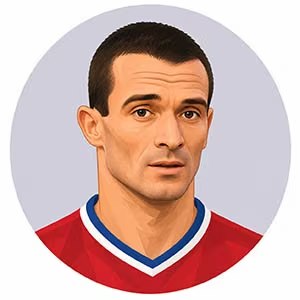
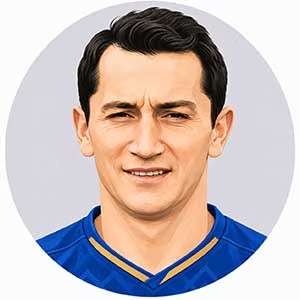
Serbia - GoalkeeperSoskic, Milutin
Bleeding heavily from a shattered jaw while continuing to command his penalty box against the relentless aerial bombardments of Real Madrid’s front line in Brussels cemented the indestructible reputation of a goalkeeper from Peć who became the defensive bedrock of the Balkans. Milutin Šoškić—universally revered across Belgrade as Šole—was a commanding, fearless custodian who combined imposing physical strength with immaculate handling, explosive reflex saves off his line, and a booming voice that organized the backline like a military unit.
Forged in the legendary youth academy of FK Partizan, Šoškić spent eleven seasons as the undisputed sovereign of the club's penalty box between 1955 and 1966. He made nearly 400 appearances, captaining the historic Partizanove Bebe (Partizan's Babies) to four Yugoslav First League championships (including three consecutive titles from 1961 to 1963) and leading the club to the 1966 European Cup final, making Partizan the first Eastern European side ever to reach the continental decider. He later moved to West Germany to become a foundational figure for 1. FC Köln, lifting the 1968 DFB-Pokal. For Yugoslavia, across 50 caps, he was the undisputed starting goalkeeper of their greatest international era: capturing the Gold Medal at the 1960 Rome Olympics, reaching the final of the inaugural 1960 European Nations' Cup in Paris, and anchoring the team to a historic fourth-place finish at the 1962 World Cup in Chile. In 1963, he was selected to start for the Rest of the World XI against England at Wembley.
Šoškić’s traditional, penalty-box-centric approach, however, operated within clear spatial boundaries. He was not a modern, sweeper-keeper who sprinted thirty yards out of his area to clear counter-attacks with his feet; his game was strictly containment, command of the eighteen-yard box, and dominant aerial collection. When caught in chaotic scramble situations where opposing forwards crowded him under swinging, deflected crosses, his aggressive decision to punch rather than catch could occasionally produce dangerous loose balls around the penalty spot.
Resolute, charismatic, and possessing an ironclad moral spine forged through childhood survival in wartime Kosovo, Šoškić was a natural-born leader of men. He had zero tolerance for cowardice, hesitation, or tactical complacency, demanding absolute commitment from his defenders and protecting them with ferocious loyalty. On the pitch, his presence radiated intimidating authority: staring down opposing strikers, rising high above clusters of attackers to claim crosses with clean hands, and issuing barking commands that silenced hostile away terraces. Inside the Partizan, Köln, and Yugoslav dressing rooms, he was an adored captain and father figure whose indomitable courage under extreme pressure earned him an eternal place as one of the most decorated and respected goalkeepers in continental history.