We use Google Analytics to understand how visitors use this site. Analytics cookies are only activated with your consent. For details, read our Privacy Policy.
Profile lensThe same player, read from a different angle.
Athletic77
Acceleration
72
Pace
73
Agility
76
Strength
88
Balance
78
Jumping
78
Stamina
64
Fitness
86
Technical48
Dribbling
58
Short Passing
63
Long Passing
68
Shot Accuracy
44
Shot Power
82
Shooting Technique
43
Heading
55
Free Kick
45
Penalties
51
First Touch
57
Mental89
Composure
91
Consistency
85
Leadership
88
Goalkeeping92
Reflexes
91
Positioning
96
Handling
94
Kicking
85
Goalkeeping92
Reflexes
91
Positioning
96
Handling
94
Kicking
85
Attacking50
Heading Accuracy
55
Shot Accuracy
44
Technique56
Dribbling
58
Free Kick
45
Short Passing
63
Long Passing
68
First Touch
57
Shot Technique
43
Physicality80
Shot Power
82
Jumping
78
Stamina
64
Strength
88
Fitness
86
Movement75
Acceleration
72
Pace
73
Agility
76
Balance
78
Mentality & Game Reading79
Composure
91
Penalties
51
Leadership
88
Consistency
85
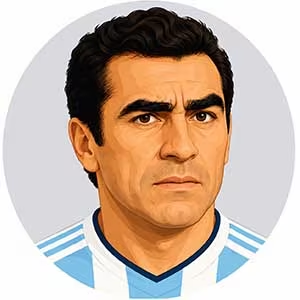
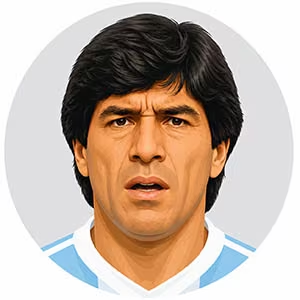
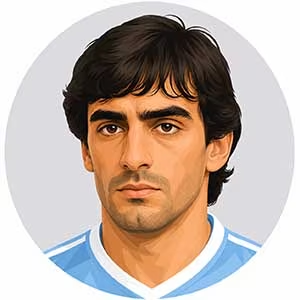
Argentina - GoalkeeperCarrizo, Amadeo
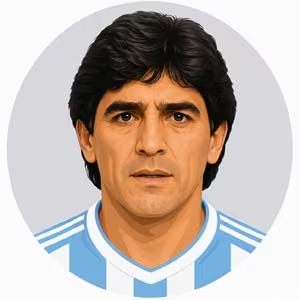
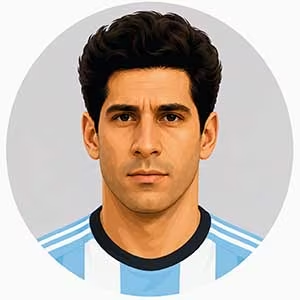
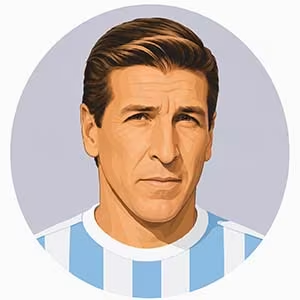
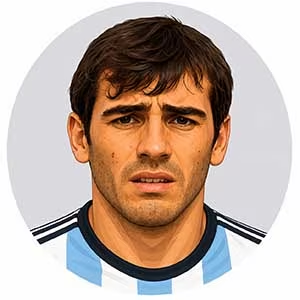
A beret tilted with nonchalant swagger, hands wrapped in thick cloth gloves, and the audacity to dribble an onrushing center-forward outside the penalty box in the late 1940s marked the birth of modern goalkeeping through Amadeo Raúl Carrizo Larretape. Stationed at River Plate for over two decades across 520 appearances, El Gran Amadeo single-handedly dismantled the traditional concept of the static, goal-line prisoner. Standing six-foot-two with an athletic frame and razor-sharp anticipation, he transformed the eighteen-yard box into his sovereign territory: rushing off his line to sweep up loose long balls, using his feet to initiate attacks with crisp ground distribution, and catching crosses with a single, calm snatch. Anchoring La Máquina and its subsequent iterations, he lifted seven Argentine Primera División titles between 1945 and 1957, later winning the 1964 Taça das Nações with Argentina by keeping clean sheets against Pelé's Brazil, Portugal, and England. Across 22 caps for La Albiceleste, his continental stature was immense, voted by IFFHS as the greatest South American goalkeeper of the 20th century.
Revolutionary daring, however, walked hand-in-hand with occasional catastrophic exposure. Carrizo’s insistence on adventurous, high-line sweeping could backfire spectacularly if his timing was compromised by heavy, muddy pitches or rapid bounces, leaving an empty net behind him. Furthermore, his international legacy was permanently scarred by the 1958 World Cup in Sweden—the infamous Desastre de Suecia—where an underprepared Argentina was dismantled 6–1 by Czechoslovakia, with Carrizo bearing the brutal brunt of public scapegoating upon their return to Buenos Aires.
Aristocratic, endlessly confident, and possessed of a theatrical charm that drove rival crowds to fury, Carrizo treated the pitch as an exhibition stage. He thrived on psychological superiority: feinting with the ball at his feet to tempt strikers into futile lunges before skipping past them with a casual smile. On the pitch, his body language radiated total control, subduing chaos inside his penalty area with calm, authoritative gestures rather than frantic screams. Inside the River Plate locker room, he was an untouchable patriarch and revered cultural icon who influenced generations of South American shot-stoppers, from Hugo Gatti to José Luis Chilavert. Match officials respected his spotless sporting dignity, leaving behind an immortal legacy as the visionary pioneer who dragged goalkeeping into the modern tactical era.