We use Google Analytics to understand how visitors use this site. Analytics cookies are only activated with your consent. For details, read our Privacy Policy.
Profile lensThe same player, read from a different angle.
Athletic76
Acceleration
68
Pace
70
Agility
80
Strength
80
Balance
77
Jumping
82
Stamina
62
Fitness
88
Technical44
Dribbling
49
Short Passing
55
Long Passing
57
Shot Accuracy
48
Shot Power
80
Shooting Technique
47
Heading
48
Free Kick
45
Penalties
44
First Touch
53
Mental85
Composure
85
Consistency
85
Leadership
82
Goalkeeping88
Reflexes
90
Positioning
90
Handling
86
Kicking
85
Goalkeeping88
Reflexes
90
Positioning
90
Handling
86
Kicking
85
Attacking48
Heading Accuracy
48
Shot Accuracy
48
Technique51
Dribbling
49
Free Kick
45
Short Passing
55
Long Passing
57
First Touch
53
Shot Technique
47
Physicality78
Shot Power
80
Jumping
82
Stamina
62
Strength
80
Fitness
88
Movement74
Acceleration
68
Pace
70
Agility
80
Balance
77
Mentality & Game Reading74
Composure
85
Penalties
44
Leadership
82
Consistency
85
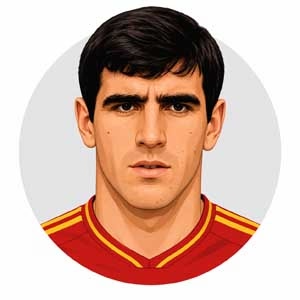
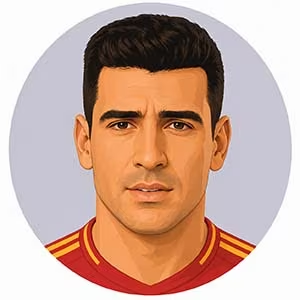
Spain - GoalkeeperSadurní, Salvador
The electric atmosphere of the Santiago Bernabéu on July 11, 1968, produced a masterclass in defensive resilience when a Catalan shot-stopper withstood a barrage of hostile attacks—and a hail of glass bottles from the stands—to guide FC Barcelona to a famous 1–0 Copa del Generalísimo triumph over Real Madrid in the iconic Final de las Botellas. Salvador Sadurní Urpí was the loyal, agile guardian between the posts for Barcelona across sixteen seasons, bridging the eras of Helenio Herrera and Rinus Michels. Operating with exceptional agility on his goal line, cat-like reflexes on close-range rebounds, and soft, secure handling, the l'Arboç native was a model of consistency: dominating his area through sharp lateral movement and fearless diving at the feet of onrushing forwards. Across 464 matches in the blaugrana shirt between 1960 and 1976, he collected the 1973–74 La Liga title alongside Johan Cruyff, three Copas del Generalísimo (1963, 1968, 1971), and the 1965–66 Inter-Cities Fairs Cup, winning the prestigious Ricardo Zamora Trophy for best goalkeeper in Spain three times (1969, 1974, 1975). For Spain, across ten caps, he was a member of the Euro 1964 winning squad and featured in the 1962 World Cup setup.
Nevertheless, Sadurní’s game was subject to the physical and tactical limitations of his era. Standing under six feet tall, he lacked towering aerial reach against hyper-physical British or northern European center-forwards on high, looping set pieces, requiring strong physical shielding from stoppers like Gallego and Ferran Olivella. Furthermore, he spent extensive stretches of his early career sharing starting duties in an intense internal rivalry with José Manuel Pesudo before definitively locking down the number one shirt.
Gentle, dignified, and fiercely devoted to the Catalan colors, Sadurní was a consummate professional who let his clean shot-stopping do all the talking. He had zero appetite for theatrical self-promotion or media controversy, approaching high-stakes Clásicos with monastic focus and quiet courage. On the pitch, his presence was reassuring and tidy: picking himself up instantly after heavy collisions and resetting his backline with calm, focused hand signals. Inside the Camp Nou dressing room, he was an untouchable patriarch and revered senior figure whose longevity and modesty earned the profound respect of both local veterans and international superstars like Cruyff and Johan Neeskens. Opposing forwards found his positioning on the goal line immensely difficult to beat without a deflection, leaving behind an immortal legacy as one of the most reliable, decorated, and beloved goalkeepers in FC Barcelona history.


 All Time BarcelonaClub