We use Google Analytics to understand how visitors use this site. Analytics cookies are only activated with your consent. For details, read our Privacy Policy.
Profile lensThe same player, read from a different angle.
Athletic75
Acceleration
65
Pace
67
Agility
71
Strength
84
Balance
80
Jumping
78
Stamina
64
Fitness
90
Technical45
Dribbling
50
Short Passing
57
Long Passing
62
Shot Accuracy
44
Shot Power
81
Shooting Technique
44
Heading
55
Free Kick
45
Penalties
45
First Touch
53
Mental90
Composure
91
Consistency
91
Leadership
85
Goalkeeping93
Reflexes
92
Positioning
96
Handling
93
Kicking
91
Goalkeeping93
Reflexes
92
Positioning
96
Handling
93
Kicking
91
Attacking50
Heading Accuracy
55
Shot Accuracy
44
Technique52
Dribbling
50
Free Kick
45
Short Passing
57
Long Passing
62
First Touch
53
Shot Technique
44
Physicality79
Shot Power
81
Jumping
78
Stamina
64
Strength
84
Fitness
90
Movement71
Acceleration
65
Pace
67
Agility
71
Balance
80
Mentality & Game Reading78
Composure
91
Penalties
45
Leadership
85
Consistency
91
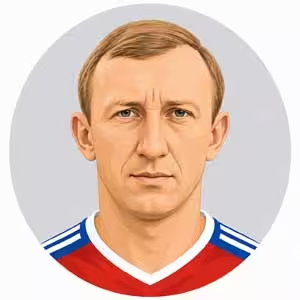
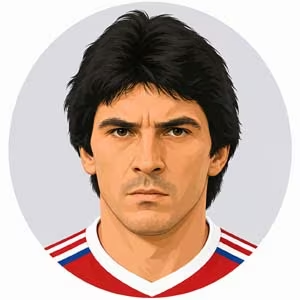
Russia - GoalkeeperDasaev, Rinat
A lean, six-foot-two frame encased in monochromatic gray, lightning-fast cross-body arm extensions, and a distinct single-handed throwing technique established Rinat Fayzrakhmanovich Dasayev as the undisputed global heir to Lev Yashin throughout the 1980s. Emerging from Volgar Astrakhan before becoming the defensive cornerstone of Konstantin Beskov’s Spartak Moscow, the Soviet shot-stopper combined classical Russian positional schooling with an aggressive aerial range. Dasayev excelled in dead-zone interventions: he came off his line with precise horizontal spring, plucked crossed balls out of the air at their apex, and instantly launched counter-attacks with baseball-style overarm throws that accurately found wingers past the halfway line. Over a decorated decade with Spartak, he secured two Soviet Top League titles (1979, 1987) and won the prestigious Ogonyok Soviet Goalkeeper of the Year award six times. For the Soviet Union, across 91 caps spanning three World Cups (1982, 1986, 1990) and the run to the Euro 1988 final, he was named the inaugural IFFHS World’s Best Goalkeeper in 1988. Yet, for all his aerial majesty and reaction speeds, tactical vulnerabilities lingered: his footwork on the floor could occasionally look stiff against skidding, low-bouncing shots from outside the box, and his late-career transfer to Sevilla exposed a severe inability to adapt to foreign tactical cultures and high-pressured Western media environments, culminating in costly domestic errors and a premature European decline.
Deeply superstitious, stoic, and carrying a quiet Tatar pride, Dasayev entered every match with a small pouch containing a piece of Muslim prayer cloth placed inside his goal—a quiet personal ritual that grounded his focus amid the geopolitical pressures of representing the USSR. He was not a loud, theatrical performer; he controlled his backline through cold, measured authority and strict positional demands. However, when the structural collective system around him fractured—such as during the high-pressure knockout stages against Belgium in 1986 or the cultural isolation he endured in Andalusia—his psychological equilibrium showed fractures, retreating into sullen introspection rather than outwardly rallying his teammates. In the Spartak and Soviet locker rooms, he was an untouchable, respected figure, balancing the intellectual tactical demands of Beskov and Valeriy Lobanovskyi with ease. Opposing forwards who sought to obstruct him on corners were met with a knee-first aerial leap and an uncompromising punch, while referees found him polite and detached, leaving an immortal legacy as the defining Eastern European goalkeeping titan of the late Cold War era.


 All-Time 1980s1980s