We use Google Analytics to understand how visitors use this site. Analytics cookies are only activated with your consent. For details, read our Privacy Policy.
Profile lensThe same player, read from a different angle.
Athletic79
Acceleration
73
Pace
71
Agility
82
Strength
82
Balance
80
Jumping
86
Stamina
66
Fitness
93
Technical39
Dribbling
51
Short Passing
55
Long Passing
59
Shot Accuracy
44
Shot Power
82
Shooting Technique
43
Heading
0
Free Kick
41
Penalties
44
First Touch
51
Mental90
Composure
89
Consistency
93
Leadership
87
Goalkeeping92
Reflexes
95
Positioning
94
Handling
91
Kicking
86
Goalkeeping92
Reflexes
95
Positioning
94
Handling
91
Kicking
86
Attacking22
Heading Accuracy
0
Shot Accuracy
44
Technique50
Dribbling
51
Free Kick
41
Short Passing
55
Long Passing
59
First Touch
51
Shot Technique
43
Physicality82
Shot Power
82
Jumping
86
Stamina
66
Strength
82
Fitness
93
Movement77
Acceleration
73
Pace
71
Agility
82
Balance
80
Mentality & Game Reading78
Composure
89
Penalties
44
Leadership
87
Consistency
93
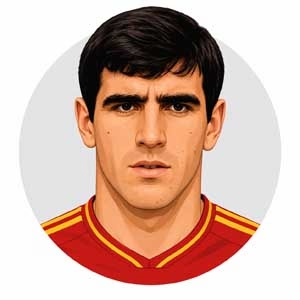
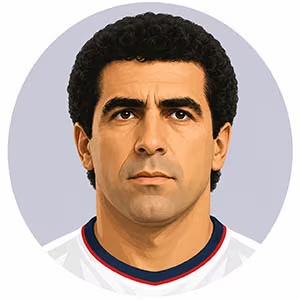
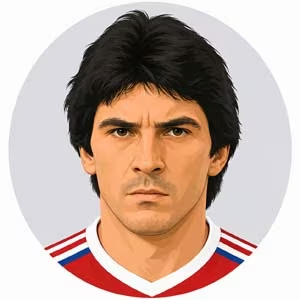
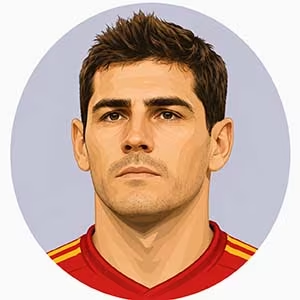
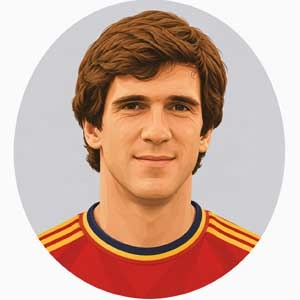
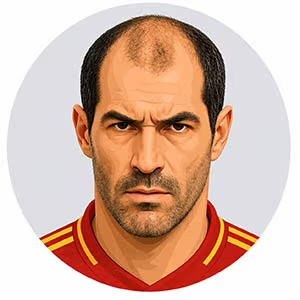
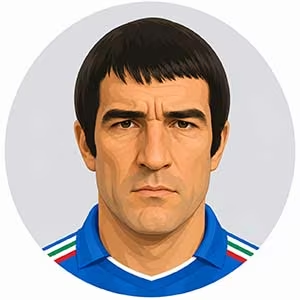
Spain - GoalkeeperIribar, José Ángel
A towering silhouette dressed entirely in black earned an Basque shot-stopper the mythic moniker El Chopo (The Poplar) across Spanish football during the 1960s and 1970s. José Ángel Iribar Kortajarena spent seventeen seasons operating as the undisputed guardian of Athletic Club, redefining the art of commanding, unhurried goalkeeping. Standing over six-foot-three with immense reach, soft hands that smothered fierce drives, and extraordinary positional anticipation, Iribar dominated his penalty area with serene majesty: catching aerial crosses with ease, narrowing angles in one-on-one isolations, and launching instant counter-attacks with powerful underarm throws. Across 614 official appearances for Athletic Club—a club record that stands to this day—he won two Copas del Generalísimo (1969, 1973) and spearheaded their run to the 1977 UEFA Cup final. For Spain, across 49 caps, he was the undisputed starting goalkeeper of the Euro 1964 triumph, famously denying the Soviet Union at the Santiago Bernabéu to claim Spain's first major international trophy.
Underneath his legendary reliability, however, Iribar’s style remained tied to the classic parameters of his era. He was not an adventurous, sweeper-keeper who sprinted thirty yards outside his box to clear loose balls with his feet, preferring to dominate within the boundaries of his eighteen-yard box. In his later years, recurring knee problems and back stiffness slightly reduced his explosive ground-level diving speed on low, skidding shots across wet pitches.
Monastic, stoic, and carrying immense cultural and moral gravitas, Iribar was more than a footballer in the Basque Country—he was an unshakeable institution. He never engaged in theatrical diving for the cameras, cheap time-wasting, or hysterical finger-pointing at his defenders; after conceding, he picked the ball out of the net with quiet dignity and immediately reset his defensive line. On the pitch, his presence radiated unshakeable safety, standing tall in the goalmouth to demoralize opposing forwards before they could shoot. Inside the San Mamés and Spanish national team dressing rooms, he was an untouchable patriarch and revered moral compass whose quiet word resolved any internal tension. Match officials held him in god-like esteem for his spotless sporting conduct, leaving behind an immortal legacy as one of the greatest, most dignified, and iconic goalkeepers in European football history.