

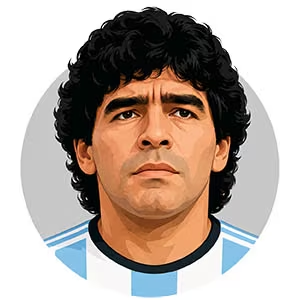
Identity & Heritage
Peak: 1970s
Coaching School
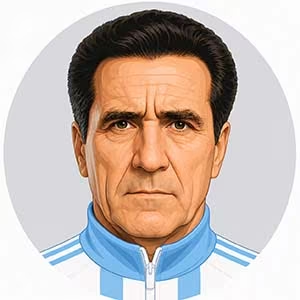


Tactical Lineup
Tactical Verdict
Argentina's problem is a beautiful one: how do you give enough ball to Maradona, Messi and Di Stefano without asking the rest of the team to become spectators?
If the answer is clear, the side becomes almost impossible to read. Maradona attacks the emotional centre of the match, Messi manipulates time and angle, Di Stefano supplies the total-football authority between phases. They are not three versions of the same genius; they bend the game in different directions.
The supporting structure matters more than it first appears. Passarella brings command and menace from the back, the midfield gives the team bite and forward impulse, and the Argentine tradition adds something close to competitive theatre: pride, provocation, resistance, the sense that a match is also a psychological negotiation.
There is a real spacing question, especially with so many creators and second-striker profiles. Argentina would need the wide players and deeper midfielders to respect the geometry, otherwise the centre becomes overcrowded. But if that balance holds, they might be the best all-time team at converting genius into momentum. Not pure control like Italy, not pure abundance like Brazil: something more dramatic, unstable and devastating.
Legends at a glance
Squad dimensions, contextual profiles and specialist peaks, followed by international records.
Squad Dimensions
The leading player in each core attribute family.

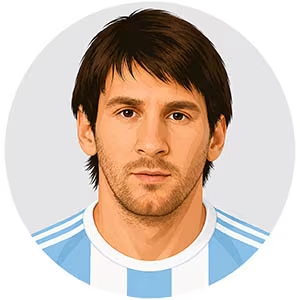
Contextual Profiles
Distinctive profiles shaped by combinations of attributes and roles.
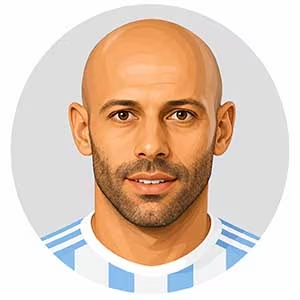
Skill Specialists
Five direct leaders for instantly readable specialist skills.
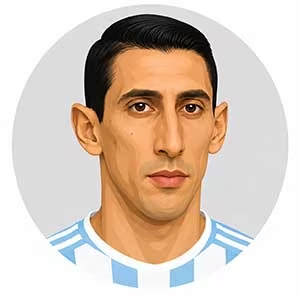

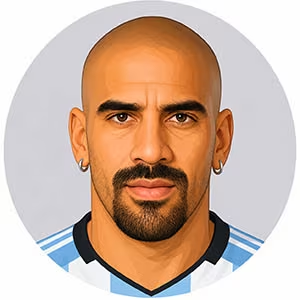
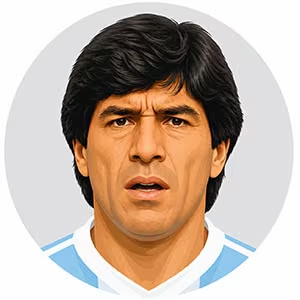

Physical Profile
Complete squad
Take this team further
Move naturally from the canonical selection into the wider Legends Database.
Argentina beyond the XI
Records, eras, legends and the wider football identity behind this selection.
Explore →Your selectionBuild your own all-time XI
Challenge the canon, choose a shape and create a share-ready team from the full database.
Open Line-up Builder →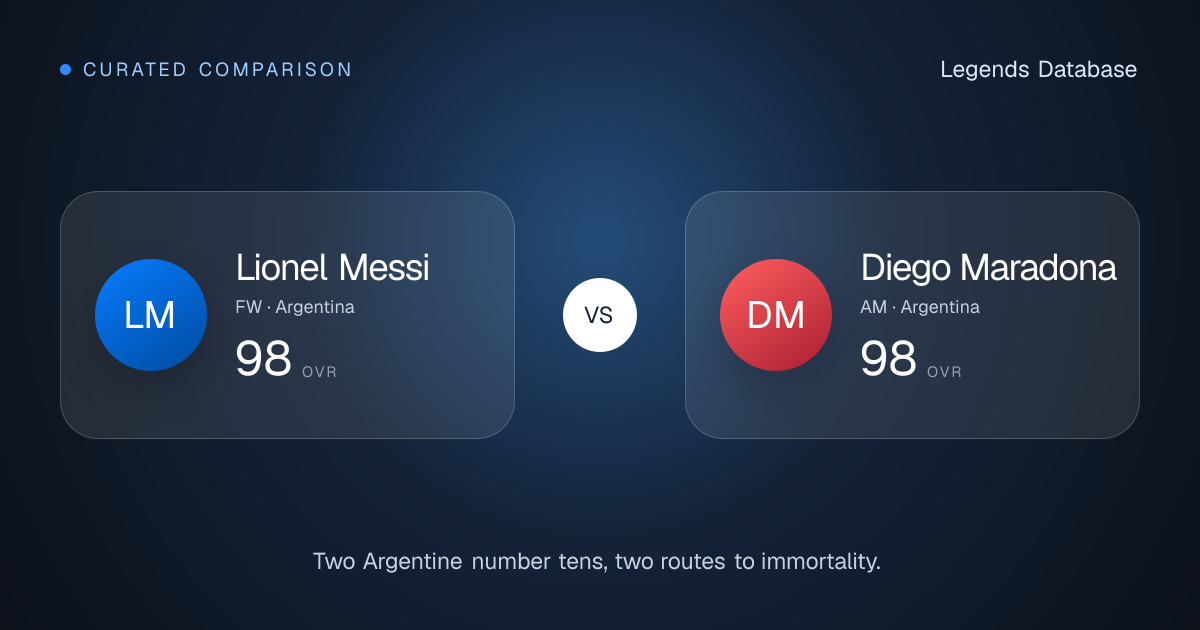 Duels
DuelsMessi vs Maradona - The Question That Has No Answer
20 min read
Read the story →