We use Google Analytics to understand how visitors use this site. Analytics cookies are only activated with your consent. For details, read our Privacy Policy.
Profile lensThe same player, read from a different angle.
Athletic75
Acceleration
66
Pace
65
Agility
71
Strength
87
Balance
88
Jumping
78
Stamina
63
Fitness
85
Technical40
Dribbling
50
Short Passing
53
Long Passing
59
Shot Accuracy
44
Shot Power
44
Shooting Technique
44
Heading
50
Free Kick
40
Penalties
44
First Touch
55
Mental86
Composure
88
Consistency
83
Leadership
82
Goalkeeping90
Reflexes
93
Positioning
92
Handling
88
Kicking
88
Goalkeeping90
Reflexes
93
Positioning
92
Handling
88
Kicking
88
Attacking47
Heading Accuracy
50
Shot Accuracy
44
Technique50
Dribbling
50
Free Kick
40
Short Passing
53
Long Passing
59
First Touch
55
Shot Technique
44
Physicality71
Shot Power
44
Jumping
78
Stamina
63
Strength
87
Fitness
85
Movement73
Acceleration
66
Pace
65
Agility
71
Balance
88
Mentality & Game Reading74
Composure
88
Penalties
44
Leadership
82
Consistency
83
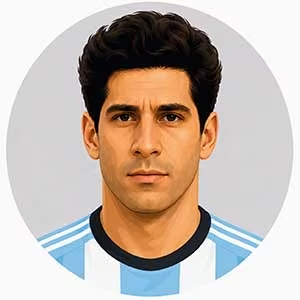
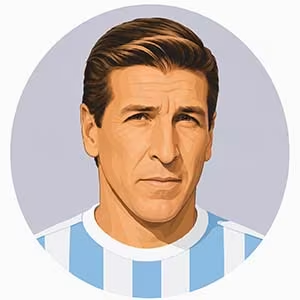
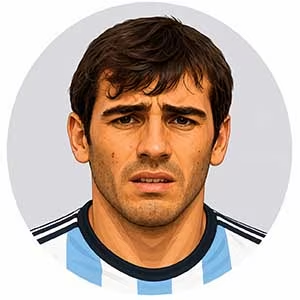
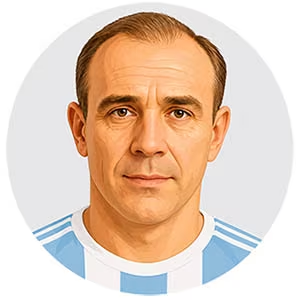
Argentina - GoalkeeperDomínguez, Rogelio
Racing Club’s triumphant mid-1950s era provided the launchpad for an imposing Argentine shot-stopper whose commanding presence between the posts caught the eye of Santiago Bernabéu himself in 1957. Rogelio Antonio Domínguez arrived in the Spanish capital to take over the gloves for Real Madrid during the peak of their continental supremacy. Standing over six-foot-two with exceptional reach, powerful hands, and cat-like reflexes on high crosses, the Buenos Aires native brought South American agility and calm box authority to European football. Across his five seasons at Chamartín, he was an integral part of the greatest club dynasty in history, lifting three consecutive European Cups (1958, 1959, 1960—starting the 1959 final against Reims and the iconic 7–3 demolition of Eintracht Frankfurt in Glasgow), the inaugural 1960 Intercontinental Cup, and three La Liga championships. For Argentina, across 24 caps, he was the undisputed starting goalkeeper of the legendary Caras Sucias (Dirty Faces) side that swept the 1957 South American Championship in Lima, before later playing at the 1962 World Cup in Chile.
However, Domínguez’s game had clear structural and era-specific limitations. His footwork on ground-level buildup was rudimentary, his recovery speed on low, skidding drives across greasy winter pitches in Europe was noticeably stiffer than his high-ball dominance, and he occasionally struggled with consistency when facing relentless aerial scrambles in tight, chaotic goalmouths. His starting role at Real Madrid was eventually challenged and shared with the emerging Juanito Alonso and José Vicente Train as tactical demands shifted.
Calm, dignified, and radiating a natural gentlemanly authority, Domínguez was an unshakeable presence behind Madrid's star-studded frontline. He never indulged in erratic, theatrical outbursts or hysterical reprimands; instead, he marshaled his defense with deep, steady calls and clean handling that absorbed opponent pressure. On the pitch, his body language was upright and regal, standing tall in one-on-one situations to force opposing forwards into hurried finishes. Inside the Bernabéu and Argentine locker rooms, he was a quiet, universally respected professional who blended seamlessly with titanic egos like Alfredo Di Stéfano, Ferenc Puskás, and Omar Sívori, serving as a reliable defensive foundation while the stars captured the headlines. Match officials respected his spotless sporting conduct, leaving behind an enduring legacy as one of the most decorated and agile South American goalkeepers to conquer European football.