

Identity & Heritage
Peak: 2010s
Best Coaches
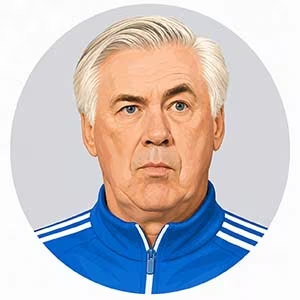


Tactical Lineup
Tactical Verdict
Real Madrid's verdict starts with a tactical paradox: the side can look slightly excessive and still be perfectly true to itself. Madrid have always treated imbalance differently from other clubs. For them, it is not automatically a flaw; sometimes it is the cost of carrying match-winners.
Di Stefano is the player who makes the whole thing credible. He gives the team an organising intelligence, a capacity to connect defence, midfield and attack before the modern vocabulary for that role fully existed. With Cristiano Ronaldo and Puskas ahead or around him, Madrid gain terrifying certainty near goal: movement, volume, timing, ego, execution.
Zidane changes the emotional pace. He can slow a stadium down, which is a very Madrid form of power. The team may not always press like a laboratory-perfect modern side, but it has a cultural instinct for escalation: stay alive, absorb the drama, then turn one elite action into a decisive event.
Defensively, yes, there are cleaner all-time XIs. Milan and Italy feel more naturally protected. Germany feel more institutionally stable. But Madrid bring a different weapon: historical pressure. Opponents do not only play the players; they play the shirt, the expectation, the sense that the game is never fully closed.
So this is not the most balanced team on paper. It is the team most likely to make balance feel irrelevant for ten seconds, which in elite football is often enough.
Legends at a glance
Squad dimensions, contextual profiles and specialist peaks across this editorial all-time squad.
Squad Dimensions
The leading player in each core attribute family.



Contextual Profiles
Distinctive profiles shaped by combinations of attributes and roles.


Skill Specialists
Five direct leaders for instantly readable specialist skills.

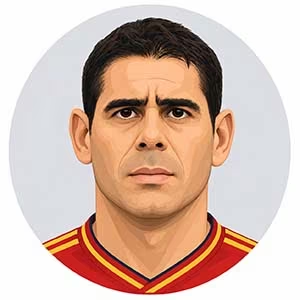

Complete squad
Take this team further
Move naturally from the canonical selection into the wider Legends Database.
Explore every all-time team
Move across clubs, nations and editorial selections without losing the thread.
Explore →Your selectionBuild your own all-time XI
Challenge the canon, choose a shape and create a share-ready team from the full database.
Open Line-up Builder →Era ExplorerPlace this squad in football history
Open the database timeline around the era that shaped this all-time selection.
Explore the timeline →