We use Google Analytics to understand how visitors use this site. Analytics cookies are only activated with your consent. For details, read our Privacy Policy.
Profile lensThe same player, read from a different angle.
Athletic79
Acceleration
71
Pace
73
Agility
78
Strength
91
Balance
85
Jumping
83
Stamina
60
Fitness
94
Technical47
Dribbling
57
Short Passing
63
Long Passing
72
Shot Accuracy
45
Shot Power
85
Shooting Technique
43
Heading
48
Free Kick
47
Penalties
47
First Touch
51
Mental89
Composure
90
Consistency
85
Leadership
94
Goalkeeping93
Reflexes
92
Positioning
95
Handling
95
Kicking
89
Goalkeeping93
Reflexes
92
Positioning
95
Handling
95
Kicking
89
Attacking47
Heading Accuracy
48
Shot Accuracy
45
Technique56
Dribbling
57
Free Kick
47
Short Passing
63
Long Passing
72
First Touch
51
Shot Technique
43
Physicality83
Shot Power
85
Jumping
83
Stamina
60
Strength
91
Fitness
94
Movement77
Acceleration
71
Pace
73
Agility
78
Balance
85
Mentality & Game Reading79
Composure
90
Penalties
47
Leadership
94
Consistency
85
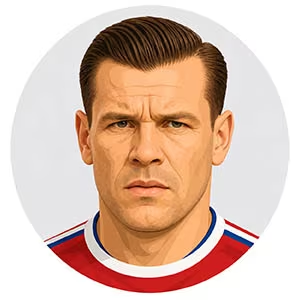
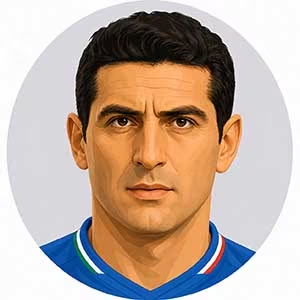
Germany - GoalkeeperTrautmann, Bert
Playing the final seventeen minutes of the 1956 FA Cup final with five dislocated vertebrae and a fractured neck after a brutal collision at the feet of Birmingham's Peter Murphy carved Bernhard Carl Trautmann permanently into the mythos of global sport. A former German paratrooper and prisoner of war who won over a hostile post-war British public through pure sporting heroism, Trautmann redefined the art of athletic goalkeeping across 545 appearances for Manchester City between 1949 and 1964. Standing six-foot-two with an imposing physical presence, he pioneered the use of quick, pinpoint hand-throws to initiate immediate counter-attacks—a technique he adapted from his handball background—while displaying breathtaking bravery on low dives and extraordinary reflexes on goal-bound shots. His heroic display in the 1956 FA Cup triumph made him the first foreign player to be named FWA Footballer of the Year. Due to the DFB's rigid policy of not selecting overseas-based players, he never earned a single cap for West Germany, missing out on the 1954 World Cup triumph despite widely being considered the finest goalkeeper on earth.
Trautmann’s high-risk, fearless style carried catastrophic physical vulnerability. His instinct to dive headfirst into the feet of charging British center-forwards without self-preservation led to numerous severe head traumas and bone fractures throughout his career. Tactically, his dominance was concentrated inside his penalty box, as the tactical conventions of the 1950s did not demand expansive sweeper-keeper positioning outside the area, and playing out from the back with his feet under back-pass pressure was virtually non-existent.
Possessing an ironclad psychological constitution forged in the crucible of wartime survival, Trautmann carried himself with extraordinary moral courage and dignity. He endured relentless anti-German abuse and 20,000-strong street protests upon his arrival in Manchester, ultimately winning the absolute love of the Maine Road faithful through unyielding bravery and pristine sportsmanship. On the pitch, his body language was noble and fearless: commanding his area through sheer physical stature and refusing to show pain even when gravely injured. Inside the City locker room, he was an untouchable patriarch and revered leader whose gentlemanly conduct helped bridge post-war divides, leaving an immortal legacy as one of the most heroic, revolutionary, and iconic goalkeepers in British football history.



 All-Time 1950s1950s