We use Google Analytics to understand how visitors use this site. Analytics cookies are only activated with your consent. For details, read our Privacy Policy.
Profile lensThe same player, read from a different angle.
Athletic81
Acceleration
78
Pace
77
Agility
73
Strength
84
Balance
87
Jumping
83
Stamina
84
Fitness
81
Technical74
Dribbling
73
Short Passing
72
Long Passing
75
Finishing
51
Shot Accuracy
64
Shot Power
77
Shooting Technique
67
Heading
80
Tackling
89
Crossing
79
Free Kick
58
Penalties
57
First Touch
74
Mental84
Composure
83
Aggression
93
Consistency
80
Creativity
60
Leadership
87
Work Rate
93
Tactical82
Vision
71
Off the Ball
63
Defensive Positioning
92
Teamwork
80
Anticipation
93
Marking
95
Player Traits
Attacking67
Crossing
79
Finishing
51
Heading Accuracy
80
Shot Accuracy
64
Off the Ball
63
Technique70
Dribbling
73
Free Kick
58
Short Passing
72
Long Passing
75
First Touch
74
Shot Technique
67
Movement79
Acceleration
78
Pace
77
Agility
73
Balance
87
Physicality82
Shot Power
77
Jumping
83
Stamina
84
Strength
84
Fitness
81
Defending92
Marking
95
Tackling
89
Def. Positioning
92
Mentality & Game Reading80
Aggression
93
Composure
83
Penalties
57
Vision
71
Leadership
87
Work Rate
93
Teamwork
80
Anticipation
93
Consistency
80
Creativity
60
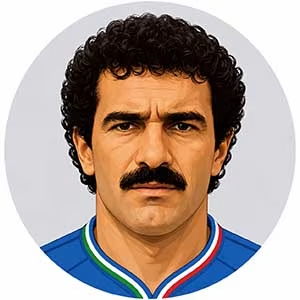
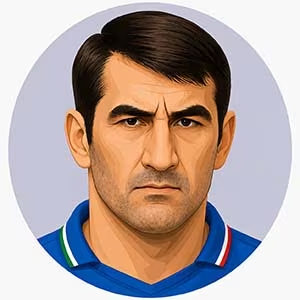
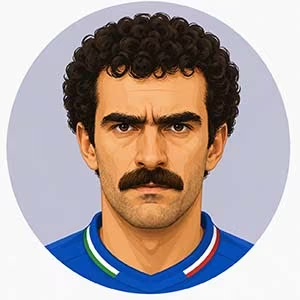
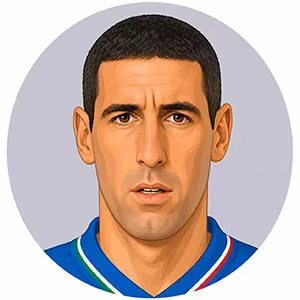
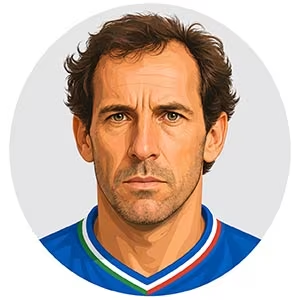
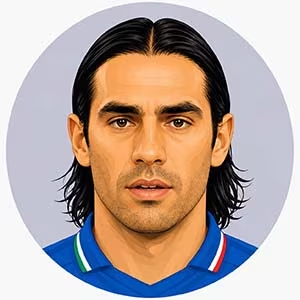
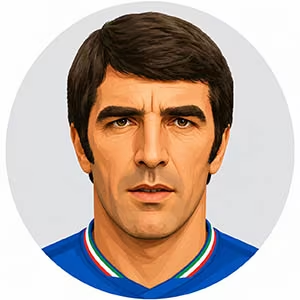
Italy - Right BackGentile, Claudio
Claudio Gentile
An uncompromising tempest of physical intimidation, man-marking perfection, and relentless competitive aggression, Claudio Gentile stood as the ultimate defensive nightmare for Juventus and the Italian national team across the 1970s and 1980s. Born in Tripoli, Libya, Gentile forged a defensive identity rooted in absolute physical dominance, utilizing a dense, broad-shouldered frame, lightning-fast short-burst acceleration, and an uncanny ability to deny central forwards even a single millimeter of turning space. His technical profile was razor-focused on defensive neutralization: surgical ground tackles, suffocating shirt-tugging inside the legal limits of referee vision, and an disciplined ability to win aerial duels against far taller opponents. While often cast purely as a rugged stopper, Gentile possessed functional, press-resistant passing and spatial intelligence that allowed him to play as a right full-back or central defender in Giovanni Trapattoni’s side, winning six Serie A titles, two UEFA Cups, and a Cup Winners' Cup. His legendary status was cemented during Italy’s 1982 World Cup victory, where he delivered two of the most iconic, relentless individual marking displays in football history, neutralizing both Diego Maradona and Zico in consecutive matches.
On the pitch, Gentile was an explosive, fiercely confrontational leader who governed through fearlessness, high-volume tactical chatter, and a total refusal to concede ground. Within the dressing room, he was a protective, fiercely loyal pillar who forged an iron bond with defensive partners like Dino Zoff and Gaetano Scirea, taking full pride in keeping clean sheets. Under peak matchday pressure, his emotional posture was purely combative and hyper-focused; he used hostile stadium environments and world-class opponents as fuel to sharpen his concentration, famous for his post-match declaration that "football is not for dance academies" after subduing Maradona. Toward match officials and opposition attackers, Gentile operated on the razor’s edge of physical psychological warfare; he engaged in constant physical contact, sharp verbal mind games, and aggressive tackles that pushed referee interpretations to their absolute limit, yet he rarely received red cards due to his precise timing and tactical cleverness. Meticulous in his physical conditioning and fiercely proud of the Azzurri shirt, Gentile absorbed team responsibilities with uncompromising pride, leaving an immortal legacy as the undisputed archetype of the ultimate defensive marker.