


Identity & Heritage
Peak: 1970s
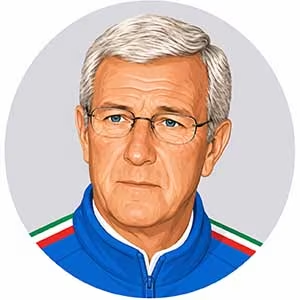
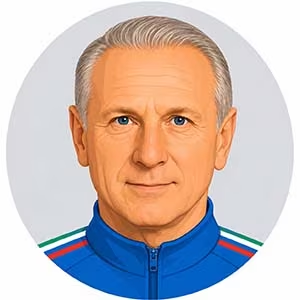
Best Coaches
Tactical Lineup
Tactical Verdict
Juventus are one of those all-time sides where the shirt almost becomes a tactical instruction. Before talking about systems, you feel the attitude: suffer well, compete hard, stay alive in the match, then strike with maximum seriousness.
The defensive culture is huge. Juve have historically understood the value of control without theatricality: compactness, timing, positional discipline, leaders who know when to slow the game and when to turn it into a duel. It is not always glamorous, but it is extremely adult football.
Midfield gives the team its moral temperature. There is craft, but also legs, sacrifice and that hard-to-measure winning mentality that belongs to clubs used to carrying pressure every week. In organisational psychology terms, Juventus look like a high-resilience group: not always expressive, rarely naive.
The attack has enough class to prevent the verdict from becoming only defensive. Platini brings aristocratic invention, Del Piero gives imagination and finishing, and the wider tradition adds forwards who understand big moments rather than just pretty sequences.
Maybe Juventus do not have the pure aesthetic charge of Barcelona or Brazil. Fine. Their strength is different: competitive intelligence, solidity, hunger, and a refusal to let matches drift away emotionally. Against them, you usually have to win twice: first on the pitch, then in the head.
Legends at a glance
Squad dimensions, contextual profiles and specialist peaks across this editorial all-time squad.
Squad Dimensions
The leading player in each core attribute family.


Contextual Profiles
Distinctive profiles shaped by combinations of attributes and roles.


Skill Specialists
Five direct leaders for instantly readable specialist skills.


Complete squad
Take this team further
Move naturally from the canonical selection into the wider Legends Database.
Explore every all-time team
Move across clubs, nations and editorial selections without losing the thread.
Explore →Your selectionBuild your own all-time XI
Challenge the canon, choose a shape and create a share-ready team from the full database.
Open Line-up Builder →Era ExplorerPlace this squad in football history
Open the database timeline around the era that shaped this all-time selection.
Explore the timeline →