We use Google Analytics to understand how visitors use this site. Analytics cookies are only activated with your consent. For details, read our Privacy Policy.
Profile lensThe same player, read from a different angle.
Athletic85
Acceleration
85
Pace
82
Agility
84
Strength
80
Balance
86
Jumping
86
Stamina
89
Fitness
86
Technical76
Dribbling
72
Short Passing
75
Long Passing
78
Finishing
53
Shot Accuracy
62
Shot Power
78
Shooting Technique
68
Heading
73
Tackling
91
Crossing
80
Free Kick
68
Penalties
67
First Touch
76
Mental88
Composure
86
Aggression
78
Consistency
87
Creativity
68
Leadership
90
Work Rate
95
Tactical82
Vision
74
Off the Ball
68
Defensive Positioning
91
Teamwork
76
Anticipation
92
Marking
94
Player Traits
Attacking67
Crossing
80
Finishing
53
Heading Accuracy
73
Shot Accuracy
62
Off the Ball
68
Technique73
Dribbling
72
Free Kick
68
Short Passing
75
Long Passing
78
First Touch
76
Shot Technique
68
Movement84
Acceleration
85
Pace
82
Agility
84
Balance
86
Physicality84
Shot Power
78
Jumping
86
Stamina
89
Strength
80
Fitness
86
Defending92
Marking
94
Tackling
91
Def. Positioning
91
Mentality & Game Reading81
Aggression
78
Composure
86
Penalties
67
Vision
74
Leadership
90
Work Rate
95
Teamwork
76
Anticipation
92
Consistency
87
Creativity
68
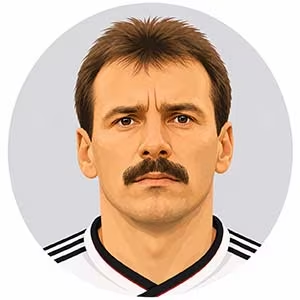
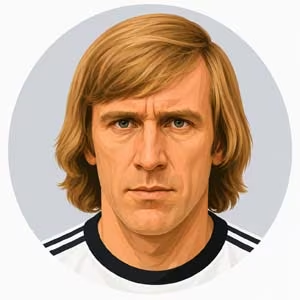
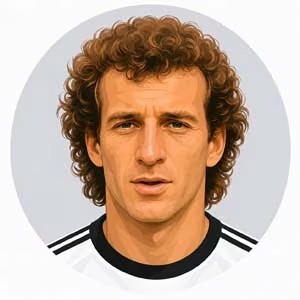
Germany - Right BackVogts, Berti
A ruthless embodiment of man-marking perfection, relentless physical stamina, and unyielding competitive grit, the legendary German defender anchored the backlines of Borussia Mönchengladbach and West Germany throughout the 1960s and 70s. Nicknamed Der Terrier for his fierce, biting tracking style, Vogts possessed exceptional short-burst agility, broad-shouldered core strength, and an uncanny ability to lock onto world-class attackers for ninety minutes without granting a single centimeter of space. His technical profile was purely functional and defensive-minded: razor-sharp ground tackles, flawless interception mechanics, and an disciplined short-passing execution that immediately recycled possession to playmakers like Günter Netzer or Rainer Bonhof. The defining pinnacle of his playing career occurred during the 1974 World Cup final, where his relentless, aggressive marking successfully neutralized Johan Cruyff after the opening minutes, securing global glory for West Germany to add to his five Bundesliga titles and two UEFA Cups with Gladbach. On the pitch, Vogts was a stern, highly demanding captain who governed through absolute physical commitment and total tactical compliance, expecting his defensive colleagues to match his ferocious work rate. Within the dressing room, he maintained an authoritative, focused posture, leading strictly by example and demanding complete dedication to the collective cause. Under peak matchday pressure, his emotional posture was unbreakable and combative, using high-stakes friction to sharpen his defensive focus. Toward match officials and opposition markers, he played on the razor's edge of physical intimidation; while operating with intense aggression, his interventions relied on immaculate timing and sheer physical strength rather than dirty play, earning deep respect across European football. Meticulous in his daily physical preparation and fiercely loyal to Mönchengladbach—spending his entire senior club career with the Fohlen—Vogts carried team results with stoic, heavy responsibility, leaving an indelible mark as one of football's ultimate defensive specialists.



 All Time GermanyNT