We use Google Analytics to understand how visitors use this site. Analytics cookies are only activated with your consent. For details, read our Privacy Policy.
Profile lensThe same player, read from a different angle.
Athletic83
Acceleration
82
Pace
82
Agility
77
Strength
83
Balance
78
Jumping
81
Stamina
91
Fitness
86
Technical84
Dribbling
82
Short Passing
84
Long Passing
87
Finishing
81
Shot Accuracy
74
Shot Power
94
Shooting Technique
80
Heading
81
Tackling
81
Crossing
87
Free Kick
85
Penalties
84
First Touch
84
Mental86
Composure
86
Aggression
86
Consistency
87
Creativity
76
Leadership
86
Work Rate
89
Tactical83
Vision
86
Off the Ball
75
Defensive Positioning
78
Teamwork
88
Anticipation
86
Marking
76
Player Traits
Attacking80
Crossing
87
Finishing
81
Heading Accuracy
81
Shot Accuracy
74
Off the Ball
75
Technique84
Dribbling
82
Free Kick
85
Short Passing
84
Long Passing
87
First Touch
84
Shot Technique
80
Movement80
Acceleration
82
Pace
82
Agility
77
Balance
78
Physicality87
Shot Power
94
Jumping
81
Stamina
91
Strength
83
Fitness
86
Defending78
Marking
76
Tackling
81
Def. Positioning
78
Mentality & Game Reading85
Aggression
86
Composure
86
Penalties
84
Vision
86
Leadership
86
Work Rate
89
Teamwork
88
Anticipation
86
Consistency
87
Creativity
76
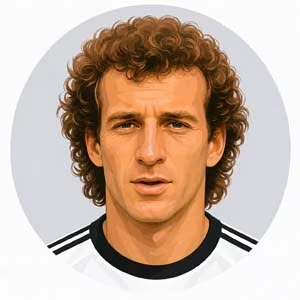
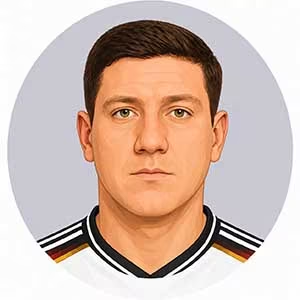
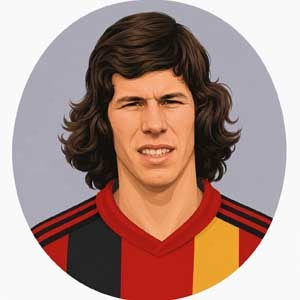
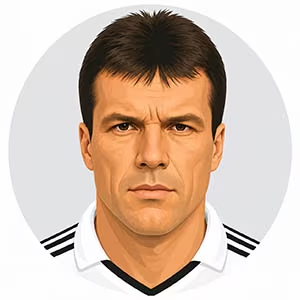
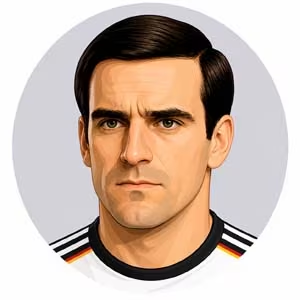
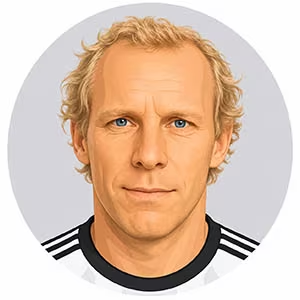
Germany - Defensive MidfielderBonhof, Rainer
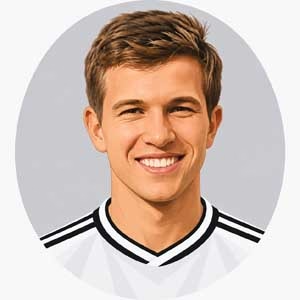
Few players in European football history have ever combined unyielding physical stamina with the terrifying ballistic violence that defined the right foot of Rainer Bonhof. A central pillar of Hennes Weisweiler and Udo Lattek’s swashbuckling Borussia Mönchengladbach side of the 1970s before high-profile stints with Valencia, 1. FC Köln, and Hertha BSC, Bonhof was the ultimate dynamic midfield powerhouse. Possessing broad shoulders, deep cardiovascular reserves, and the versatility to operate seamlessly as a deep-lying midfield anchor, a surging box-to-box engine, or an overlapping right-sided wing-back, his tactical utility was limitless. Technically, his signature weapon was his devastating dead-ball striking: capable of generating unprecedented velocity and swerve from 35-yard free kicks that left opposing walls flinching and goalkeepers utterly paralyzed. At just twenty-two years of age, he served as the dynamic engine of West Germany’s 1974 World Cup triumph—delivering the pinpoint, surging cutback assist for Gerd Müller’s tournament-winning strike against the Netherlands in Munich—and remains the only German footballer to have claimed one World Cup (1974) alongside two European Championship titles (1972 and 1980), complementing four Bundesliga titles, two UEFA Cups, and a European Cup Winners' Cup with Valencia.
Psychologically, Bonhof operated with a disciplined, cold-blooded efficiency and an unshakeable competitive poise that belied his youth on the world’s grandest stages. He did not play with flashy self-indulgence or emotional volatility; instead, he approached every match with the methodical rigor of an engineer, executing high-intensity recovery runs, bone-crunching tactical challenges, and defensive transitions with unrelenting consistency. Inside the locker room, he was a deeply respected, pragmatic figure—unassuming, fiercely loyal to squad cohesion, and serving as the vital, selfless bridge between Gladbach's free-flowing attacking artists like Günter Netzer or Allan Simonsen and the rigid defensive unit. Under extreme tournament pressure, his mental composure was remarkable; whether facing the hostile cauldrons of European away legs or stepping up in high-tension cup finals, his focus never wavered. Toward match officials and opposition midfielders, Bonhof carried himself with an honorable, robust sporting integrity: engaging in bruising physical duels right on the edge of legality, absorbing tactical fouls without theatrical diving, and letting his relentless running and thunderous long-range strikes establish absolute territorial supremacy on the pitch.