We use Google Analytics to understand how visitors use this site. Analytics cookies are only activated with your consent. For details, read our Privacy Policy.
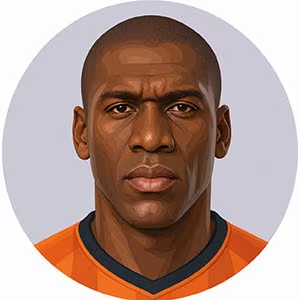
There was something almost professorial in the way Clarence Clyde Seedorf stood over a football, radiating a heavy, gravitational calm while chaos unfolded all around him. The only footballer to ever lift the UEFA Champions League trophy with three different clubs—Ajax, Real Madrid, and AC Milan (twice)—the Paramaribo-born maestro was the quintessential modern total midfielder: built with dense, iron-cast thigh and glute musculature that made dispossessing him an exercise in futility, yet equipped with the delicate spatial touch of a classical artist. Seedorf operated with panoramic vision; he could slow down a frantic European knockout tie to a rhythmic stroll, protecting the ball under multiple presses using clever hip swivels, before suddenly accelerating the phase of play with a laser-guided 40-yard switch or an explosive, outside-of-the-boot drive into the top corner. In Carlo Ancelotti’s diamond and Christmas tree midfields alongside Pirlo and Gattuso, he functioned as the ultimate structural bridge, effortlessly shifting between a box-to-box ball progressor, a wide interior playmaker, and a fluid trequartista.
Intellectually and emotionally, Seedorf carried himself with an aristocratic authority that bordered on sheer arrogance to the uninitiated, but was rooted in an obsessive, analytical understanding of the game. He never hesitated to openly debate tactical adjustments with managers like Ancelotti, Lippi, or Capello mid-match, earning him deep reverence as an on-pitch tactician while occasionally ruffling egos who mistook his directness for insubordination. Inside the dressing room, he was a polyglot cosmopolitan leader—fluent in six languages—who acted as a natural diplomat and mentor, instilling an uncompromising, elite European standard in younger teammates. When the stadium erupted into hostile decibels and match stakes escalated to continental finals, his physiological pulse appeared entirely flatlined; he thrived on big-game friction, using immense pressure as a sharpening tool for his decision-making. Against match officials and physical markers, Seedorf maintained an icy, dignified distance: absorbing bone-jarring fouls with a stoic nod, avoiding theatricality, and preferring to dismantle opposition insolence through flawless technical execution rather than petty verbal warfare.


 All Time NetherlandsNT