We use Google Analytics to understand how visitors use this site. Analytics cookies are only activated with your consent. For details, read our Privacy Policy.
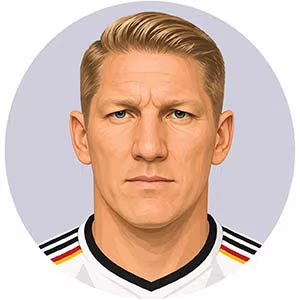
July 13, 2014, inside the hostile cauldron of the Maracanã, produced the definitive image of German tactical sacrifice: a bloodied, bandaged Bastian Schweinsteiger rising from the turf to absorb yet another bone-crunching collision, refusing to yield an inch of central midfield turf until the World Cup trophy was secured. Developed through Bayern Munich's academy as an energetic, bleached-blonde winger, his career underwent a transformative tactical rebirth under Louis van Gaal in 2009, repositioning him as a deep-lying midfield general (Chef-Strategist). Stationed at the base of the engine room, Schweinsteiger orchestrated transitions through laser-accurate forty-yard diagonal switches, governed tempo with flawless short-range circulation, and anchored the defensive block with perfectly timed standing tackles and body-shielding mechanics. Over five hundred appearances for Bayern, Der Fußballgott (The Football God) swept eight Bundesliga titles, seven DFB-Pokals, and the historic 2012–2013 continental treble, before closing his European career at Manchester United. Across 121 caps and 24 goals for Germany, he captained the national side and stood as the undisputed emotional and structural bedrock across three World Cups and four European Championships.
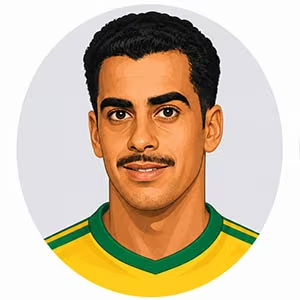
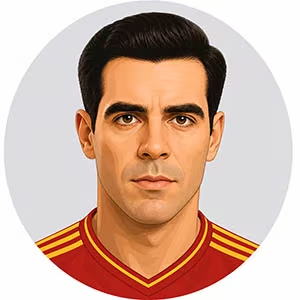
Tactically and physically, however, Schweinsteiger’s game carried severe physical costs. His maximalist style—built on continuous physical friction and high-impact duels—took a catastrophic toll on his ankles, knees, and patellar tendons, stripping him of his dynamic recovery pace and turning agility well before he moved to the Premier League. When left isolated in wide-open expanses against hyper-athletic counter-attacks, his lack of high-end linear speed left the central channels exposed unless supported by a dynamic ball-carrier like Javi Martínez or Sami Khedira.
Stoic, dignified, and possessing an unbreakable competitive backbone, Schweinsteiger was the ultimate culture-setter and locker-room general of Germany’s golden modern era. He did not succumb to pressure or tournament heartbreak; the agonizing trauma of missing a decisive penalty in the 2012 Champions League final in Munich did not destroy his nerve, but instead forged the ruthless, ice-cold resolve that drove Bayern and Germany to global titles twelve months later. On the pitch, his body language was authoritative and completely unflappable: he absorbed relentless physical abuse without theatrical protest, directed pressing triggers with decisive hand gestures, and commanded the total respect of referees through calm, professional discourse. Inside the Säbener Straße and national team dressing rooms, he was the indisputable patriarch and emotional bridge between tactical coaches and the squad, leaving behind an immortal legacy as the defining German midfield warrior of the 21st century.