We use Google Analytics to understand how visitors use this site. Analytics cookies are only activated with your consent. For details, read our Privacy Policy.
Profile lensThe same player, read from a different angle.
Athletic80
Acceleration
77
Pace
75
Agility
80
Strength
74
Balance
82
Jumping
73
Stamina
91
Fitness
91
Technical78
Dribbling
77
Short Passing
85
Long Passing
80
Finishing
64
Shot Accuracy
63
Shot Power
78
Shooting Technique
71
Heading
66
Tackling
84
Crossing
72
Free Kick
65
Penalties
73
First Touch
78
Mental90
Composure
86
Aggression
87
Consistency
94
Creativity
74
Leadership
91
Work Rate
92
Tactical84
Vision
82
Off the Ball
64
Defensive Positioning
86
Teamwork
91
Anticipation
87
Marking
85
Player Traits
Attacking66
Crossing
72
Finishing
64
Heading Accuracy
66
Shot Accuracy
63
Off the Ball
64
Technique76
Dribbling
77
Free Kick
65
Short Passing
85
Long Passing
80
First Touch
78
Shot Technique
71
Movement79
Acceleration
77
Pace
75
Agility
80
Balance
82
Physicality81
Shot Power
78
Jumping
73
Stamina
91
Strength
74
Fitness
91
Defending85
Marking
85
Tackling
84
Def. Positioning
86
Mentality & Game Reading86
Aggression
87
Composure
86
Penalties
73
Vision
82
Leadership
91
Work Rate
92
Teamwork
91
Anticipation
87
Consistency
94
Creativity
74
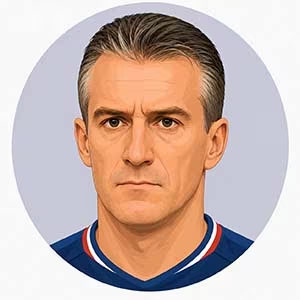
France - Defensive MidfielderDeschamps, Didier
Eric Cantona famously dismissed him as a mere "water carrier," yet Didier Claude Deschamps turned tactical self-sacrifice and midfield orchestration into an art form that collected every major trophy European football had to offer. Stationed at the base of the midfield as the ultimate holding pivot and defensive communicator, the Bayonne native governed the tempo of matches through anticipatory positioning, crisp short-range recycling, and relentless mid-block containment. Deschamps was the tactical brain and on-pitch general behind historic club dynasties: captaining Olympique de Marseille to the 1992–93 UEFA Champions League, anchoring Marcello Lippi’s dominant Juventus (winning three Scudetti, the 1995–96 Champions League, and the 1996 Intercontinental Cup), and lifting the FA Cup with Chelsea and reaching the 2001 Champions League final with Valencia. For France, across 103 caps and four goals, he wore the captain's armband for the historic international double, hoisting the 1998 World Cup and Euro 2000.
Tactically and technically, Deschamps operated within strictly defined parameters. He possessed virtually zero individual dribbling threat, lacked the long-range shooting artillery to score from distance, and had unexceptional straight-line sprinting pace. His entire effectiveness depended on maintaining supreme collective compactness; if a match dissolved into an end-to-end, chaotic transition battle, his physical limitations became evident unless surrounded by explosive, dynamic box-to-box runners.
Pragmatic, relentlessly driven, and possessing an ironclad winning mentality, Deschamps was a manager on the pitch long before he stepped into the dugout. He had no time for individual vanity, judging every pass, tackle, and tactical foul solely on whether it advanced the team toward victory. On the pitch, his presence was authoritarian and communicative: barking pressing triggers, pointing out defensive overloads, and managing referees through calm, diplomatic dialogue. Inside the Marseille, Juventus, and French dressing rooms, his leadership was undisputed; massive egos fell in line behind his tactical clarity and unshakeable competitive focus. Opponents found his positional anticipation deeply frustrating, cementing his legacy as one of the most intelligent, successful, and influential captains in football history.


 All Time FranceNT