We use Google Analytics to understand how visitors use this site. Analytics cookies are only activated with your consent. For details, read our Privacy Policy.
Profile lensThe same player, read from a different angle.
Athletic81
Acceleration
81
Pace
82
Agility
78
Strength
77
Balance
82
Jumping
83
Stamina
81
Fitness
80
Technical84
Dribbling
84
Short Passing
75
Long Passing
72
Finishing
90
Shot Accuracy
87
Shot Power
85
Shooting Technique
77
Heading
86
Tackling
44
Crossing
66
Free Kick
68
Penalties
76
First Touch
85
Mental81
Composure
84
Aggression
85
Consistency
77
Creativity
76
Leadership
85
Work Rate
75
Tactical82
Vision
74
Off the Ball
90
Defensive Positioning
36
Teamwork
75
Anticipation
87
Marking
38
Attacking84
Crossing
66
Finishing
90
Heading Accuracy
86
Shot Accuracy
87
Off the Ball
90
Technique77
Dribbling
84
Free Kick
68
Short Passing
75
Long Passing
72
First Touch
85
Shot Technique
77
Movement81
Acceleration
81
Pace
82
Agility
78
Balance
82
Physicality81
Shot Power
85
Jumping
83
Stamina
81
Strength
77
Fitness
80
Defending39
Marking
38
Tackling
44
Def. Positioning
36
Mentality & Game Reading79
Aggression
85
Composure
84
Penalties
76
Vision
74
Leadership
85
Work Rate
75
Teamwork
75
Anticipation
87
Consistency
77
Creativity
76
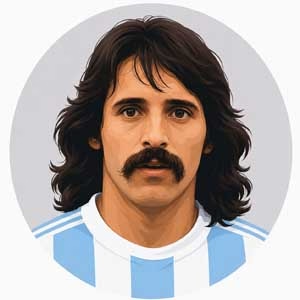
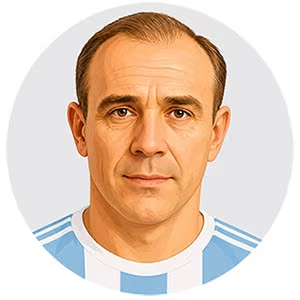
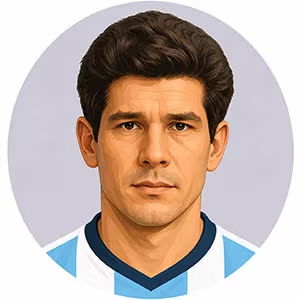
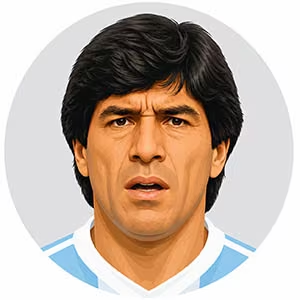
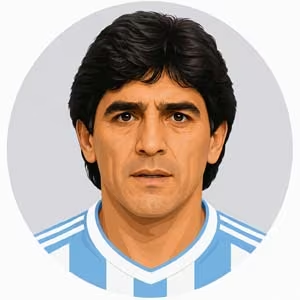
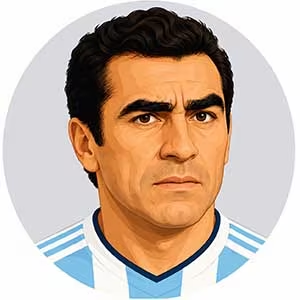
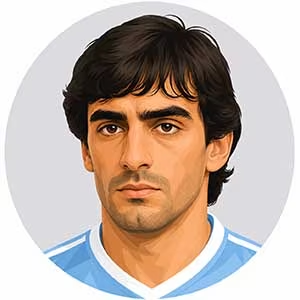
Argentina - StrikerLuque, Leopoldo
Pushing through the agonizing grief of his brother’s tragic death in a car crash mid-tournament while battling a severely dislocated right elbow bandaged tightly to his chest turned a ferocious center-forward from Santa Fe into the ultimate symbol of Argentine emotional fortitude during the 1978 World Cup triumph. Leopoldo Jacinto Luque was the gladiatorial spearhead of César Luis Menotti’s historic champions and the goalscoring engine of Ángel Labruna’s legendary River Plate side of the late 1970s.
Combining an imposing physical frame, broad-shouldered back-to-goal hold-up play, and a devastating first-time strike off either foot, Luque was a complete central striker. He excelled at running the channels, winning bruising aerial duels inside the box, and creating scoring runways for Mario Kempes and Daniel Bertoni. After breaking through at Unión de Santa Fe, he moved to River Plate in 1975, netting 75 goals in 176 matches to sweep five Argentine Primera División titles (1975 Metropolitano and Nacional, 1977 Metropolitano, 1979 Metropolitano and Nacional) and reach the 1976 Copa Libertadores final. For Argentina, across 45 caps and 22 goals, his international apex was monumental: scoring four crucial goals at the 1978 World Cup—including a thunderous, dipping 25-yard volley against France and a decisive brace against Peru—to hoist the nation's historic, first-ever World Cup trophy.
Luque’s physical, aggressive game, however, required continuous high-intensity supply from wide areas and midfield runners. He was not an elusive, light-footed dribbler who could dance through three defenders in a phone booth, relying instead on momentum, strength, and explosive forward surges. When isolated against deep, cynical continental stoppers who denied him physical friction and systematically doubled him in the air, his involvement in patient build-up play could become fragmented.
Stoic, dignified, and possessed of immense moral courage, Luque was a working-class warrior who commanded universal respect across Argentine football. He carried personal tragedy and severe physical pain without making excuses, leading by sheer, raw physical sacrifice on the pitch. On the field, his presence was commanding and resolute: contesting every loose ball with full commitment, absorbing heavy blows from stoppers without complaint, and celebrating goals with an emotional, triumphant roar. Inside the River Plate and Argentine locker rooms, he was an indispensable elder statesman and quiet leader whose courage under unfathomable pressure earned the lifelong reverence of Menotti, Kempes, and millions of supporters, leaving an immortal legacy as one of the most heroic, clutch center-forwards in South American history.