We use Google Analytics to understand how visitors use this site. Analytics cookies are only activated with your consent. For details, read our Privacy Policy.
Profile lensThe same player, read from a different angle.
Athletic84
Acceleration
85
Pace
87
Agility
83
Strength
87
Balance
85
Jumping
81
Stamina
83
Fitness
83
Technical87
Dribbling
87
Short Passing
84
Long Passing
82
Finishing
92
Shot Accuracy
90
Shot Power
88
Shooting Technique
81
Heading
84
Tackling
53
Crossing
74
Free Kick
76
Penalties
82
First Touch
85
Mental83
Composure
84
Aggression
87
Consistency
86
Creativity
75
Leadership
81
Work Rate
82
Tactical84
Vision
79
Off the Ball
92
Defensive Positioning
45
Teamwork
79
Anticipation
86
Marking
38
Player Traits
Attacking86
Crossing
74
Finishing
92
Heading Accuracy
84
Shot Accuracy
90
Off the Ball
92
Technique83
Dribbling
87
Free Kick
76
Short Passing
84
Long Passing
82
First Touch
85
Shot Technique
81
Movement85
Acceleration
85
Pace
87
Agility
83
Balance
85
Physicality84
Shot Power
88
Jumping
81
Stamina
83
Strength
87
Fitness
83
Defending45
Marking
38
Tackling
53
Def. Positioning
45
Mentality & Game Reading82
Aggression
87
Composure
84
Penalties
82
Vision
79
Leadership
81
Work Rate
82
Teamwork
79
Anticipation
86
Consistency
86
Creativity
75
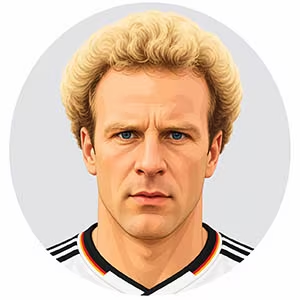
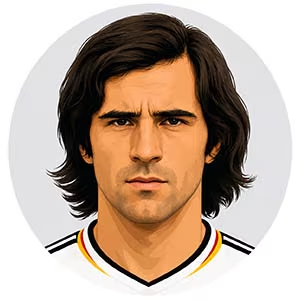
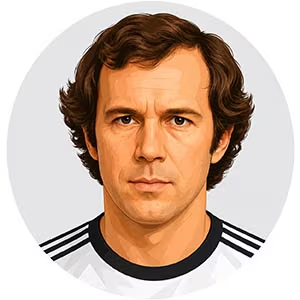
Germany - StrikerRummenigge, Karl-Heinz
Dynamic dribbling, long-strided acceleration, and elite goalscoring instincts combined to make Kalle the dominant attacking force of European football in the early 1980s. Starring for Bayern Munich, Inter Milan, Servette, and West Germany, Rummenigge transformed from a gifted wide dribbler into a complete, lethal forward capable of deciding major matches through rapid counter-attacking runs and sharp, clinical finishing with both feet. His technical repertoire was remarkably complete: sharp short-space agility, excellent aerial balance, and a powerful shooting technique that yielded two Ballon d'Or awards in 1980 and 1981, alongside two European Cups with Bayern Munich and a UEFA European Championship title with West Germany. On the pitch, Rummenigge exercised an assertive, highly ambitious leadership style that expected complete tactical compliance and high performance standards from everyone around him. Within the dressing room and across team management, he maintained a firm, authoritative posture, forming a powerful tactical and organizational partnership with Paul Breitner in their famous "Breitnigge" era while fearlessly asserting squad demands to club leadership. Under high-stakes pressure, such as captaining West Germany to back-to-back World Cup finals in 1982 and 1986 despite managing persistent muscle injuries, his emotional response was defined by stern, uncompromising fortitude, fighting through severe physical limitations to score critical goals. Toward match officials, opponents, and football executives, he projected a cold, articulate authority, engaging in direct dialogue to protect team interests without resorting to erratic pitch behavior or cheap bookings. Highly disciplined in his personal preparation, training rigor, and long-term career planning, Rummenigge approached football with analytical precision, taking full ownership of team outcomes and setting an uncompromising standard of competitive excellence throughout his career.