We use Google Analytics to understand how visitors use this site. Analytics cookies are only activated with your consent. For details, read our Privacy Policy.
Profile lensThe same player, read from a different angle.
Athletic84
Acceleration
84
Pace
86
Agility
81
Strength
90
Balance
88
Jumping
88
Stamina
80
Fitness
77
Technical87
Dribbling
84
Short Passing
75
Long Passing
74
Finishing
94
Shot Accuracy
91
Shot Power
95
Shooting Technique
91
Heading
93
Tackling
52
Crossing
66
Free Kick
82
Penalties
80
First Touch
82
Mental82
Composure
85
Aggression
88
Consistency
82
Creativity
76
Leadership
80
Work Rate
78
Tactical84
Vision
77
Off the Ball
92
Defensive Positioning
35
Teamwork
73
Anticipation
92
Marking
38
Player Traits
Attacking87
Crossing
66
Finishing
94
Heading Accuracy
93
Shot Accuracy
91
Off the Ball
92
Technique81
Dribbling
84
Free Kick
82
Short Passing
75
Long Passing
74
First Touch
82
Shot Technique
91
Movement85
Acceleration
84
Pace
86
Agility
81
Balance
88
Physicality86
Shot Power
95
Jumping
88
Stamina
80
Strength
90
Fitness
77
Defending42
Marking
38
Tackling
52
Def. Positioning
35
Mentality & Game Reading81
Aggression
88
Composure
85
Penalties
80
Vision
77
Leadership
80
Work Rate
78
Teamwork
73
Anticipation
92
Consistency
82
Creativity
76
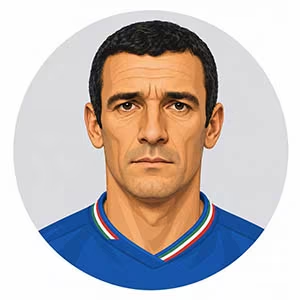
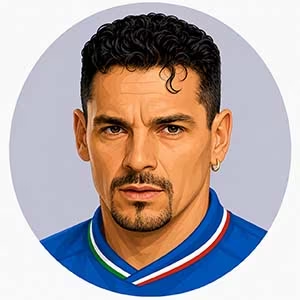
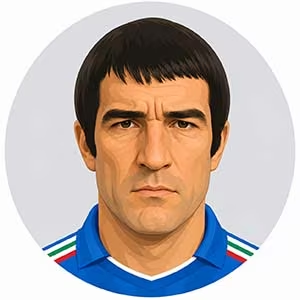
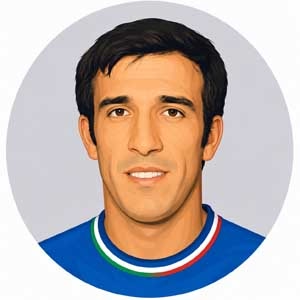
Italy - StrikerRiva, Luigi
A force of nature whose explosive athleticism and thunderous left foot made him an immortal icon for Cagliari and the Italian national team, Gigi Riva redefined the power-forward role across the late 1960s and 70s. Nicknamed Rombo di Tuono (Roar of Thunder) by Gianni Brera, Riva combined a broad, athletic frame with a terrifying vertical leap, incredible courageous diving headers, and a lethal, high-velocity shot that shattered opposition defenses. Operating primarily from the left-wing channel before cutting inside with unstoppable momentum, he powered Cagliari to an historic, unrepeatable Scudetto in 1970 and established an all-time goalscoring record for the Azzurri with 35 goals in 42 appearances. Technically, his game was pure, devastating efficiency; he was not a flashy dribbler in crowded spaces, nor did he offer much in slow, short-passing build-up play, relying entirely on direct, vertical power, open space, and service into the box. On the pitch, Riva was an intensely proud, quiet leader who governed through absolute physical courage, stoic resilience, and unwavering loyalty. In the dressing room, he was a protective, unifying figure who spoke very little, preferring to lead by taking the full brunt of physical punishment on the pitch. Under maximum pressure, such as the 1968 European Championship final or the 1970 World Cup, his response was purely resolute, willingly risking severe physical injury to reach incoming balls. Toward opponents and match officials, Riva maintained a stern, respectful, and uncompromising posture; despite suffering two horrific leg fractures during international duty, he never complained, retaliated, or engaged in cheap theatricality. He possessed a fierce, incorruptible sense of loyalty, famously rejecting massive financial offers from Juventus to remain lifelong devoted to the island of Sardinia and its people. Highly disciplined in his preparation and deeply tied to his adopted land, Riva absorbed collective failures with quiet, heavy responsibility, embodying an unshakeable integrity that made him an untouchable legend of Italian sport.