We use Google Analytics to understand how visitors use this site. Analytics cookies are only activated with your consent. For details, read our Privacy Policy.
Profile lensThe same player, read from a different angle.
Athletic86
Acceleration
83
Pace
82
Agility
82
Strength
86
Balance
93
Jumping
84
Stamina
90
Fitness
90
Technical85
Dribbling
82
Short Passing
79
Long Passing
77
Finishing
89
Shot Accuracy
84
Shot Power
90
Shooting Technique
79
Heading
86
Tackling
52
Crossing
69
Free Kick
73
Penalties
77
First Touch
85
Mental86
Composure
84
Aggression
89
Consistency
90
Creativity
74
Leadership
87
Work Rate
87
Tactical84
Vision
77
Off the Ball
88
Defensive Positioning
47
Teamwork
87
Anticipation
86
Marking
44
Player Traits
Attacking83
Crossing
69
Finishing
89
Heading Accuracy
86
Shot Accuracy
84
Off the Ball
88
Technique79
Dribbling
82
Free Kick
73
Short Passing
79
Long Passing
77
First Touch
85
Shot Technique
79
Movement85
Acceleration
83
Pace
82
Agility
82
Balance
93
Physicality88
Shot Power
90
Jumping
84
Stamina
90
Strength
86
Fitness
90
Defending48
Marking
44
Tackling
52
Def. Positioning
47
Mentality & Game Reading84
Aggression
89
Composure
84
Penalties
77
Vision
77
Leadership
87
Work Rate
87
Teamwork
87
Anticipation
86
Consistency
90
Creativity
74
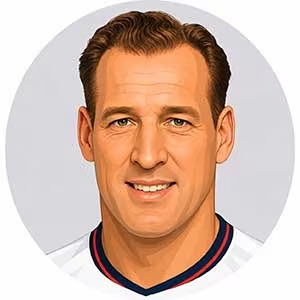
Wales - StrikerHughes, Mark
A chest that could trap a medicine ball on the full sprint and a set of thighs capable of detonating jaw-dropping mid-air volleys turned a Welsh prodigy from Ruabon into the most ferocious back-to-goal forward of British football's modern era. Leslie Mark Hughes—immortalized at Old Trafford and across Europe simply as Sparky—was the gladiatorial spearhead of Sir Alex Ferguson’s early Manchester United renaissance. Operating as a classic target man and second striker, Hughes was a physical marvel: pinning towering center-halves with his back to goal, holding off defenders with immense upper-body strength, and swiveling with violent torque to unleash scissor-kicks and volleys with terrifying velocity. Over two spells at Manchester United (interspersed with stints at Barcelona and Bayern Munich), he scored 163 goals in 467 games, lifting two Premier League titles, three FA Cups, the 1992 League Cup, and the 1991 European Cup Winners' Cup in Rotterdam (scoring both goals in the 2–1 final triumph over Barcelona), before winning further honors at Chelsea. For Wales, across 72 caps and 16 goals, his international pedigree was legendary, spearheading the nation's frontline across fifteen years.
Yet Hughes’s high-impact, physical game had clear operational constraints. He was not a high-speed linear sprinter who could pull away from defenders over long distances, relying heavily on dynamic wingers like Lee Sharpe and Andrei Kanchelskis to stretch the pitch for him. Furthermore, his aggressive, combative nature saw him constantly walking the tightrope of referee tolerance, racking up a steady stream of bookings for physical clashes with opposing center-backs, while chronic knee and ankle wear took a heavy toll in his thirties.
Intense, taciturn off the pitch, and utterly fearless on it, Hughes approached matches with a simmering, brooding fury. He never complained about heavy fouls or requested medical attention for cuts; he absorbed the blow, adjusted his socks, and retaliated on the next cross by soaring above the marker to smash the ball into the top corner. On the pitch, his body language was all coiled power and raw determination, shielding the ball with broad shoulders and creating attacking lanes out of thin air. Inside the United and Chelsea dressing rooms, he was an untouchable, quiet leader whose explosive performances in cup finals set the competitive standard for Ferguson's young generation. Center-backs universally dreaded the exhausting physical pummeling of marking him, leaving behind an immortal legacy as the ultimate clutch volley specialist and warrior forward in British history.



 All Time Manchester UnitedClub