We use Google Analytics to understand how visitors use this site. Analytics cookies are only activated with your consent. For details, read our Privacy Policy.
Profile lensThe same player, read from a different angle.
Athletic83
Acceleration
87
Pace
85
Agility
80
Strength
83
Balance
77
Jumping
84
Stamina
81
Fitness
83
Technical86
Dribbling
82
Short Passing
76
Long Passing
70
Finishing
94
Shot Accuracy
94
Shot Power
82
Shooting Technique
90
Heading
91
Tackling
37
Crossing
62
Free Kick
63
Penalties
81
First Touch
84
Mental82
Composure
87
Aggression
91
Consistency
83
Creativity
74
Leadership
76
Work Rate
79
Tactical86
Vision
77
Off the Ball
95
Defensive Positioning
38
Teamwork
74
Anticipation
94
Marking
38
Player Traits
Attacking87
Crossing
62
Finishing
94
Heading Accuracy
91
Shot Accuracy
94
Off the Ball
95
Technique78
Dribbling
82
Free Kick
63
Short Passing
76
Long Passing
70
First Touch
84
Shot Technique
90
Movement82
Acceleration
87
Pace
85
Agility
80
Balance
77
Physicality83
Shot Power
82
Jumping
84
Stamina
81
Strength
83
Fitness
83
Defending38
Marking
38
Tackling
37
Def. Positioning
38
Mentality & Game Reading82
Aggression
91
Composure
87
Penalties
81
Vision
77
Leadership
76
Work Rate
79
Teamwork
74
Anticipation
94
Consistency
83
Creativity
74
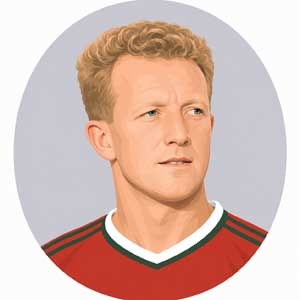
Wales - StrikerRush, Ian
Sudden diagonal sprints, front-post darts, and an unmatched work rate off the ball transformed Ian James Rush into the all-time attacking standard-bearer of Liverpool’s dominant 1980s dynasty. Recruited from Chester City by Bob Paisley in 1980, the Welsh marksman forged an iconic offensive partnership with Kenny Dalglish, where Dalglish served as the creative fulcrum and Rush functioned as the lethal, direct spearhead. Standing five-foot-eleven with a light, wiry build, he was the original high-pressing center-forward: hunting down opposing center-backs and goalkeepers to force turnovers high up the pitch before counter-pressing was formalized in modern tactical manuals. Once Liverpool regained possession, his acceleration across five to ten yards left defenders flat-footed, allowing him to finish cut-backs with clean, side-foot placements into the side netting or first-time volleys off either boot. Over two spells at Anfield—interrupted by a single, low-scoring season at Juventus—Rush scored an astonishing 346 goals in 660 matches, capturing five First Division titles, three FA Cups, five League Cups, two European Cups, and the 1984 European Golden Boot. For Wales, he stood as the all-time record scorer for over two decades with 28 goals in 73 caps, famously scoring the decisive winner against Germany in a 1991 European Championship qualifier.
A modest, hard-working character raised in the industrial environment of Flintshire, Rush played with a total absence of individual vanity or self-indulgence. He viewed the physical burden of defending from the front as an absolute tactical duty rather than an option, relentlessly chasing lost causes and tracking back into his own half with unflagging cardiovascular stamina. On the pitch, his communication was understated; he let his constant, intelligent movement pull defensive blocks out of shape, creating expansive passing channels for his midfield colleagues. When his transition to Italian football at Juventus proved tactically isolating due to rigid low-block defenses and defensive conservatism, he handled the difficult period without public petulance, returning to Merseyside to instantly resume his lethal domestic efficiency. Inside the Liverpool locker room, he was a warm, grounded teammate, completely integrated into the club's famous Boot Room culture of humility, collective responsibility, and relentless winning habits. Confronted by brutal man-markers who hacked at his ankles, Rush never lashed out or engaged in gamesmanship: he rose quickly from the turf, adjusted his shin guards, and used his blistering speed to beat the offside trap on the next attacking wave.



 All Time LiverpoolClub