We use Google Analytics to understand how visitors use this site. Analytics cookies are only activated with your consent. For details, read our Privacy Policy.
Profile lensThe same player, read from a different angle.
Athletic86
Acceleration
92
Pace
95
Agility
84
Strength
83
Balance
82
Jumping
83
Stamina
83
Fitness
82
Technical83
Dribbling
87
Short Passing
78
Long Passing
78
Finishing
87
Shot Accuracy
85
Shot Power
84
Shooting Technique
80
Heading
77
Tackling
47
Crossing
75
Free Kick
75
Penalties
88
First Touch
85
Mental82
Composure
85
Aggression
80
Consistency
77
Creativity
85
Leadership
83
Work Rate
80
Tactical77
Vision
78
Off the Ball
87
Defensive Positioning
44
Teamwork
74
Anticipation
77
Marking
42
Player Traits
Attacking82
Crossing
75
Finishing
87
Heading Accuracy
77
Shot Accuracy
85
Off the Ball
87
Technique81
Dribbling
87
Free Kick
75
Short Passing
78
Long Passing
78
First Touch
85
Shot Technique
80
Movement88
Acceleration
92
Pace
95
Agility
84
Balance
82
Physicality83
Shot Power
84
Jumping
83
Stamina
83
Strength
83
Fitness
82
Defending44
Marking
42
Tackling
47
Def. Positioning
44
Mentality & Game Reading81
Aggression
80
Composure
85
Penalties
88
Vision
78
Leadership
83
Work Rate
80
Teamwork
74
Anticipation
77
Consistency
77
Creativity
85
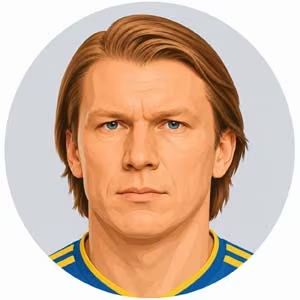
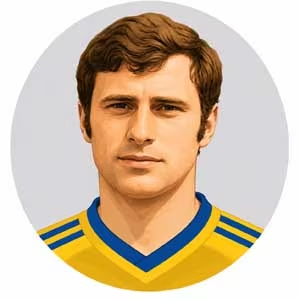
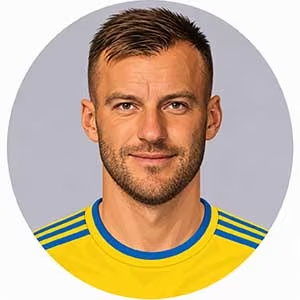
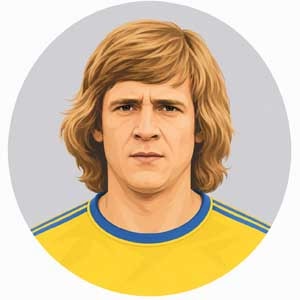
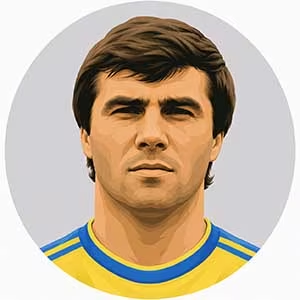
Ukraine - Left WingerBlokhin, Oleg
A explosive, long-strided powerhouse of raw speed and clinical execution, Oleg Blokhin was the dynamic spearhead of Valeriy Lobanovsky's revolutionary Dynamo Kyiv sides and the Soviet Union throughout the 1970s and 80s. Operating primarily as a left-sided forward or central striker, Blokhin possessed a terrifying track-sprinter acceleration that allowed him to blow past high defensive lines in transitional phases. His technical hallmark centered on sudden changes of pace, sharp horizontal cuts from the left wing, and a devastatingly accurate left foot capable of unleashing high-velocity drives into the far corner or delivering precise set-pieces. In Lobanovsky's high-pressing, scientifically calibrated collective system, Blokhin provided the crucial individual brilliance to break rigid low blocks, leading Dynamo to two European Cup Winners' Cups in 1975 and 1986, and claiming the 1975 Ballon d'Or as Europe's premier attacking player. Yet his individualistic tendencies could occasionally clash with the collective ethos; he was prone to long stretches of passive body language when forced into defensive tracking, and his reliance on top-end sprinting speed made him less effective in slow, heavily compressed penalty boxes. On the pitch, Blokhin possessed an intensely demanding, highly vocal personality that frequently created friction within his own team. He led through sheer competitive drive and high expectations, routinely shouting at teammates for misplaced passes or poor movement, while maintaining an aloof, distant posture toward the broader dressing room hierarchy. Under high-stakes pressure, his response was fiercely competitive, actively demanding the ball in transitional moments to settle major matches through individual runs. Toward match officials, opposing players, and state sports authorities, he displayed an assertive, highly critical demeanor, never hesitating to air grievances over refereeing decisions or tactical setups. His relationship with rules was governed by a sharp, pragmatic edge; while not a dirty player, he frequently engaged in vocal dissent and animated gestures when decisions went against him. Highly disciplined in his personal physical conditioning to sustain his sprinting output over two decades, Blokhin approached football with an uncompromising pride, attributing victories to his own decisive execution while reacting sharply to external criticism from media or authorities.