We use Google Analytics to understand how visitors use this site. Analytics cookies are only activated with your consent. For details, read our Privacy Policy.
Profile lensThe same player, read from a different angle.
Athletic82
Acceleration
83
Pace
78
Agility
77
Strength
76
Balance
81
Jumping
78
Stamina
84
Fitness
95
Technical86
Dribbling
86
Short Passing
86
Long Passing
88
Finishing
92
Shot Accuracy
89
Shot Power
81
Shooting Technique
80
Heading
82
Tackling
58
Crossing
84
Free Kick
82
Penalties
91
First Touch
86
Mental92
Composure
90
Aggression
76
Consistency
93
Creativity
83
Leadership
93
Work Rate
95
Tactical87
Vision
86
Off the Ball
90
Defensive Positioning
55
Teamwork
92
Anticipation
87
Marking
48
Player Traits
Attacking87
Crossing
84
Finishing
92
Heading Accuracy
82
Shot Accuracy
89
Off the Ball
90
Technique85
Dribbling
86
Free Kick
82
Short Passing
86
Long Passing
88
First Touch
86
Shot Technique
80
Movement80
Acceleration
83
Pace
78
Agility
77
Balance
81
Physicality83
Shot Power
81
Jumping
78
Stamina
84
Strength
76
Fitness
95
Defending54
Marking
48
Tackling
58
Def. Positioning
55
Mentality & Game Reading89
Aggression
76
Composure
90
Penalties
91
Vision
86
Leadership
93
Work Rate
95
Teamwork
92
Anticipation
87
Consistency
93
Creativity
83
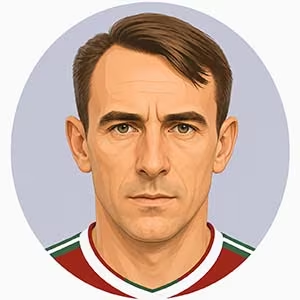
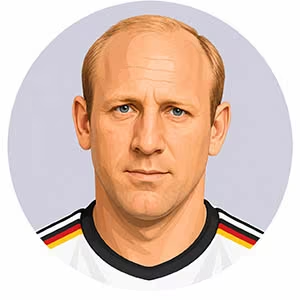
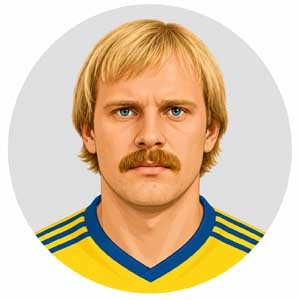
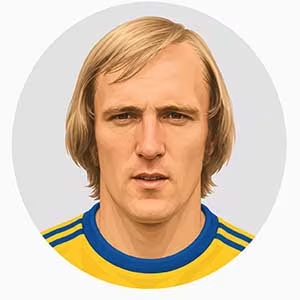
Germany - ForwardWalter, Fritz
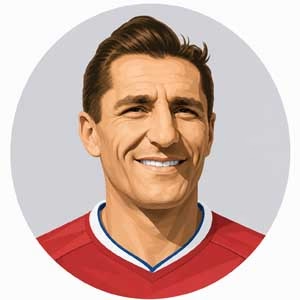
More than a sublime inside-forward or a world-class playmaker, Friedrich Walter was the spiritual beacon, moral conscience, and foundational architect of post-war German football. Leading his beloved 1. FC Kaiserslautern through the ashes of the 1940s and 1950s—where he scored over 300 goals and claimed two German national championships—Walter was a cerebral orchestrator whose technical sophistication was decades ahead of his era. Blessed with an upright, majestic posture, immaculate close control, and panoramic peripheral vision, he controlled the tempo of matches through subtle body feints, delicate chipped passes, and perfectly timed late arrivals inside the penalty box. His physical performances were intimately tied to atmospheric conditions: having contracted malaria during World War II, he struggled in intense heat but became virtually unplayable in torrential rain on heavy, mud-soaked pitches, giving birth to the immortal German footballing lore of Fritz-Walter-Wetter (Fritz Walter weather). His crowning achievement came as the talismanic captain of Sepp Herberger’s West German side at the 1954 World Cup in Switzerland, orchestrating the legendary Miracle of Bern to defeat the seemingly invincible Hungarian Golden Team 3–2 and restore national pride to a fractured country.
Mentally and emotionally, Walter was a complex, deeply sensitive soul whose leadership was grounded in humility, empathy, and an extraordinary sense of civic and sporting duty. He was not a ruthless, snarling field marshal; he led through an aura of profound moral authority, gentle encouragement, and an intimate psychological bond with his teammates, who revered him with an almost familial devotion. Having survived wartime conscription and the harrowing trauma of a Soviet prisoner-of-war camp—famously spared from Siberian exile because a guard recognized his footballing identity—he carried a heavy emotional fragility that required the fatherly reassurance of Herberger to unlock his full genius. Under the unbearable psychological weight of the 1954 World Cup final, his mental resilience proved transcendent: remaining composed when trailing 2–0 in the opening minutes, organizing the tactical comeback with stoic clarity, and refusing to succumb to panic. Toward match officials and opponents, Walter was the absolute gold standard of gentlemanly nobility: he despised gamesmanship, rejected cynical foul play, treated rivals with deep respect, and famously turned down massive professional contracts abroad (including from Atlético Madrid and Inter Milan) out of pure, romantic loyalty to Kaiserslautern, leaving an eternal legacy as the most beloved and noble icon in German sporting history.