We use Google Analytics to understand how visitors use this site. Analytics cookies are only activated with your consent. For details, read our Privacy Policy.
Profile lensThe same player, read from a different angle.
Athletic84
Acceleration
87
Pace
83
Agility
88
Strength
84
Balance
88
Jumping
79
Stamina
85
Fitness
81
Technical91
Dribbling
96
Short Passing
87
Long Passing
87
Finishing
90
Shot Accuracy
92
Shot Power
90
Shooting Technique
91
Heading
88
Tackling
58
Crossing
83
Free Kick
93
Penalties
93
First Touch
96
Mental87
Composure
92
Aggression
85
Consistency
90
Creativity
96
Leadership
75
Work Rate
85
Tactical86
Vision
87
Off the Ball
90
Defensive Positioning
55
Teamwork
80
Anticipation
89
Marking
48
Player Traits
Attacking89
Crossing
83
Finishing
90
Heading Accuracy
88
Shot Accuracy
92
Off the Ball
90
Technique92
Dribbling
96
Free Kick
93
Short Passing
87
Long Passing
87
First Touch
96
Shot Technique
91
Movement87
Acceleration
87
Pace
83
Agility
88
Balance
88
Physicality84
Shot Power
90
Jumping
79
Stamina
85
Strength
84
Fitness
81
Defending54
Marking
48
Tackling
58
Def. Positioning
55
Mentality & Game Reading87
Aggression
85
Composure
92
Penalties
93
Vision
87
Leadership
75
Work Rate
85
Teamwork
80
Anticipation
89
Consistency
90
Creativity
96
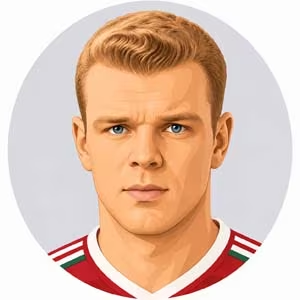
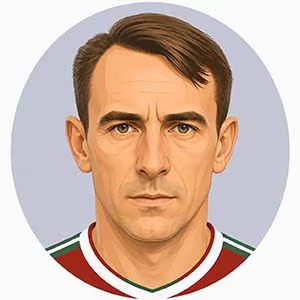
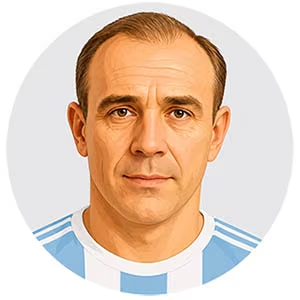
Hungary - ForwardKubala, László
Fleeing behind the Iron Curtain in 1949 disguised as a Soviet soldier, László Kubala Stecz arrived in Catalonia to construct the sporting and cultural mythos of FC Barcelona—sparking such a frenzy among supporters that the club had to build the 100,000-seat Camp Nou simply because the old Les Corts stadium could no longer contain the crowds. Operating as an inside-forward, roaming playmaker, or second striker, Kubala was an athletic marvel ahead of his time: combining a heavily muscled, sculpted frame with the balance of a gymnast, effortless change of direction, and an innovative dead-ball technique that curled free-kicks over walls before the tactic was common in Europe. Over a glorious decade at Barcelona between 1951 and 1961 across 345 matches and 280 goals, he claimed four La Liga championships, five Copas del Generalísimo, and two Inter-Cities Fairs Cups, famously scoring seven goals in a single league match against Sporting Gijón in 1952. His international career was an extraordinary odyssey across three national teams (Czechoslovakia, Hungary, and Spain), earning 19 caps and 11 goals for Spain, though cruel political barriers and injuries tragically prevented him from ever appearing in a World Cup finals match.
Kubala’s virtuosity, however, was repeatedly targeted by the brutal physical violence of contemporary defenders, most notably suffering a devastating, reconstructive knee injury against Athletic Club in 1954 that permanently altered his explosive turning speed. Furthermore, his bohemian lifestyle and love for Barcelona's vibrant nightlife occasionally led to explosive friction with rigid, authoritarian managers like Helenio Herrera, who demanded strict tactical discipline over individual autonomy.
Charismatic, generous, and radiating pure, magnetic swagger, Kubala was treated as a living demigod across Catalonia. He played with boundless joy: juggling the ball past aggressive stoppers, shielding possession with his broad shoulders, and executing pinpoint backheels that brought terraces to their feet. On the pitch, his body language was upright and regal, taking brutal hacking without retaliating and answering cynical marking with another goal or assist. Inside the Barcelona locker room, he was an adored patriarch who shared his wealth freely with friends and teammates, setting a standard of technical brilliance that laid the aesthetic foundation for modern Barça, leaving behind an immortal legacy as one of the most mesmerizing, trailblazing figures in world football.