We use Google Analytics to understand how visitors use this site. Analytics cookies are only activated with your consent. For details, read our Privacy Policy.
Profile lensThe same player, read from a different angle.
Athletic78
Acceleration
80
Pace
76
Agility
86
Strength
78
Balance
77
Jumping
68
Stamina
78
Fitness
78
Technical84
Dribbling
89
Short Passing
82
Long Passing
86
Finishing
77
Shot Accuracy
78
Shot Power
85
Shooting Technique
77
Heading
66
Tackling
42
Crossing
91
Free Kick
89
Penalties
76
First Touch
92
Mental74
Composure
82
Aggression
71
Consistency
71
Creativity
89
Leadership
68
Work Rate
70
Tactical76
Vision
83
Off the Ball
82
Defensive Positioning
38
Teamwork
72
Anticipation
74
Marking
38
Attacking79
Crossing
91
Finishing
77
Heading Accuracy
66
Shot Accuracy
78
Off the Ball
82
Technique86
Dribbling
89
Free Kick
89
Short Passing
82
Long Passing
86
First Touch
92
Shot Technique
77
Movement80
Acceleration
80
Pace
76
Agility
86
Balance
77
Physicality77
Shot Power
85
Jumping
68
Stamina
78
Strength
78
Fitness
78
Defending39
Marking
38
Tackling
42
Def. Positioning
38
Mentality & Game Reading76
Aggression
71
Composure
82
Penalties
76
Vision
83
Leadership
68
Work Rate
70
Teamwork
72
Anticipation
74
Consistency
71
Creativity
89
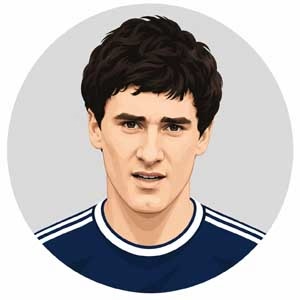
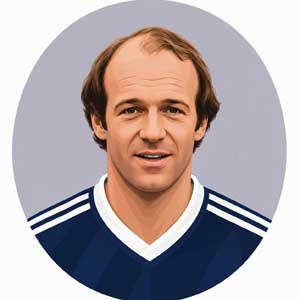
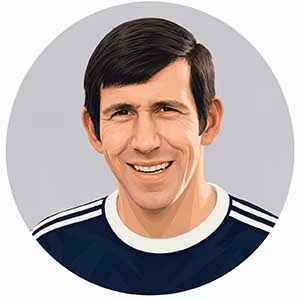
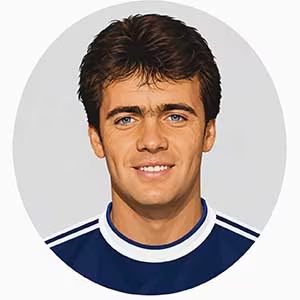
Scotland - Left MidfielderCooper, David
Possessing a left foot of supernatural delicacy and a dribbling style so hypnotic it bordered on wizardry, David "Davie" Cooper was the ultimate mercurial maverick of modern Scottish football. Rising to prominence with Clydebank before becoming an immortal folk hero at Rangers and later Motherwell, Cooper was the quintessential touchline artist who played the game entirely on his own aesthetic terms. Operating primarily as an outside-left or roaming creative winger, he did not rely on blistering track speed; instead, his game was defined by balance, sudden deceleration, and a legendary body swerve that sent aggressive defenders sliding uselessly into touch. Technically, his signature was the dead-ball curler and the improvised juggle—epitomized by his 1979 Drybrough Cup final wonder-goal against Celtic, where he flicked the ball over three defenders inside the box without it touching the ground before volleying home. Over a twelve-year spell at Ibrox spanning 546 appearances, he claimed three Scottish league titles, three Scottish Cups, and seven League Cups, later orchestrating Motherwell’s famous 1991 Scottish Cup triumph. Earning 22 caps for Scotland across two World Cup squads (1986 and 1990), his supreme technique drew unconditional praise from contemporaries, with Ruud Gullit famously naming him among the finest footballers he had ever witnessed. Psychologically, Cooper was a quiet, introverted romantic whose genius was intimately tied to his emotional comfort and absolute purity of passion. He felt no urge to chase fame or astronomical wages in England or continental Europe, preferring the cultural familiarity and unvarnished working-class authenticity of central Scotland. On the pitch, his emotional state was cool, detached, and utterly impervious to the toxic tribal fury of the Old Firm derby; he never sought conflict, letting the cruelty of his trickery inflict all the psychological damage on opposing markers. Inside the dressing room, he was a gentle, enigmatic, and modest soul—sparing with his words, universally adored by supporters, and deeply protective of his private life away from the tabloid glare. While sometimes critiqued by pragmatic managers for periods of peripheral drifting, he possessed an uncanny, clutch temperament, regularly producing game-winning moments of magic in tense cup finals when tension paralyzed others. Toward match officials and physical full-backs who hacked at his ankles with unabashed brutality, Cooper maintained a stoic, almost sorrowful dignity: he rarely argued, despised diving or gamesmanship, and simply gathered the ball again to weave through the chaos, leaving a revered legacy that was tragically cut short when he suffered a fatal brain aneurysm at just 39 years old while filming a coaching video for children.


 All Time ScotlandNT