We use Google Analytics to understand how visitors use this site. Analytics cookies are only activated with your consent. For details, read our Privacy Policy.
Profile lensThe same player, read from a different angle.
Athletic80
Acceleration
88
Pace
82
Agility
95
Strength
69
Balance
82
Jumping
74
Stamina
78
Fitness
75
Technical89
Dribbling
94
Short Passing
87
Long Passing
85
Finishing
85
Shot Accuracy
84
Shot Power
78
Shooting Technique
92
Heading
66
Tackling
40
Crossing
85
Free Kick
88
Penalties
85
First Touch
94
Mental80
Composure
83
Aggression
76
Consistency
75
Creativity
94
Leadership
80
Work Rate
79
Tactical78
Vision
84
Off the Ball
85
Defensive Positioning
40
Teamwork
66
Anticipation
74
Marking
33
Player Traits
Attacking81
Crossing
85
Finishing
85
Heading Accuracy
66
Shot Accuracy
84
Off the Ball
85
Technique90
Dribbling
94
Free Kick
88
Short Passing
87
Long Passing
85
First Touch
94
Shot Technique
92
Movement87
Acceleration
88
Pace
82
Agility
95
Balance
82
Physicality75
Shot Power
78
Jumping
74
Stamina
78
Strength
69
Fitness
75
Defending38
Marking
33
Tackling
40
Def. Positioning
40
Mentality & Game Reading80
Aggression
76
Composure
83
Penalties
85
Vision
84
Leadership
80
Work Rate
79
Teamwork
66
Anticipation
74
Consistency
75
Creativity
94
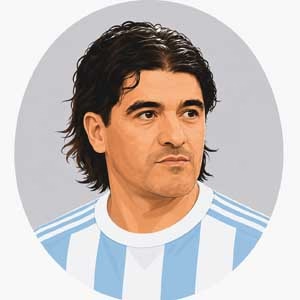
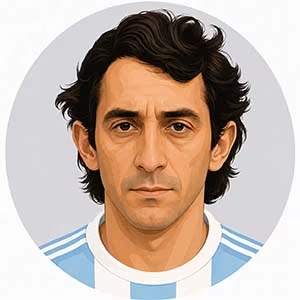
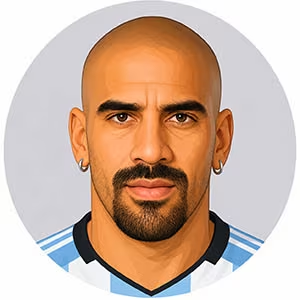
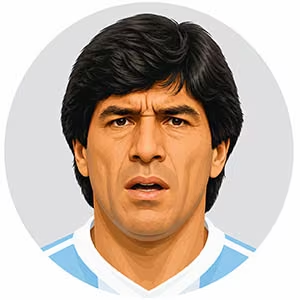
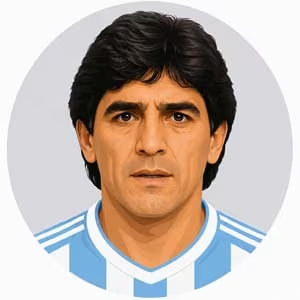
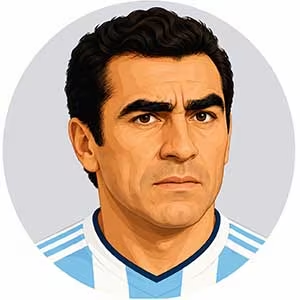
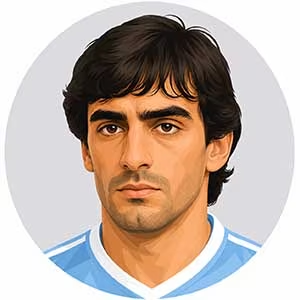
Argentina - Attacking MidfielderOrtega, Ariel
The sudden, ankle-breaking hip shake that sent a defender stumbling toward the touchline before a feather-light lob drifted over an advancing goalkeeper encapsulated the mesmerizing, unrepentant street-fighter artistry of a boy from Ledesma who carried the heaviest mantle in Argentine football. Ariel Arnaldo Ortega—immortalized worldwide as El Burrito (The Little Donkey)—was the ultimate archetypal pibe de potrero: an electric, anarchic dribbling virtuoso whose low center of gravity, devastating change of pace, and audacious audacity turned tight defensive corridors into playgrounds of humiliation.
Operating as a roving number ten, second striker, or wide attacking soloist, Ortega was virtually impossible to tackle without committing a foul. He manipulated the ball with rapid-fire sole rolls and sudden hesitations, utilizing his low-slung, explosive frame to accelerate away from lunging markers before delivering laser-guided through-balls or executing his trademark chipped finishes. Across four legendary spells at River Plate spanning over 350 matches and 80 goals, he became the spiritual idol of the Monumental, lifting six Argentine Primera División titles (including the undefeated 1994 Apertura) and the 1996 Copa Libertadores. His European journey included moments of dazzling brilliance with Valencia, Sampdoria, and Parma (winning the 1998–99 Coppa Italia and Supercoppa Italiana), alongside later spells with Fenerbahçe and Newell's Old Boys (winning the 2004 Apertura). For Argentina, across 87 caps and 17 goals, he was the creative fulcrum across three World Cups (1994, 1998, 2002), winning the 1996 Olympic Silver Medal in Atlanta and finishing as one of the top assist providers at France '98.
The tragic, heartbreaking ceiling of Ortega’s genius, however, was an emotional combustibility and vulnerability to psychological provocation that repeatedly crossed the line into self-sabotage. His career's most infamous moment—the retaliatory headbutt on Edwin van der Sar in the 1998 World Cup quarter-final in Marseille that resulted in a red card minutes before Dennis Bergkamp's winner—encapsulated a player who operated entirely on raw impulse. Off the pitch, an agonizing, lifelong battle with alcohol dependency, contractual disputes, and an inability to adapt to the structured, corporate demands of European club football repeatedly derailed his prime and shortened his elite European shelf life. Furthermore, he offered minimal defensive contribution, refusing to track back or participate in rigid pressing schemes.
Vulnerable, deeply nostalgic, and possessed of a childlike, pure love for the ball, Ortega played strictly for the visceral joy of the terraces and the emotional sanctuary of River Plate. He was a creature of feeling who withered under rigid, disciplinary systems and flourished only when enveloped in unconditional love and freedom to improvise. On the pitch, his body language was a chaotic mix of street swagger and defiance: teasing defenders with the ball at his feet, riding brutal kicks with a scowl, and celebrating jaw-dropping goals with joyful, arms-outstretched sprints to the Los Borrachos del Tablón terraces. Inside the dressing rooms of Buenos Aires and Argentina, he was an adored, flawed antihero whose breathtaking skill, profound humanity, and indelible connection to the romantic soul of Argentine football made him one of the most beloved icons in South American history.