We use Google Analytics to understand how visitors use this site. Analytics cookies are only activated with your consent. For details, read our Privacy Policy.
Profile lensThe same player, read from a different angle.
Athletic77
Acceleration
74
Pace
76
Agility
83
Strength
82
Balance
71
Jumping
73
Stamina
80
Fitness
74
Technical86
Dribbling
91
Short Passing
87
Long Passing
89
Finishing
85
Shot Accuracy
77
Shot Power
82
Shooting Technique
87
Heading
73
Tackling
47
Crossing
85
Free Kick
80
Penalties
80
First Touch
91
Mental82
Composure
87
Aggression
77
Consistency
83
Creativity
92
Leadership
73
Work Rate
80
Tactical81
Vision
87
Off the Ball
81
Defensive Positioning
57
Teamwork
84
Anticipation
80
Marking
44
Player Traits
Attacking80
Crossing
85
Finishing
85
Heading Accuracy
73
Shot Accuracy
77
Off the Ball
81
Technique88
Dribbling
91
Free Kick
80
Short Passing
87
Long Passing
89
First Touch
91
Shot Technique
87
Movement76
Acceleration
74
Pace
76
Agility
83
Balance
71
Physicality78
Shot Power
82
Jumping
73
Stamina
80
Strength
82
Fitness
74
Defending49
Marking
44
Tackling
47
Def. Positioning
57
Mentality & Game Reading82
Aggression
77
Composure
87
Penalties
80
Vision
87
Leadership
73
Work Rate
80
Teamwork
84
Anticipation
80
Consistency
83
Creativity
92
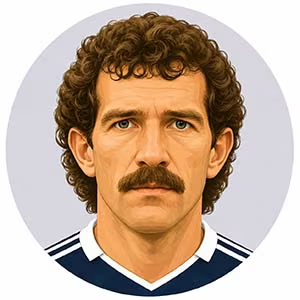
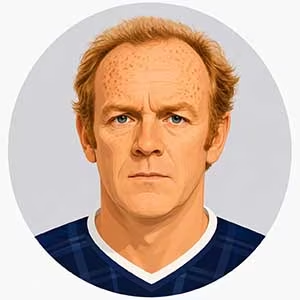
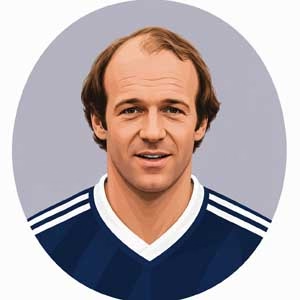
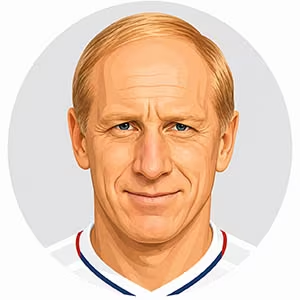
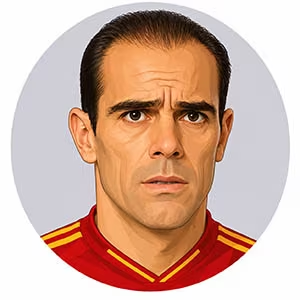
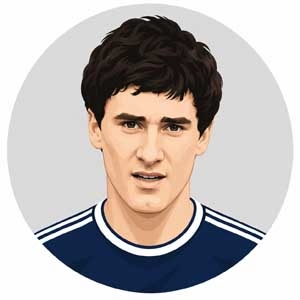
Scotland - Centre MidfielderBaxter, Jim
Wembley Stadium on April 15, 1967, was transformed into a private stage of Scottish irreverence when an unhurried, cigarette-smoking genius from Fife broke into a casual sequence of keepie-uppies against the reigning World Champions England, humiliating the hosts and orchestrating a historic 3–2 victory for Scotland. James Curran Baxter—revered across British football folklore simply as Slim Jim—was the bohemian, left-footed sorcerer and aesthetic kingpin of Rangers FC during their dominant early-1960s apex. Operating as an aristocratic left half-back or roaming deep-lying playmaker, Baxter manipulated time and space through pure technical arrogance: stroking 50-yard passes with pinpoint curve, executing delicate body swerves that sent markers tumbling to the turf, and dictating the tempo of matches without ever breaking into a sweat. Across 254 appearances and 24 goals for Rangers between 1960 and 1965, he collected three Scottish League championships, three Scottish Cups, and four Scottish League Cups, later starring in the English First Division for Sunderland and Nottingham Forest. For Scotland, across 34 caps and three goals, his international pedigree was mythic, scoring both goals in a famous 2–1 triumph over England at Wembley in 1963 despite Scotland playing with ten men for eighty minutes.
Naturally, Baxter’s romantic, languid genius was completely detached from physical discipline or tactical containment. He was entirely allergic to defensive tracking, offered zero contribution to mid-block tackling dogfights, and treated physical conditioning with open contempt, famously drinking alcohol and gambling heavily throughout his playing career. A devastating, compound leg fracture suffered against Rapid Wien in a December 1964 European Cup tie permanently robbed him of what little acceleration he possessed, accelerating the decline of his elite career in his late twenties.
Rebellious, wickedly charismatic, and driven by an insatiable need to display supreme technical superiority, Baxter viewed football as a joyous platform for psychological entertainment and terrace celebration. He was completely immune to high-stakes pressure: bantering with opposing players and managers mid-game, winking at the crowd, and punishing defenders by exposing their lack of finesse with a flick of his boot. On the pitch, his posture was upright and regal, strolling through chaotic midfield battles with effortless swagger and demanding the ball at his feet in the tightest spots. Inside the Ibrox and Scottish national team dressing rooms, he was an untouchable, magnetic folk icon whose audacious brilliance made him a living legend to millions of supporters, leaving behind an immortal legacy as the most gifted, charismatic, and unrepentant maverick in Scottish football history.


 All Time ScotlandNT