We use Google Analytics to understand how visitors use this site. Analytics cookies are only activated with your consent. For details, read our Privacy Policy.
Profile lensThe same player, read from a different angle.
Athletic76
Acceleration
89
Pace
81
Agility
84
Strength
66
Balance
72
Jumping
67
Stamina
75
Fitness
74
Technical83
Dribbling
93
Short Passing
77
Long Passing
83
Finishing
82
Shot Accuracy
80
Shot Power
86
Shooting Technique
83
Heading
65
Tackling
38
Crossing
83
Free Kick
70
Penalties
71
First Touch
87
Mental73
Composure
77
Aggression
76
Consistency
74
Creativity
93
Leadership
69
Work Rate
67
Tactical74
Vision
78
Off the Ball
84
Defensive Positioning
30
Teamwork
68
Anticipation
75
Marking
38
Player Traits
Attacking79
Crossing
83
Finishing
82
Heading Accuracy
65
Shot Accuracy
80
Off the Ball
84
Technique82
Dribbling
93
Free Kick
70
Short Passing
77
Long Passing
83
First Touch
87
Shot Technique
83
Movement82
Acceleration
89
Pace
81
Agility
84
Balance
72
Physicality74
Shot Power
86
Jumping
67
Stamina
75
Strength
66
Fitness
74
Defending35
Marking
38
Tackling
38
Def. Positioning
30
Mentality & Game Reading75
Aggression
76
Composure
77
Penalties
71
Vision
78
Leadership
69
Work Rate
67
Teamwork
68
Anticipation
75
Consistency
74
Creativity
93
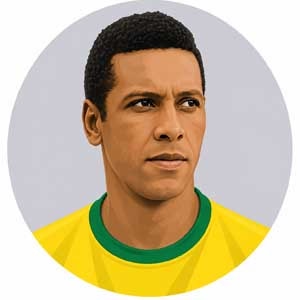
Brazil - Left WingerCanhoteiro
Dropping his left shoulder on the chalk of the touchline, executing a mesmerizing series of lightning-fast stepovers, and leaving a marker twisted onto the grass like a pretzel earned a wizard from Coroatá the reverent title of the "Left-Footed Garrincha." José Ribamar de Oliveira—immortalized across Brazil simply as Canhoteiro—was an anarchic dribbling sorcerer whose astonishing elasticity, balance, and wicked left-footed swerves made him the most captivating and elusive outside-left in South America throughout the 1950s.
Operating strictly along the left flank, Canhoteiro was an artist of the impossible isolation: freezing right-backs with rapid body feints before flicking the ball through their legs with the outside of his boot or clipping delicate, lofted crosses to the far post. As the adored talisman and aesthetic soul of São Paulo FC across 415 matches and 104 goals between 1954 and 1963, he formed an iconic left-sided tandem with Gino Orlando and Zizinho, leading the club to the 1957 Campeonato Paulista title. For Brazil, across 16 caps and one goal, his international pedigree was electric—starring in memorable victories over Argentina and Portugal—yet his refusal to travel and a catastrophic knee injury on the eve of the 1958 tournament cruelly deprived him of World Cup glory, paving the way for Zagallo and Pepe.
The paradox of Canhoteiro’s genius, however, was a total aversion to defensive discipline and tactical conformity. He was an unrepentant romantic who flatly refused to track back into his own defensive third, viewing football purely as a creative duel between himself and the opposing full-back. Furthermore, his career was severely curtailed by chronic fear of flying, irregular lifestyle habits off the pitch, and the devastating physical trauma of a brutal tackle by Corinthians defender Homero in 1961 that permanently shattered his left knee and stripped away his explosive change of pace.
Bohemian, joyful, and completely detached from the cutthroat business of professional sport, Canhoteiro played strictly for the roar of the Pacaembu terraces. He was a creature of emotion who withered under rigid managerial systems and flourished only when given absolute freedom to improvise and entertain. On the pitch, his body language was pure theatrical mischief: standing motionless on the sideline to bait defenders, winking at the crowd, and exploding into dazzling sequences of dribbles that brought standing ovations even from rival supporters. Inside the locker room, he was an adored, warm-hearted figure whose tragic later-life decline into poverty never erased the memory of his hypnotic brilliance, leaving behind an immortal legacy as one of the most naturally gifted and romantic wingers in Brazilian football lore.