We use Google Analytics to understand how visitors use this site. Analytics cookies are only activated with your consent. For details, read our Privacy Policy.
Profile lensThe same player, read from a different angle.
Athletic80
Acceleration
87
Pace
83
Agility
84
Strength
77
Balance
82
Jumping
70
Stamina
79
Fitness
78
Technical87
Dribbling
95
Short Passing
85
Long Passing
89
Finishing
87
Shot Accuracy
77
Shot Power
88
Shooting Technique
90
Heading
66
Tackling
37
Crossing
86
Free Kick
82
Penalties
81
First Touch
93
Mental75
Composure
79
Aggression
77
Consistency
72
Creativity
93
Leadership
74
Work Rate
68
Tactical76
Vision
84
Off the Ball
87
Defensive Positioning
30
Teamwork
68
Anticipation
74
Marking
31
Player Traits
Attacking81
Crossing
86
Finishing
87
Heading Accuracy
66
Shot Accuracy
77
Off the Ball
87
Technique89
Dribbling
95
Free Kick
82
Short Passing
85
Long Passing
89
First Touch
93
Shot Technique
90
Movement84
Acceleration
87
Pace
83
Agility
84
Balance
82
Physicality78
Shot Power
88
Jumping
70
Stamina
79
Strength
77
Fitness
78
Defending33
Marking
31
Tackling
37
Def. Positioning
30
Mentality & Game Reading77
Aggression
77
Composure
79
Penalties
81
Vision
84
Leadership
74
Work Rate
68
Teamwork
68
Anticipation
74
Consistency
72
Creativity
93
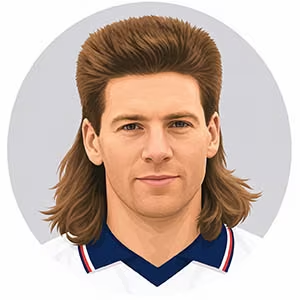
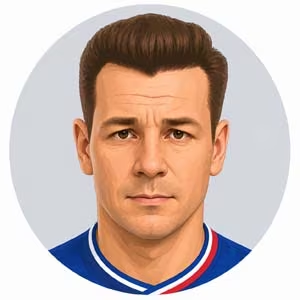
France - Left WingerGinola, David
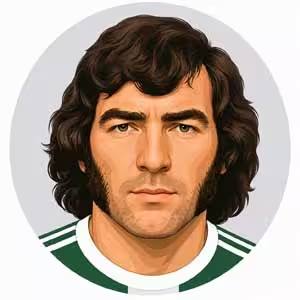
Few wingers in the history of British football ever provoked the sheer collective gasp of terrace anticipation like the Parisian showman who arrived on Tyneside in 1995 with hair flowing in the wind and two feet of pure sorcery. David Ginola was the aesthetic heartbeat and unpredictable lightning rod of Kevin Keegan’s legendary Entertainers at Newcastle United before becoming a cult deity at Tottenham Hotspur. Stationed on the left wing with complete license to roam inside, Ginola was an athletic anomaly: boasting a broad, powerful six-foot-one frame paired with the delicate close control and balance of a ballroom dancer. He dismantled defenders through effortless bilateral execution, shifting the ball from left to right with lightning stepovers, shrugging off aggressive full-backs with pure upper-body power, and unleashing dipping, swerving rockets into the top corner off either boot. His masterclass campaign for Tottenham in 1998–99 saw him achieve the rare feat of winning both the PFA Players' Player of the Year and FWA Footballer of the Year awards in a team that finished tenth in the Premier League.
The paradox of Ginola’s genius, however, lay in his total and unapologetic detachment from tactical dogma. He was completely allergic to defensive tracking, offered zero presence in collective mid-block pressing structures, and frequently held onto the ball for three beats too long in search of individual glory. His international career for France was permanently derailed after 17 caps and three goals, becoming the public scapegoat for France’s failure to qualify for the 1994 World Cup following his infamous over-hit cross against Bulgaria in 1993, which led to a bitter, lifelong feud with manager Gérard Houllier.
Romantic, flamboyant, and driven by an insatiable need to entertain the crowd, Ginola viewed football not as a tactical science of containment, but as a fine art meant to stir the soul. He was immune to stadium intimidation; when opposing crowds showered him with jeers or defenders tried to kick him out of the game, he responded by casually chesting the ball down, nutmegging his marker, and waving to the stands. On the pitch, his body language was theatrical and proud, walking with an aristocratic posture that demanded the ball at his feet at all times. Inside the Newcastle and Spurs dressing rooms, he was a magnetic, charming figure whose individual brilliance won over teammates like Alan Shearer and Les Ferdinand, even when his refusal to defend made his full-backs sweat. Referees found him expressive but clean, leaving an immortal legacy as one of the most mesmerizing, technically gifted, and unrepentant mavericks in Premier League history.