We use Google Analytics to understand how visitors use this site. Analytics cookies are only activated with your consent. For details, read our Privacy Policy.
Profile lensThe same player, read from a different angle.
Athletic81
Acceleration
88
Pace
85
Agility
86
Strength
78
Balance
78
Jumping
74
Stamina
78
Fitness
80
Technical89
Dribbling
96
Short Passing
84
Long Passing
96
Finishing
87
Shot Accuracy
85
Shot Power
83
Shooting Technique
88
Heading
75
Tackling
41
Crossing
93
Free Kick
93
Penalties
88
First Touch
94
Mental84
Composure
88
Aggression
83
Consistency
85
Creativity
91
Leadership
79
Work Rate
78
Tactical78
Vision
85
Off the Ball
87
Defensive Positioning
37
Teamwork
71
Anticipation
80
Marking
37
Player Traits
Attacking85
Crossing
93
Finishing
87
Heading Accuracy
75
Shot Accuracy
85
Off the Ball
87
Technique92
Dribbling
96
Free Kick
93
Short Passing
84
Long Passing
96
First Touch
94
Shot Technique
88
Movement84
Acceleration
88
Pace
85
Agility
86
Balance
78
Physicality79
Shot Power
83
Jumping
74
Stamina
78
Strength
78
Fitness
80
Defending38
Marking
37
Tackling
41
Def. Positioning
37
Mentality & Game Reading83
Aggression
83
Composure
88
Penalties
88
Vision
85
Leadership
79
Work Rate
78
Teamwork
71
Anticipation
80
Consistency
85
Creativity
91
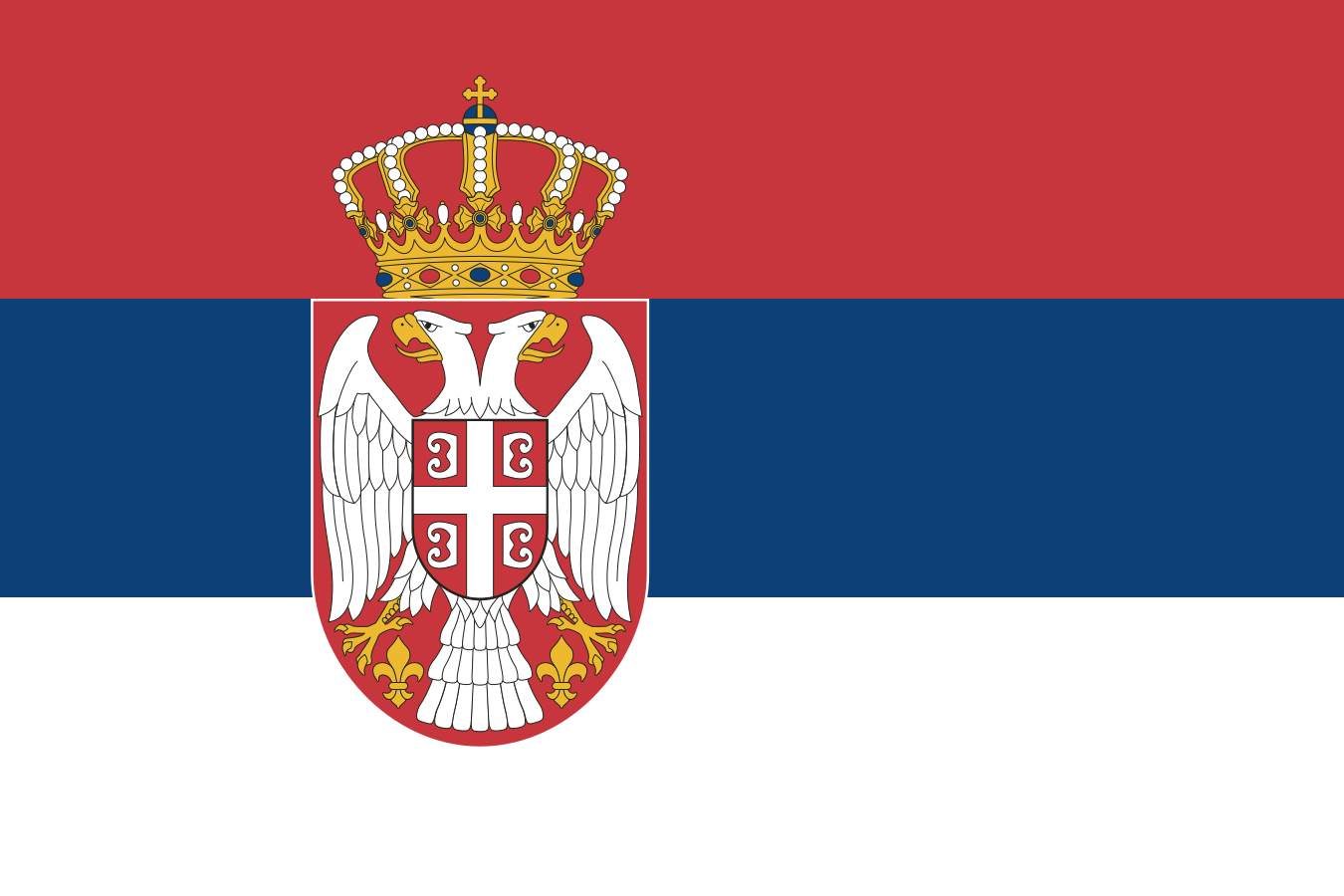
Serbia - Left WingerDžajić, Dragan
Hailed by Pelé as one of the most naturally gifted natural left-wingers world football ever produced, Dragan Džajić was a generational master of the touchline who blended balletic body swerves, velvet close control, and a lethal crossing trajectory into a mesmerizing art form. A lifelong icon of Red Star Belgrade who later spent two refined seasons in France with SEC Bastia, Džajić was the quintessential pure winger of the 1960s and 1970s. Standing at five-foot-nine with effortless balance, his game was built around manipulating space through rhythm rather than pure sprint speed: he would slow his run, drop his shoulder to freeze opposing right-backs, and then accelerate past them along the chalk before delivering pinpoint, curving crosses with the outside or inside of his left boot that seemed to hang in the air for arriving strikers. He was equally lethal cutting inside to curl free-kicks into the top corner with delicate trajectory variations. Over a legendary career at Red Star spanning five Yugoslav First League titles and four domestic cups, Džajić earned 85 caps and scored 23 goals for Yugoslavia, orchestrating their run to the final of Euro 1968—where his breathtaking chipped goal against world champions England in the semi-final and his strike against Italy in the final saw him finish as tournament top scorer and finish third in the 1968 Ballon d'Or. Mentally and emotionally, Džajić was an introverted, aristocratic purist whose entire self-expression was channeled through the aesthetic beauty and competitive romance of the game. He felt no urge to leave Belgrade during his absolute prime, remaining deeply loyal to his home club and country during an era when Eastern European stars faced severe administrative hurdles to move abroad, approaching his status as a national sporting hero with understated modesty. On the pitch, his demeanor was cool, elusive, and largely impervious to physical intimidation; when opposing defenders sought to kick him out of matches, he responded with subtle technical cruelty, repeatedly making them miss with graceful feints that demoralized markers far more than verbal retaliation ever could. Inside the dressing room, he was a quiet, revered figure of authority—leading not by shouting, but by the undeniable standard of his performances and a calm, dignified presence that unified a diverse Yugoslav national squad. Under the suffocating pressure of international tournaments, his creative vision remained crystal clear, demanding the ball in tight spaces and treating high-stakes matches with effortless artistic freedom. Toward referees and aggressive defenders, Džajić maintained an honorable, old-school sporting posture: absorbing heavy fouls without rolling theatrically, dusting off his kit, and getting right back to work along the touchline with timeless Balkan grace.