We use Google Analytics to understand how visitors use this site. Analytics cookies are only activated with your consent. For details, read our Privacy Policy.
Profile lensThe same player, read from a different angle.
Athletic80
Acceleration
81
Pace
78
Agility
82
Strength
80
Balance
78
Jumping
83
Stamina
80
Fitness
80
Technical89
Dribbling
93
Short Passing
93
Long Passing
87
Finishing
87
Shot Accuracy
85
Shot Power
86
Shooting Technique
84
Heading
85
Tackling
40
Crossing
83
Free Kick
88
Penalties
86
First Touch
92
Mental81
Composure
87
Aggression
82
Consistency
77
Creativity
90
Leadership
78
Work Rate
77
Tactical84
Vision
87
Off the Ball
88
Defensive Positioning
43
Teamwork
85
Anticipation
81
Marking
44
Player Traits
Attacking86
Crossing
83
Finishing
87
Heading Accuracy
85
Shot Accuracy
85
Off the Ball
88
Technique90
Dribbling
93
Free Kick
88
Short Passing
93
Long Passing
87
First Touch
92
Shot Technique
84
Movement80
Acceleration
81
Pace
78
Agility
82
Balance
78
Physicality82
Shot Power
86
Jumping
83
Stamina
80
Strength
80
Fitness
80
Defending42
Marking
44
Tackling
40
Def. Positioning
43
Mentality & Game Reading83
Aggression
82
Composure
87
Penalties
86
Vision
87
Leadership
78
Work Rate
77
Teamwork
85
Anticipation
81
Consistency
77
Creativity
90
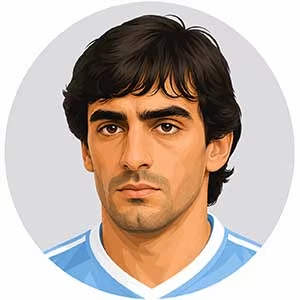
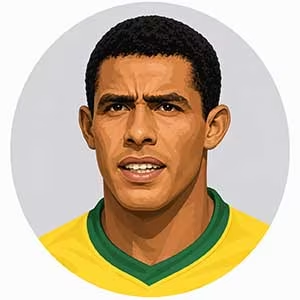
Uruguay - ForwardRocha, Pedro
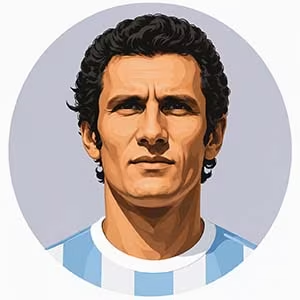
Pelé once paid the ultimate tribute to a rival by declaring that among all the foreign maestros who ever set foot on Brazilian soil, none possessed the pure tactical genius of a quiet Uruguayan orchestrator from Salto. Pedro Virgilio Rocha Franchetti was the majestic midfield conductor of Peñarol’s all-conquering 1960s dynasty before bringing his masterclasses across the border to São Paulo FC. Known across the continent as El Verdugo (The Executioner), Rocha was the complete inside-forward and attacking midfielder: boasting a towering, muscular frame, exceptional aerial timing on late penalty-box surges, and a lethal right foot that delivered booming long-range strikes and delicate chipped passes with equal ease. With Peñarol, he swept seven Uruguayan league titles, three Copas Libertadores (1960, 1961, 1966), and two Intercontinental Cups—famously dismantling Real Madrid in 1966—before leading São Paulo to their historic 1977 Campeonato Brasileiro triumph. For Uruguay, across 54 caps and 17 goals, he earned the unique distinction of being selected for four consecutive World Cups (1962, 1966, 1970, 1974) and lifting the 1967 South American Championship as the tournament's best player and top scorer.
Yet Rocha’s physical imperiousness was repeatedly undermined by cruel tournament timing and biological vulnerability. A devastating muscle tear in Uruguay's 1970 World Cup opening match against Israel robbed him of playing in the deep knockout rounds where La Celeste reached the semi-finals. Tactically, he operated at a measured, deliberate pace; he was not a rapid counter-attacking sprinter who could exploit wide expanses over forty yards, requiring compact, structured possession networks where his speed of thought could compensate for a modest turning acceleration in transition defense.
Severe, dignified, and carrying the unbending gravitas of classic garra charrúa, Rocha commanded the pitch through silent, imposing authority rather than theatrical histrionics. He played with an aristocratic posture—head high, chest out, absorbing bone-crunching tackles from bruising South American stoppers without so much as a grimace before punishing them on the scoreboard. Inside the Peñarol and São Paulo dressing rooms, he was an untouchable patriarch and natural tactician whose positional reads were trusted implicitly by managers and teammates alike. Opponents feared his late runs into the eighteen-yard box, while match officials respected his spotless, gentlemanly conduct, cementing an eternal legacy as one of the most complete, powerful, and cerebral playmakers South American football has ever produced.