We use Google Analytics to understand how visitors use this site. Analytics cookies are only activated with your consent. For details, read our Privacy Policy.
Profile lensThe same player, read from a different angle.
Athletic82
Acceleration
90
Pace
87
Agility
85
Strength
73
Balance
77
Jumping
78
Stamina
87
Fitness
78
Technical76
Dribbling
78
Short Passing
76
Long Passing
74
Finishing
67
Shot Accuracy
73
Shot Power
85
Shooting Technique
74
Heading
72
Tackling
47
Crossing
80
Free Kick
73
Penalties
71
First Touch
81
Mental78
Composure
76
Aggression
80
Consistency
80
Creativity
72
Leadership
77
Work Rate
84
Tactical77
Vision
78
Off the Ball
78
Defensive Positioning
52
Teamwork
80
Anticipation
79
Marking
47
Attacking74
Crossing
80
Finishing
67
Heading Accuracy
72
Shot Accuracy
73
Off the Ball
78
Technique76
Dribbling
78
Free Kick
73
Short Passing
76
Long Passing
74
First Touch
81
Shot Technique
74
Movement85
Acceleration
90
Pace
87
Agility
85
Balance
77
Physicality80
Shot Power
85
Jumping
78
Stamina
87
Strength
73
Fitness
78
Defending49
Marking
47
Tackling
47
Def. Positioning
52
Mentality & Game Reading78
Aggression
80
Composure
76
Penalties
71
Vision
78
Leadership
77
Work Rate
84
Teamwork
80
Anticipation
79
Consistency
80
Creativity
72
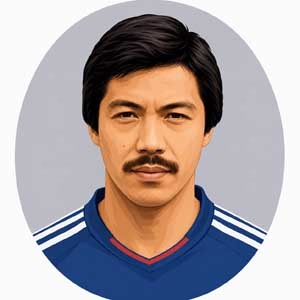
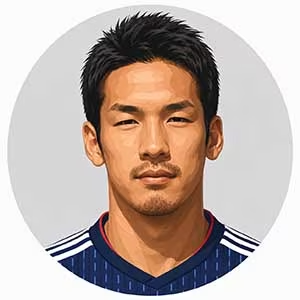
Japan - Left MidfielderOkudera, Yasuhiko
A Japanese player entering the Bundesliga in 1977 was not a marketing story; it was a footballing stress test. Yasuhiko Okudera passed it through intelligence, adaptability and a level of professionalism that made him useful in one of Europe’s most demanding leagues. Köln first gave him the platform, and he became part of the 1977 to 1978 double winning squad, later scoring in a European Cup semi final against Nottingham Forest. Werder Bremen then gave him the longer German chapter, where his discipline, stamina and tactical awareness fitted Otto Rehhagel’s organised, competitive football. He could operate in midfield or wide defensive roles, not as a spectacular dribbler but as a mobile connector who understood spacing, timing and simple execution under pressure. For Japanese football, his legacy is enormous because he proved the route was possible before the route properly existed. Okudera was a pioneer, yes, but more importantly he was good enough to stay.