We use Google Analytics to understand how visitors use this site. Analytics cookies are only activated with your consent. For details, read our Privacy Policy.
Profile lensThe same player, read from a different angle.
Athletic82
Acceleration
78
Pace
77
Agility
77
Strength
84
Balance
76
Jumping
82
Stamina
87
Fitness
93
Technical92
Dribbling
92
Short Passing
96
Long Passing
95
Finishing
87
Shot Accuracy
82
Shot Power
88
Shooting Technique
88
Heading
81
Tackling
60
Crossing
91
Free Kick
83
Penalties
91
First Touch
92
Mental90
Composure
93
Aggression
79
Consistency
90
Creativity
90
Leadership
90
Work Rate
86
Tactical90
Vision
93
Off the Ball
84
Defensive Positioning
63
Teamwork
97
Anticipation
86
Marking
53
Player Traits
Attacking85
Crossing
91
Finishing
87
Heading Accuracy
81
Shot Accuracy
82
Off the Ball
84
Technique91
Dribbling
92
Free Kick
83
Short Passing
96
Long Passing
95
First Touch
92
Shot Technique
88
Movement77
Acceleration
78
Pace
77
Agility
77
Balance
76
Physicality87
Shot Power
88
Jumping
82
Stamina
87
Strength
84
Fitness
93
Defending59
Marking
53
Tackling
60
Def. Positioning
63
Mentality & Game Reading90
Aggression
79
Composure
93
Penalties
91
Vision
93
Leadership
90
Work Rate
86
Teamwork
97
Anticipation
86
Consistency
90
Creativity
90
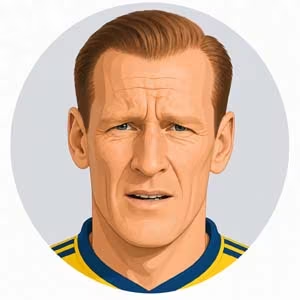
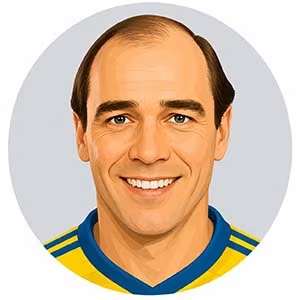
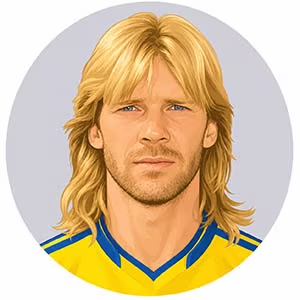
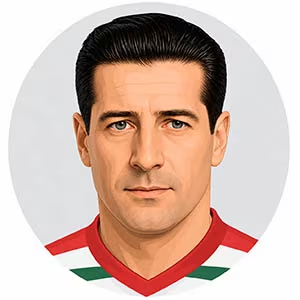
Sweden - Attacking MidfielderLiedholm, Nils
To describe Nils Liedholm simply as a midfielder is to miss the entire essence of a sporting philosopher who transformed the conceptual landscape of European football. Arriving at AC Milan in 1949 as part of the immortal "Gre-No-Li" Swedish trio before going on to revolutionize Italian tactical thinking as a manager with AS Roma, Il Barone played with a level of technical perfection that bordered on the mythical—legend has it that it took two full seasons at San Siro for him to misplace a single pass, prompting a standing ovation from the home crowd when he finally did. Operating as a deep-lying interior or central playmaker, Liedholm dictated match velocity through an extraordinary spatial economy; he moved with an effortless, upright posture, using delicate first-touch orientation, laser-guided 40-meter switches, and subtle body feints to unpick the most suffocating defensive locks. Rather than relying on raw physical speed, he mastered the art of letting the ball do the work, insulating his teams from opposition pressing while conserving energy to sustain peak decision-making over ninety minutes.
On the pitch, Liedholm governed through an aristocratic, unruffled calm that earned him absolute reverence from teammates, opponents, and referees alike. Inside the dressing room, he was a gentle, highly intellectual authority figure who introduced innovative ideas regarding physical preparation, nutrition, and spatial geometry long before they became industry standards, all while treating young players and international stars with identical warmth. Under the heaviest high-stakes pressure, his heart rate seemed not to shift a single beat; he approached high-friction derbies and European cup ties with a detached, chess-like composure, completely immune to panic or environmental hostility. Towards match officials, his posture was flawless—he never engaged in referee dissent, theatrical gamesmanship, or cynical fouls, viewing football as an art form governed by elegance and respect. A deeply cultured individual who made Italy his permanent home, Liedholm carried both victories and defeats with stoic, gentlemanly grace, leaving an indelible legacy as one of the game's true noblemen.