We use Google Analytics to understand how visitors use this site. Analytics cookies are only activated with your consent. For details, read our Privacy Policy.
Profile lensThe same player, read from a different angle.
Athletic83
Acceleration
83
Pace
82
Agility
80
Strength
77
Balance
82
Jumping
83
Stamina
87
Fitness
86
Technical77
Dribbling
77
Short Passing
78
Long Passing
78
Finishing
68
Shot Accuracy
64
Shot Power
77
Shooting Technique
71
Heading
74
Tackling
76
Crossing
77
Free Kick
68
Penalties
66
First Touch
79
Mental84
Composure
84
Aggression
84
Consistency
87
Creativity
71
Leadership
82
Work Rate
85
Tactical80
Vision
78
Off the Ball
74
Defensive Positioning
82
Teamwork
89
Anticipation
80
Marking
78
Attacking71
Crossing
77
Finishing
68
Heading Accuracy
74
Shot Accuracy
64
Off the Ball
74
Technique75
Dribbling
77
Free Kick
68
Short Passing
78
Long Passing
78
First Touch
79
Shot Technique
71
Movement82
Acceleration
83
Pace
82
Agility
80
Balance
82
Physicality82
Shot Power
77
Jumping
83
Stamina
87
Strength
77
Fitness
86
Defending79
Marking
78
Tackling
76
Def. Positioning
82
Mentality & Game Reading81
Aggression
84
Composure
84
Penalties
66
Vision
78
Leadership
82
Work Rate
85
Teamwork
89
Anticipation
80
Consistency
87
Creativity
71
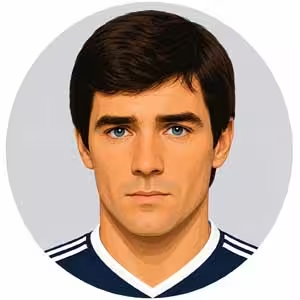
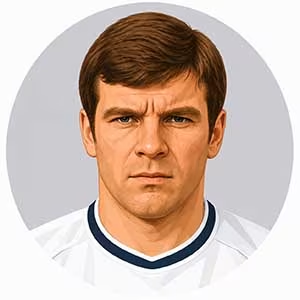
England - Left BackHughes, Emlyn
An electric burst of kinetic energy and an infectious, wide-mouthed roar earned a powerhouse from Barrow-in-Furness the affectionate nickname Crazy Horse from the Kop. Emlyn Walter Hughes was the versatile, high-octane beating heart of Liverpool’s rise from domestic contenders to European conquerors under Bill Shankly and Bob Paisley. Equally devastating as a dynamic box-to-box midfielder, an overlapping full-back, or a sweeping center-half, Hughes played with boundless cardiovascular endurance, ferocious tackling power, and a thunderous long-range shot off either foot. Over 665 appearances for the Reds, he captained Liverpool to their first two European Cup triumphs (1977 in Rome, 1978 at Wembley), four First Division championships, the 1974 FA Cup, and two UEFA Cups, being named FWA Footballer of the Year in 1977 before later lifting the League Cup with Wolverhampton Wanderers. For England, across 62 caps and one goal, he captained the national side 23 times during the 1970s.
His maximalist, hyper-enthusiastic style, however, carried tactical vulnerabilities. Hughes’s unstoppable urge to drive forward with the ball occasionally left large defensive spaces behind him, requiring disciplined covering from partners like Phil Thompson. When deployed as a pure central defender against calculated, elusive center-forwards who operated strictly between the lines, his aggressive front-foot instincts could be lured out of position by clever decoy runs, leaving the offside trap momentarily misaligned.
Exuberant, passionate, and fiercely patriotic, Hughes was the ultimate emotional talisman who wore his heart on his sleeve across every single minute of action. He celebrated goals with unrestrained, childlike ecstasy—leaping into teammates' arms and pumping his fists toward the terraces. On the pitch, his presence was a constant whirlwind of vocal encouragement: rallying drooping heads, demanding higher tempo, and hurling his body into dangerous situations to block shots. Inside the Anfield locker room, his bubbly personality and relentless competitive optimism made him a natural leader and iconic captain, capable of lifting the squad through grueling winter fixture congestions. Match officials found him an energetic, talkative competitor who played with pure honesty, cementing an eternal legacy as one of Liverpool’s most beloved, dynamic, and inspiring captains.

 All Time LiverpoolClub