We use Google Analytics to understand how visitors use this site. Analytics cookies are only activated with your consent. For details, read our Privacy Policy.
Profile lensThe same player, read from a different angle.
Athletic79
Acceleration
73
Pace
72
Agility
76
Strength
76
Balance
82
Jumping
80
Stamina
89
Fitness
85
Technical77
Dribbling
75
Short Passing
78
Long Passing
80
Finishing
66
Shot Accuracy
64
Shot Power
76
Shooting Technique
68
Heading
82
Tackling
84
Crossing
76
Free Kick
64
Penalties
60
First Touch
77
Mental85
Composure
84
Aggression
85
Consistency
85
Creativity
68
Leadership
88
Work Rate
85
Tactical81
Vision
77
Off the Ball
66
Defensive Positioning
82
Teamwork
90
Anticipation
85
Marking
78
Attacking71
Crossing
76
Finishing
66
Heading Accuracy
82
Shot Accuracy
64
Off the Ball
66
Technique74
Dribbling
75
Free Kick
64
Short Passing
78
Long Passing
80
First Touch
77
Shot Technique
68
Movement76
Acceleration
73
Pace
72
Agility
76
Balance
82
Physicality81
Shot Power
76
Jumping
80
Stamina
89
Strength
76
Fitness
85
Defending81
Marking
78
Tackling
84
Def. Positioning
82
Mentality & Game Reading81
Aggression
85
Composure
84
Penalties
60
Vision
77
Leadership
88
Work Rate
85
Teamwork
90
Anticipation
85
Consistency
85
Creativity
68
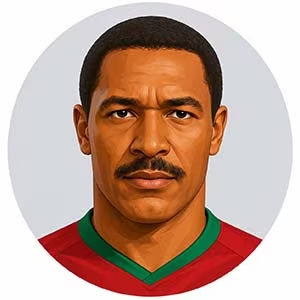
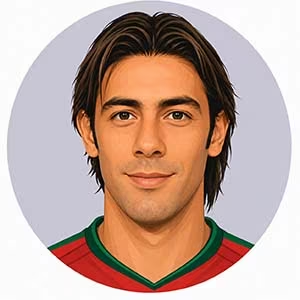
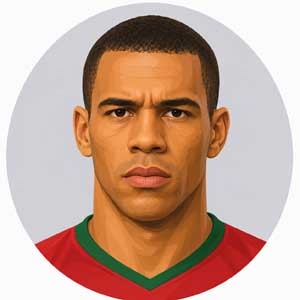
Portugal - Defensive MidfielderCostinha
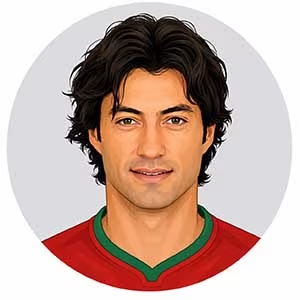
A silent, calculating screen sitting ten yards in front of his central defenders, shutting down passing lanes without ever breaking into an unnecessary sprint, turned a native of Lisbon into the indispensable tactical anchor of Europe's most ruthless counter-attacking dynasty. Francisco José Rodrigues da Costa—known universally simply as Costinha or O Ministro (The Minister)—was the master of defensive positioning, tactical equilibrium, and unheralded dirty work who provided the structural foundation for José Mourinho’s FC Porto and the golden generation of the Portuguese national team.
Operating strictly at the base of the midfield, Costinha played with immaculate tactical discipline. Standing six feet tall with clean aerial timing, crisp tackling mechanics, and a pristine positional read, he specialized in extinguishing counter-attacks before they could develop, executing clean standing challenges and immediately laying off simple, low-risk ground passes into the feet of Deco or Maniche. Rising to prominence with AS Monaco (winning the 1999–2000 Ligue 1 title), his apex unfolded at FC Porto between 2001 and 2005, where he made 165 appearances, swept two Primeira Liga titles, the 2002–03 UEFA Cup, the 2003–04 UEFA Champions League, and the 2004 Intercontinental Cup—famously scoring the 90th-minute aggregate winner against Manchester United at Old Trafford. His later European chapters included spells at Dynamo Moscow, Atlético Madrid, and Atalanta. For Portugal, across 53 caps and two goals, he was the starting defensive pillar across three major international tournaments: reaching the semi-finals of Euro 2000, starting the final of Euro 2004 on home soil, and helping the Seleção to fourth place at the 2006 World Cup in Germany.
His specialized, destruction-first profile, however, was deliberately devoid of progressive playmaking flair. Costinha was not a deep-lying regista who orchestrated play with 50-yard cross-field diagonal passes or unlocked defenses with creative through-balls; his passing range was safe, horizontal, and strictly functional. Furthermore, because he relied on spatial containment and tactical fouls to break up opposing momentum, he walked a constant disciplinary tightrope, collecting yellow cards and occasionally leaving his side vulnerable to sudden counters if caught out of his central defensive pocket against rapid transitions.
Stoic, commanding, and carrying the sober, unshakeable gravitas of a statesman, Costinha embraced the unglamorous defensive sacrifice without chasing personal acclaim. He had zero vanity, taking immense professional pride in doing the exhausting, invisible positional work that allowed more creative teammates to claim the headlines. On the pitch, his body language was calm, vigilant, and imposing: barking defensive organization, pointing markers into space, and stepping into tackles with absolute authority. Inside the Porto and Portuguese dressing rooms, he was an indispensable lieutenant and vocal leader whose tactical intelligence, physical bravery, and selfless commitment made him one of the most reliable and formidable defensive midfielders in modern European history.


 All Time PortugalNT