We use Google Analytics to understand how visitors use this site. Analytics cookies are only activated with your consent. For details, read our Privacy Policy.
Profile lensThe same player, read from a different angle.
Athletic84
Acceleration
76
Pace
75
Agility
74
Strength
87
Balance
93
Jumping
83
Stamina
88
Fitness
92
Technical75
Dribbling
75
Short Passing
78
Long Passing
73
Finishing
42
Shot Accuracy
63
Shot Power
77
Shooting Technique
73
Heading
73
Tackling
88
Crossing
69
Free Kick
62
Penalties
54
First Touch
79
Mental85
Composure
84
Aggression
92
Consistency
90
Creativity
65
Leadership
80
Work Rate
92
Tactical82
Vision
75
Off the Ball
62
Defensive Positioning
85
Teamwork
88
Anticipation
85
Marking
86
Player Traits
Attacking62
Crossing
69
Finishing
42
Heading Accuracy
73
Shot Accuracy
63
Off the Ball
62
Technique73
Dribbling
75
Free Kick
62
Short Passing
78
Long Passing
73
First Touch
79
Shot Technique
73
Movement80
Acceleration
76
Pace
75
Agility
74
Balance
93
Physicality85
Shot Power
77
Jumping
83
Stamina
88
Strength
87
Fitness
92
Defending86
Marking
86
Tackling
88
Def. Positioning
85
Mentality & Game Reading81
Aggression
92
Composure
84
Penalties
54
Vision
75
Leadership
80
Work Rate
92
Teamwork
88
Anticipation
85
Consistency
90
Creativity
65
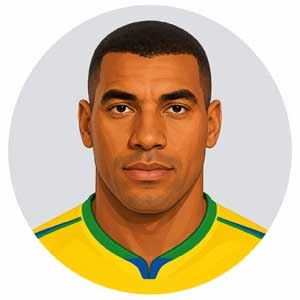
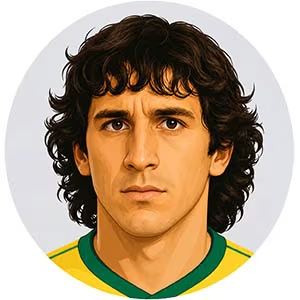
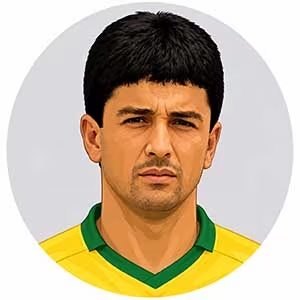
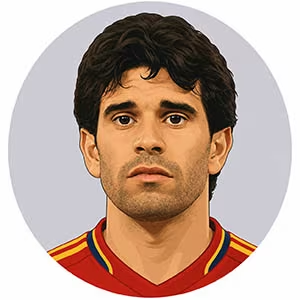
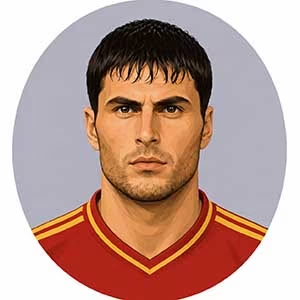
Brazil - Defensive MidfielderMauro Silva
The defensive equilibrium of both the 1994 World Cup-winning Seleção and the legendary Súper Dépor of the late 1990s rested squarely upon the shoulders of Mauro da Silva Gomes. Emerging from Guarani and Bragantino before completing a transformative 1992 switch to Deportivo La Coruña, Mauro Silva was the definitive low-block holding midfielder of his generation. Built with a stocky, low center of gravity and immense lower-body strength, he operated not through lunging tackles or frantic sprinting, but via immaculate geometric positioning in front of the central defenders. He was virtually impossible to dispossess or bypass in one-on-one duels, shielding the ball with broad shoulders and recycling possession through crisp, unpretentious five-to-ten-yard passes into the feet of creative architects like Djalminha and Juan Carlos Valerón. Across thirteen uninterrupted seasons in Galicia spanning nearly 460 competitive matches, he anchored Deportivo to their historic 1999–2000 La Liga title, two Copas del Rey—including the famed Centenariazo triumph against Real Madrid at the Santiago Bernabéu in 2002—and a run to the 2003–04 Champions League semi-finals. For Brazil, his pairing with Dunga at the 1994 World Cup in the United States proved impenetrable, allowing Carlos Alberto Parreira’s pragmatic system to grind down opponents on the way to lifting the trophy across his 59 caps.
An oasis of quiet integrity and understated professionalism, Mauro Silva commanded absolute authority without ever raising his voice or seeking personal adulation. He embraced the unglamorous burden of destructive midfield work with monastic discipline, utterly devoid of the flamboyant self-indulgence often associated with Brazilian midfielders of that era. When high-tension moments threatened to destabilize his teammates—such as the heartbreak of Miroslav Đukić’s missed title-winning penalty in 1994 or intense knockout ties against European giants—his internal pulse remained flat, offering a reassuring, impassable reference point for the entire squad. Inside the Riazor dressing room, he served as the undisputed spiritual captain, bridging cultural divides between fiery foreign stars and local veterans through sheer moral consistency and exemplary work habits. When dealing with cynical opposition players who attempted to bait him into physical altercations, he absorbed collisions with polite stoicism, refusing to retaliate or engage in theatrics. Toward referees, he maintained a respectful, diplomatic posture, cementing an enduring legacy as one of the most honest, tactically indispensable, and universally respected defensive pivots in the history of Spanish and South American football.