We use Google Analytics to understand how visitors use this site. Analytics cookies are only activated with your consent. For details, read our Privacy Policy.
Profile lensThe same player, read from a different angle.
Athletic80
Acceleration
89
Pace
85
Agility
88
Strength
66
Balance
72
Jumping
84
Stamina
83
Fitness
76
Technical85
Dribbling
87
Short Passing
84
Long Passing
83
Finishing
88
Shot Accuracy
85
Shot Power
78
Shooting Technique
85
Heading
81
Tackling
42
Crossing
80
Free Kick
87
Penalties
85
First Touch
90
Mental77
Composure
84
Aggression
76
Consistency
74
Creativity
85
Leadership
74
Work Rate
72
Tactical83
Vision
83
Off the Ball
87
Defensive Positioning
41
Teamwork
81
Anticipation
86
Marking
42
Player Traits
Attacking84
Crossing
80
Finishing
88
Heading Accuracy
81
Shot Accuracy
85
Off the Ball
87
Technique86
Dribbling
87
Free Kick
87
Short Passing
84
Long Passing
83
First Touch
90
Shot Technique
85
Movement84
Acceleration
89
Pace
85
Agility
88
Balance
72
Physicality77
Shot Power
78
Jumping
84
Stamina
83
Strength
66
Fitness
76
Defending42
Marking
42
Tackling
42
Def. Positioning
41
Mentality & Game Reading80
Aggression
76
Composure
84
Penalties
85
Vision
83
Leadership
74
Work Rate
72
Teamwork
81
Anticipation
86
Consistency
74
Creativity
85
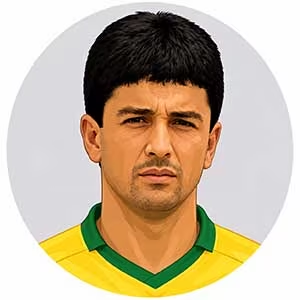
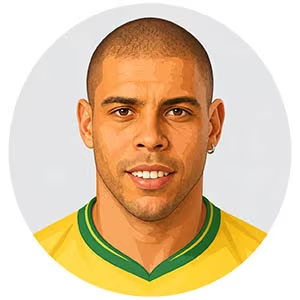
Brazil - ForwardBebeto
An iconic cradle-rocking celebration became the defining cultural image of USA '94, but reducing the Salvador-born forward to a single gesture ignores one of the most lethal, technically pristine second strikers in South American history. José Roberto Gama de Oliveira—known universally as Bebeto—was a master of spatial economy and lightning-quick execution, using an ultra-low center of gravity, rapid hip rotations, and laser-guided volleys off either boot to dismantle elite defenses.
Rising through Flamengo and Vasco da Gama (winning Brazilian championships with both in 1987 and 1989), he crossed the Atlantic in 1992 to spearhead the birth of Súper Dépor at Deportivo La Coruña. In Galicia, Bebeto netted 102 goals in 154 matches, claiming the 1992–93 Pichichi trophy, the 1995 Copa del Rey, and transforming a modest provincial outfit into an authentic European contender. For Brazil, across 75 caps and 39 goals, his international pedigree was legendary: winning the 1989 Copa América as top scorer, anchoring the frontline alongside Romário during the triumphant 1994 World Cup campaign, and returning as a finalist at France '98.
His slight, featherweight frame, however, carried inherent physical limitations. Bebeto could not operate as an isolated target man against bruising, physical stoppers; he required a dynamic partner to draw markers away and create running lanes. When forced into physical wrestling matches inside congested penalty boxes without service into feet, his match influence could be entirely smothered by aggressive man-markers.
Gentle, deeply religious, and playing with infectious, pure joy, Bebeto was the serene, selfless foil to the volatile genius of Romário. He never engaged in malicious fouls or dressing-room politics, letting his clinical first-time finishing and unselfish layoffs do the talking. On the pitch, his body language was light, agile, and alert, slipping through backlines like water. Inside the Seleção and Riazor locker rooms, his humility and professionalism made him universally adored, leaving an enduring legacy as one of the most intelligent and effective strike partners the game has ever seen.