We use Google Analytics to understand how visitors use this site. Analytics cookies are only activated with your consent. For details, read our Privacy Policy.
Profile lensThe same player, read from a different angle.
Athletic83
Acceleration
83
Pace
85
Agility
78
Strength
85
Balance
84
Jumping
85
Stamina
82
Fitness
82
Technical80
Dribbling
78
Short Passing
77
Long Passing
78
Finishing
72
Shot Accuracy
71
Shot Power
77
Shooting Technique
68
Heading
83
Tackling
89
Crossing
71
Free Kick
62
Penalties
68
First Touch
78
Mental81
Composure
87
Aggression
85
Consistency
79
Creativity
71
Leadership
80
Work Rate
76
Tactical82
Vision
75
Off the Ball
72
Defensive Positioning
88
Teamwork
75
Anticipation
86
Marking
87
Attacking74
Crossing
71
Finishing
72
Heading Accuracy
83
Shot Accuracy
71
Off the Ball
72
Technique74
Dribbling
78
Free Kick
62
Short Passing
77
Long Passing
78
First Touch
78
Shot Technique
68
Movement83
Acceleration
83
Pace
85
Agility
78
Balance
84
Physicality82
Shot Power
77
Jumping
85
Stamina
82
Strength
85
Fitness
82
Defending88
Marking
87
Tackling
89
Def. Positioning
88
Mentality & Game Reading78
Aggression
85
Composure
87
Penalties
68
Vision
75
Leadership
80
Work Rate
76
Teamwork
75
Anticipation
86
Consistency
79
Creativity
71
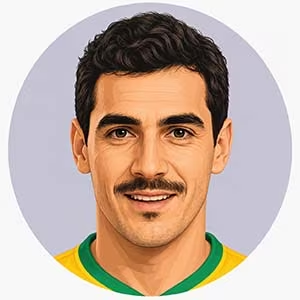
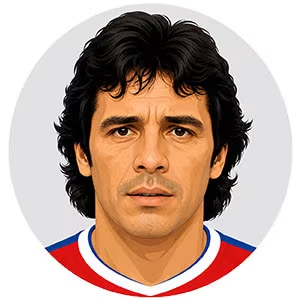
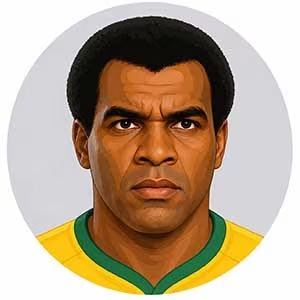
Brazil - Centre-backLuís Pereira
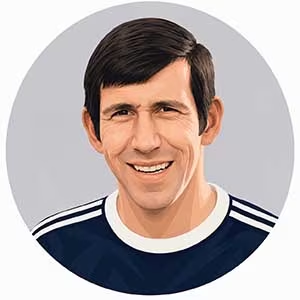
To watch Luís Edmundo Pereira in full flow was to witness the total dismantling of the rigid, heavy-footed archetype of the traditional South American central defender. Anchoring the backline of Oswaldo Brandão’s historic Academia at Palmeiras before crossing the Atlantic to become an immortal icon at Atlético Madrid alongside fellow countryman Leivinha, El Mazo introduced an aristocratic, almost nonchalant technical swagger to the heart of the defense. Standing with a tall, lithe, and deceptively powerful frame, Pereira played with an upright posture that belonged in midfield: possessing silky, press-resistant first-touch control, sudden hip swivels to leave pressing forwards grasping at air, and an instinctive urge to carry the ball thirty meters forward into opposition territory. His defensive mechanics were equally elite—relying on exceptional aerial elevation, clean slide-tackling timing without going to ground prematurely, and an extraordinary anticipatory radar that allowed him to sweep up dangerous through-balls with effortless grace. A three-time Brazilian champion with Palmeiras, a La Liga champion and Copa del Rey winner with Atlético, and the defensive pillar for Brazil at the 1974 World Cup, Pereira redefined what it meant to build play from deep.
Psychologically, Pereira operated with a serene, bohemian coolness that completely baffled aggressive European strikers accustomed to brutish, snarling center-backs. He refused to view football through the lens of anxiety or tactical paranoia; instead, he treated the most pressurized match environments with the relaxed joy of a beach pickup game, famously smiling and performing delicate feints inside his own six-yard box while opposing crowds held their breath. Inside the locker room, he was a warm, universally adored figure—unpretentious, effortlessly charismatic, and fiercely protective of squad unity, acting as a cultural and tactical bridge during Atlético's glorious mid-1970s resurgence. Under the heavy scrutiny of continental derbies and World Cup stages, his emotional pulse remained remarkably flat, though his immense competitive pride occasionally boiled over under excessive provocation, as seen in his uncharacteristic red card against the Netherlands in 1974. Toward match officials and opponents, Pereira maintained an aristocratic, gentlemanly demeanour: avoiding theatricality, dirty off-the-ball antics, and cynical hacking, preferring to assert his authority through pure technical supremacy and unflappable personal dignity.


 All Time BrazilNT