We use Google Analytics to understand how visitors use this site. Analytics cookies are only activated with your consent. For details, read our Privacy Policy.
Profile lensThe same player, read from a different angle.
Athletic82
Acceleration
79
Pace
84
Agility
78
Strength
82
Balance
78
Jumping
77
Stamina
86
Fitness
91
Technical81
Dribbling
84
Short Passing
79
Long Passing
79
Finishing
65
Shot Accuracy
68
Shot Power
80
Shooting Technique
77
Heading
78
Tackling
85
Crossing
76
Free Kick
66
Penalties
68
First Touch
85
Mental87
Composure
91
Aggression
83
Consistency
82
Creativity
84
Leadership
93
Work Rate
83
Tactical80
Vision
83
Off the Ball
68
Defensive Positioning
82
Teamwork
83
Anticipation
82
Marking
81
Player Traits
Attacking71
Crossing
76
Finishing
65
Heading Accuracy
78
Shot Accuracy
68
Off the Ball
68
Technique78
Dribbling
84
Free Kick
66
Short Passing
79
Long Passing
79
First Touch
85
Shot Technique
77
Movement80
Acceleration
79
Pace
84
Agility
78
Balance
78
Physicality83
Shot Power
80
Jumping
77
Stamina
86
Strength
82
Fitness
91
Defending83
Marking
81
Tackling
85
Def. Positioning
82
Mentality & Game Reading83
Aggression
83
Composure
91
Penalties
68
Vision
83
Leadership
93
Work Rate
83
Teamwork
83
Anticipation
82
Consistency
82
Creativity
84
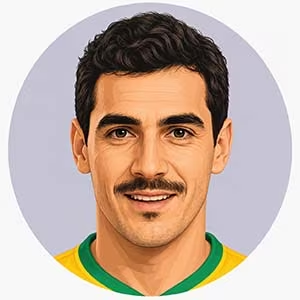
Brazil - Left BackNílton Santos
Long before modern tactical theorists coined phrases for the attacking full-back, a quiet genius in Rio de Janeiro simply rewrote the laws of the game on his own terms. A Enciclopédia—a moniker earned because he seemed to possess the entire library of footballing knowledge in his skull—anchored the left flank for Botafogo across his entire twenty-year career and claimed back-to-back World Cup triumphs with Brazil in 1958 and 1962. At a time when defenders were treated like iron gates chained to their own penalty box, Santos introduced an unheard-of elegance: pristine first-touch mechanics, delicate short-passing cycles under pressure, and the audacity to carry possession deep into opposition territory. His legendary goal against Austria in Sweden '58 remains a monument to his tactical disobedience—ignoring the frantic shouts of manager Vicente Feola to clear the ball, he casually carried it sixty meters up the pitch, bypassed three defenders, and slipped a finish past the keeper to change the trajectory of international football forever.
On the pitch, Santos governed without ever raising his voice, exuding an effortless authority that derived purely from his technical mastery and flawless spatial judgment. Within the dressing room, he served as the ultimate wise patriarch, offering a steady, protective influence that proved vital in nurturing the fragile, wild genius of a young Garrincha when he first arrived at Botafogo. Under peak tournament pressure, his heart rate barely flickered; he absorbed the tension of World Cup finals with a cool, detached composure, disarming wingers through pure positional intelligence and immaculate timing rather than physical violence or cynical shirt-tugging. Refusing to dive, engage in gamesmanship, or argue with officials, he treated the sport as a noble, intellectual pursuit, leaving an incorruptible legacy as the true founding father of the modern full-back.