We use Google Analytics to understand how visitors use this site. Analytics cookies are only activated with your consent. For details, read our Privacy Policy.
Profile lensThe same player, read from a different angle.
Athletic79
Acceleration
92
Pace
82
Agility
84
Strength
76
Balance
75
Jumping
73
Stamina
76
Fitness
77
Technical86
Dribbling
93
Short Passing
77
Long Passing
84
Finishing
86
Shot Accuracy
86
Shot Power
88
Shooting Technique
85
Heading
72
Tackling
37
Crossing
90
Free Kick
77
Penalties
78
First Touch
91
Mental78
Composure
83
Aggression
78
Consistency
75
Creativity
93
Leadership
77
Work Rate
72
Tactical75
Vision
81
Off the Ball
86
Defensive Positioning
30
Teamwork
73
Anticipation
74
Marking
34
Player Traits
Attacking84
Crossing
90
Finishing
86
Heading Accuracy
72
Shot Accuracy
86
Off the Ball
86
Technique85
Dribbling
93
Free Kick
77
Short Passing
77
Long Passing
84
First Touch
91
Shot Technique
85
Movement83
Acceleration
92
Pace
82
Agility
84
Balance
75
Physicality78
Shot Power
88
Jumping
73
Stamina
76
Strength
76
Fitness
77
Defending34
Marking
34
Tackling
37
Def. Positioning
30
Mentality & Game Reading78
Aggression
78
Composure
83
Penalties
78
Vision
81
Leadership
77
Work Rate
72
Teamwork
73
Anticipation
74
Consistency
75
Creativity
93
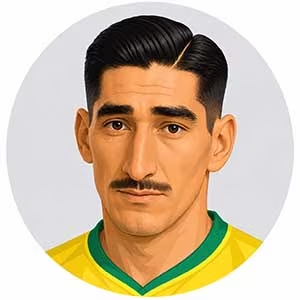
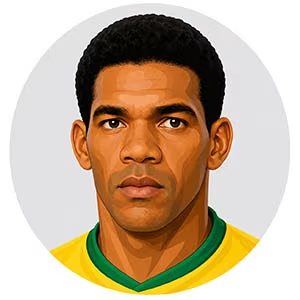
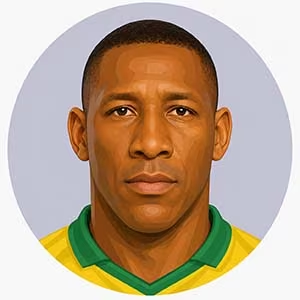
Brazil - Right WingerJulinho
The Tuscan title triumph of 1955–56 belonged to the geometric trickery and outside-boot trajectory of Júlio Botelho, better known simply as Julinho. Operating down the right touchline with sudden bursts of acceleration and deceptive hip shifts, the Brazilian winger became the crown jewel of Fulvio Bernardini’s Fiorentina after establishing his reputation at Portuguesa. Julinho did not rely on repetitive, chalk-on-the-boots crossing; he specialized in the trivela—carving viciously swerving deliveries with the three outside toes of his right boot—while possessing the bilateral balance to cut inside and unleash driven left-footed shots into the far corner. At the Stadio Artemio Franchi, his genius dismantled Serie A defenses, powering La Viola to their historic maiden Scudetto by a twelve-point margin and reaching the 1957 European Cup Final against Real Madrid. Later returning home to anchor the famous Primeira Academia of Palmeiras, his international resume across 24 caps and 11 goals for Brazil featured a standout 1954 World Cup campaign, capped by an astonishing solo goal in the brutal "Battle of Bern" against Hungary. On the tactical downside, his explosive style demanded heavy physical output that led to chronic muscular wear, while his aversion to sustained defensive backtracking frequently left his right-back exposed against overlapping modern full-backs. Furthermore, an overwhelming, debilitating homesickness (saudade) prematurely terminated his European prime at just 29 years old.
A deeply sensitive man governed by an unbending moral compass, Julinho possessed an ethical purity that occasionally collided with professional pragmatism. His personal integrity was demonstrated ahead of the 1958 World Cup: playing in Italy, he voluntarily declined Vicente Feola’s call-up because he believed Garrincha, playing domestically in Brazil, rightfully deserved the starting shirt. When toxic nationalistic skepticism boiled over at the Maracanã in a 1959 friendly against England—where 170,000 fans viciously jeered him for starting ahead of Garrincha—Julinho answered not with petulance, but with an untouchable individual masterclass, scoring inside five minutes and setting up two more to turn the whistles into a standing ovation. Inside the dressing room, he was an introspective, gentle soul who shunned celebrity lifestyle, forming deep, almost familial bonds with coaches like Bernardini while struggling privately with the cold isolation of Italian winters. Facing aggressive, bone-crunching full-backs who kicked at his heels, Julinho absorbed the contact without diving or seeking violent revenge, letting his elastic first touch and aristocratic grace serve as his only rebuttal on the pitch.