We use Google Analytics to understand how visitors use this site. Analytics cookies are only activated with your consent. For details, read our Privacy Policy.
Profile lensThe same player, read from a different angle.
Athletic79
Acceleration
77
Pace
77
Agility
81
Strength
80
Balance
79
Jumping
87
Stamina
68
Fitness
83
Technical49
Dribbling
63
Short Passing
63
Long Passing
67
Shot Accuracy
54
Shot Power
80
Shooting Technique
53
Heading
53
Free Kick
45
Penalties
47
First Touch
64
Mental84
Composure
86
Consistency
80
Leadership
82
Goalkeeping91
Reflexes
95
Positioning
91
Handling
87
Kicking
89
Goalkeeping91
Reflexes
95
Positioning
91
Handling
87
Kicking
89
Attacking54
Heading Accuracy
53
Shot Accuracy
54
Technique59
Dribbling
63
Free Kick
45
Short Passing
63
Long Passing
67
First Touch
64
Shot Technique
53
Physicality80
Shot Power
80
Jumping
87
Stamina
68
Strength
80
Fitness
83
Movement79
Acceleration
77
Pace
77
Agility
81
Balance
79
Mentality & Game Reading74
Composure
86
Penalties
47
Leadership
82
Consistency
80
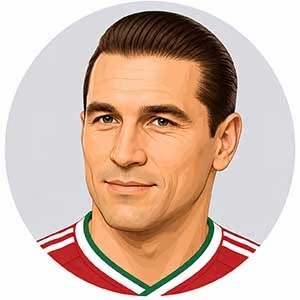
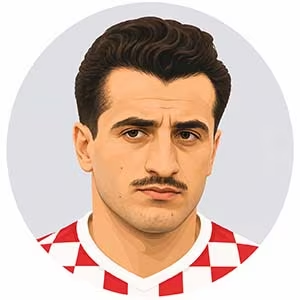
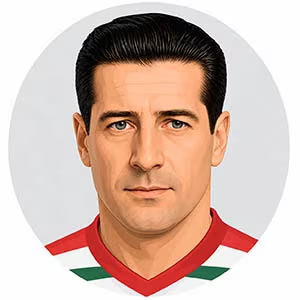
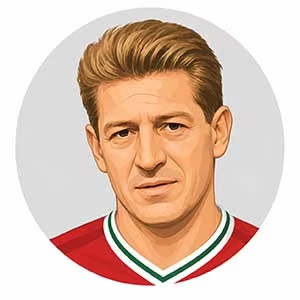
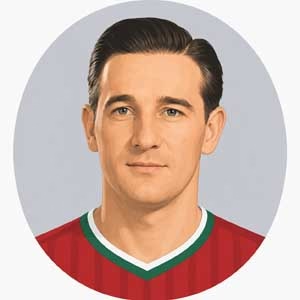
Hungary - GoalkeeperGrosics, Gyula
Dressed entirely in black as the original Fekete Párduc (Black Panther), Gyula Grosics redefined the geographic boundaries of the goalkeeper's territory, functioning as the vital tactical safety net for Gusztáv Sebes’s Aranycsapat (Mighty Magyars). Long before the sweeper-keeper concept was formalized in Western Europe, the Dorog-born shot-stopper pioneered the art of dynamic box departure. Standing five-foot-ten with explosive lateral reflexes and extraordinary physical courage, Grosics read the game with the spatial literacy of a central defender: charging twenty yards off his line to slide-tackle breakaways, intercepting through-balls into the channels, and restarting attacks with precise, over-arm throws into the stride of József Bozsik. At Budapest Honvéd, he formed the defensive backbone of the legendary military side, capturing three Hungarian league titles during an era of complete domestic and European dominance. Across 86 caps for Hungary between 1947 and 1962, he was the defensive foundation of the squad that went unbeaten for 31 consecutive matches, securing the 1952 Olympic Gold medal in Helsinki, dismantling England 6–3 at Wembley, and reaching the 1954 World Cup final in Bern. He later represented Tatabánya through the late 1950s and early 1960s, appearing in three separate World Cup tournaments (1954, 1958, 1962).
A deeply religious, politically conflicted patriot who endured severe persecution under Hungary’s Stalinist regime, Grosics lived through psychological pressures far exceeding the athletic realm. Suspected of espionage and treason after a failed attempt to flee the country in 1949, he played under the constant, paranoid surveillance of the secret police (ÁVH), knowing that any catastrophic on-pitch failure could have devastating consequences for his family. Following the traumatic 3–2 defeat to West Germany in the 1954 final, Grosics was made a primary scapegoat by the regime, enduring house arrest, intense interrogations, and a forced transfer away from Honvéd to provincial Tatabánya. On the pitch, this crucible forged an icy, fearless mental baseline; he threw himself recklessly at the feet of charging forwards without hesitation or self-preservation. Inside the locker room, he was an articulate, serious, and deeply principled presence who commanded immense respect from larger-than-life stars like Ferenc Puskás and Sándor Kocsis. Toward referees and physical opposing center-forwards, Grosics carried a severe, unyielding dignity, leaving an immortal legacy as one of the most courageous, technically revolutionary goalkeepers in the history of the sport.