We use Google Analytics to understand how visitors use this site. Analytics cookies are only activated with your consent. For details, read our Privacy Policy.
Profile lensThe same player, read from a different angle.
Athletic75
Acceleration
71
Pace
73
Agility
68
Strength
87
Balance
77
Jumping
72
Stamina
80
Fitness
74
Technical86
Dribbling
82
Short Passing
91
Long Passing
92
Finishing
80
Shot Accuracy
75
Shot Power
91
Shooting Technique
85
Heading
72
Tackling
54
Crossing
87
Free Kick
85
Penalties
85
First Touch
92
Mental84
Composure
86
Aggression
77
Consistency
74
Creativity
88
Leadership
85
Work Rate
94
Tactical80
Vision
90
Off the Ball
83
Defensive Positioning
60
Teamwork
77
Anticipation
78
Marking
48
Player Traits
Attacking79
Crossing
87
Finishing
80
Heading Accuracy
72
Shot Accuracy
75
Off the Ball
83
Technique88
Dribbling
82
Free Kick
85
Short Passing
91
Long Passing
92
First Touch
92
Shot Technique
85
Movement72
Acceleration
71
Pace
73
Agility
68
Balance
77
Physicality81
Shot Power
91
Jumping
72
Stamina
80
Strength
87
Fitness
74
Defending54
Marking
48
Tackling
54
Def. Positioning
60
Mentality & Game Reading83
Aggression
77
Composure
86
Penalties
85
Vision
90
Leadership
85
Work Rate
94
Teamwork
77
Anticipation
78
Consistency
74
Creativity
88
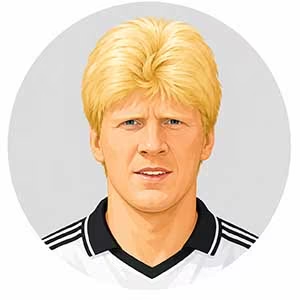
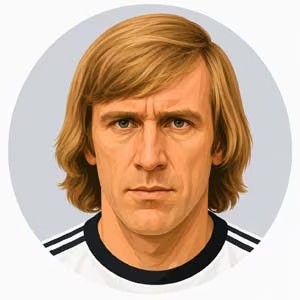
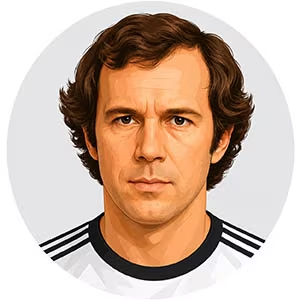
Germany - Centre MidfielderEffenberg, Stefan
May 23, 2001, at the San Siro in Milan, marked the definitive exorcism of Bayern Munich's European nightmares, and the man wearing the captain’s armband was Stefan Effenberg. Universally known as Der Tiger, the Hamburg-born midfield general stood as the undisputed emotional and tactical boss of Ottmar Hitzfeld’s golden European cycle. Operating as an imposing, deep-lying conductor and midfield enforcer, Effenberg possessed an immaculate technical repertoire: dictating the tempo with laser-guided forty-yard cross-field passes, protecting the backline through intimidating physical positioning, and converting high-pressure penalties with cold precision. His commanding performance in the 2001 Champions League final against Valencia earned him UEFA Club Footballer of the Year honors, crowning a club career that yielded three Bundesliga titles (1999, 2000, 2001), the 1998–99 DFB-Pokal, and a legendary earlier spell at Fiorentina where he forged his reputation in Serie A. For Germany, across 35 caps and five goals, he was a key protagonist in their run to the Euro 1992 final.
However, Effenberg’s imposing tactical profile had hard mechanical boundaries. He was almost completely devoid of lateral recovery speed; if bypassed in transition, he lacked the acceleration to chase down dynamic ball-carriers, leaving his defensive line exposed unless flanked by tireless runners like Jens Jeremies or Hasan Salihamidžić. Furthermore, his lack of agility in tight, congested spaces meant he struggled against aggressive high-pressing swarms that denied him time to turn and survey the field.
Arrogant, combative, and thriving on the pure hatred of opposing crowds, Effenberg weaponized hostility to fuel his performances. He possessed zero interest in being liked; he demanded total tactical obedience from his teammates and relished intimidating opponents with crushing tackles and icy, unblinking stares before the opening whistle. On the pitch, his body language was pure dominance: he puffed his chest out, controlled referee interactions with sharp authority, and never shrank from physical conflict. Inside the notoriously volatile FC Hollywood dressing room, he was the indisputable alpha whose word was law, serving as the essential lieutenant for Hitzfeld by commanding the respect of volcanic personalities like Oliver Kahn. Opposing playmakers feared stepping into his zone, while supporters worshipped his unvarnished competitive savagery, leaving behind an immortal legacy as one of the most fearsome, tactically commanding, and iconic midfield generals in European football history.