We use Google Analytics to understand how visitors use this site. Analytics cookies are only activated with your consent. For details, read our Privacy Policy.
Profile lensThe same player, read from a different angle.
Athletic79
Acceleration
83
Pace
76
Agility
85
Strength
66
Balance
80
Jumping
75
Stamina
87
Fitness
80
Technical82
Dribbling
85
Short Passing
86
Long Passing
83
Finishing
72
Shot Accuracy
71
Shot Power
82
Shooting Technique
80
Heading
68
Tackling
78
Crossing
78
Free Kick
75
Penalties
72
First Touch
86
Mental82
Composure
85
Aggression
73
Consistency
85
Creativity
85
Leadership
76
Work Rate
78
Tactical84
Vision
86
Off the Ball
77
Defensive Positioning
82
Teamwork
91
Anticipation
84
Marking
76
Attacking73
Crossing
78
Finishing
72
Heading Accuracy
68
Shot Accuracy
71
Off the Ball
77
Technique83
Dribbling
85
Free Kick
75
Short Passing
86
Long Passing
83
First Touch
86
Shot Technique
80
Movement81
Acceleration
83
Pace
76
Agility
85
Balance
80
Physicality78
Shot Power
82
Jumping
75
Stamina
87
Strength
66
Fitness
80
Defending79
Marking
76
Tackling
78
Def. Positioning
82
Mentality & Game Reading82
Aggression
73
Composure
85
Penalties
72
Vision
86
Leadership
76
Work Rate
78
Teamwork
91
Anticipation
84
Consistency
85
Creativity
85
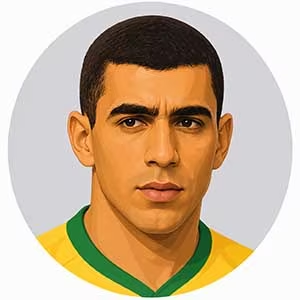
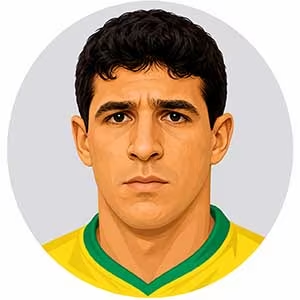
Brazil - Defensive MidfielderClodoaldo
Silky hip feints, velvet ball control, and an immaculate defensive sense turned Clodoaldo Tavares de Santana into the vital unsung balance behind Brazil’s mythological 1970 World Cup side. Emerging straight out of the Santos youth system into a squad still illuminated by Pelé, Clodoaldo was far more than a pure holding midfielder; he played with the technical finesse of a natural meia armador. Standing at five-foot-nine with a lean, agile build, his signature skill was his press-resistance in the deepest sector of the pitch: dropping his shoulder to leave markers grasping at air, absorbing contact on the turn, and distributing cleanly into the feet of Gérson, Rivellino, and Tostão. His definitive tactical masterpiece occurred during the 1970 World Cup Final against Italy at the Estadio Azteca, where he produced the legendary, hypnotic four-man dribble inside his own defensive third that initiated the sequence for Carlos Alberto’s iconic fourth goal, after having scored the vital equalizer against Uruguay in the semi-final. Across eleven seasons at Santos spanning over 500 matches and five Campeonato Paulista titles, followed by stints at Tampa Bay Rowdies and Nacional-AM, he was a midfield metronome whose tactical value was matched only by his technical elegance across 38 caps for the Seleção.
A grounded, remarkably selfless professional, Clodoaldo possessed a mature emotional baseline that belied his youth, stepping onto the world stage at just twenty years old without a trace of anxiety or stage fright. He operated with quiet, unpretentious clarity in an ecosystem dominated by massive personalities, understanding that his defensive tracking, spatial discipline, and short-range dribbling escapes were the necessary sacrifices that unlocked the attacking genius around him. Inside the dressing room, he was a tranquil, polite, and universally liked teammate—completely devoid of egotistical vanity, receptive to the tactical corrections of veterans like Carlos Alberto and Gérson, and entirely focused on collective harmony. When opposing European midfields attempted to disrupt his rhythm through aggressive physical pressing or intimidation in high-altitude Mexican stadiums, his composure remained spotless; he relied on swift lateral shifts and immaculate balance to evade challenges rather than engaging in retaliatory scuffles. Toward match officials and opponents, Clodoaldo was a model of clean, aristocratic sportsmanship: competing firmly within the rules of the contest, avoiding theatrical simulation, and leaving an enduring legacy as one of the most aesthetically gifted defensive pivots South American football has ever produced.