We use Google Analytics to understand how visitors use this site. Analytics cookies are only activated with your consent. For details, read our Privacy Policy.
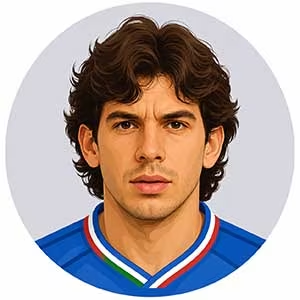
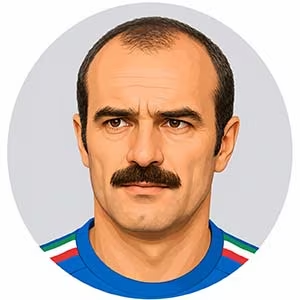
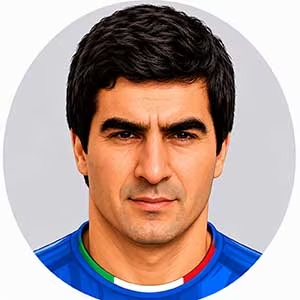
A tragic, romantic monument of solemn elegance, architectural vision, and deep Roman identity, Agostino Di Bartolomei stood as the dignified beating heart and tactical anchor of AS Roma during their golden era in the early 1980s. Emerging from the San Basilio neighborhood to become Il Capitano, Di Bartolomei possessed an unorthodox, languid physical presence, lacking explosive short-distance pace but dominating the pitch through supreme spatial geometry, an upright posture, and an extraordinary panoramic intelligence. Under the revolutionary zonal system of Nils Liedholm, Diba was dropped from central midfield into a deep playmaking libero role, becoming the strategic runway from which Roma built their game: unleashing laser-guided 50-meter diagonal switches, dictating the tempo with slow, hypnotic ball circulation, and striking his famous bombe (heavy, dead-ball free kicks and penalties struck with terrifying power without a run-up). Leading Roma to their historic 1982–83 Scudetto, three Coppa Italia titles, and the 1984 European Cup final, he was the purest tactical embodiment of Liedholm's fluid football philosophy.
Mentally and emotionally, Di Bartolomei carried an ancient, aristocratic dignity that set him apart from the loud, superficial world of modern sport. He did not run frantically or scream at the cameras; he led with a quiet, authoritative gravity that earned him unconditional, almost religious devotion from the Curva Sud and absolute reverence from teammates like Bruno Conti, Falcão, and Roberto Pruzzo. Inside the dressing room, he was a thoughtful, deeply cultured patriarch—a quiet intellectual who read literature, appreciated classical art, and maintained an iron moral code, always protecting younger players and absorbing the immense, suffocating pressure of Rome's football culture on his own shoulders. Under the unbearable tension of European nights and the tragic 1984 European Cup final against Liverpool, his pulse remained stoic and unflinching, calmly dispatching his penalty in the shootout while the stadium held its breath. Toward referees and opponents, Di Bartolomei maintained a posture of spotless, knightly fairness, avoiding vulgar antics, cynical aggression, or theatrical protests, viewing football as an honorable craft governed by moral integrity. His quiet sensitivity and deep emotional loyalty to his colors made his later estrangement from the football world deeply painful, leaving an immortal, heart-wrenching legacy as one of the most noble icons in Italian football history.


 All Time RomaClub