We use Google Analytics to understand how visitors use this site. Analytics cookies are only activated with your consent. For details, read our Privacy Policy.
Profile lensThe same player, read from a different angle.
Athletic77
Acceleration
66
Pace
71
Agility
77
Strength
86
Balance
77
Jumping
87
Stamina
66
Fitness
89
Technical45
Dribbling
57
Short Passing
57
Long Passing
67
Shot Accuracy
44
Shot Power
77
Shooting Technique
44
Heading
55
Free Kick
45
Penalties
45
First Touch
52
Mental83
Composure
83
Consistency
86
Leadership
70
Goalkeeping89
Reflexes
93
Positioning
91
Handling
87
Kicking
85
Goalkeeping89
Reflexes
93
Positioning
91
Handling
87
Kicking
85
Attacking50
Heading Accuracy
55
Shot Accuracy
44
Technique54
Dribbling
57
Free Kick
45
Short Passing
57
Long Passing
67
First Touch
52
Shot Technique
44
Physicality81
Shot Power
77
Jumping
87
Stamina
66
Strength
86
Fitness
89
Movement73
Acceleration
66
Pace
71
Agility
77
Balance
77
Mentality & Game Reading71
Composure
83
Penalties
45
Leadership
70
Consistency
86
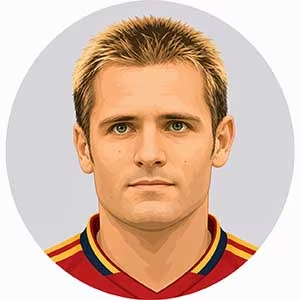
Spain - GoalkeeperCañizares, Santiago
Bleached-blonde hair, grey tracksuits, and an explosive, confrontational energy inside the eighteen-yard box turned a Madrid-born shot-stopper into the undisputed cult deity of Valencia CF’s greatest modern era. José Santiago Cañizares Ruiz—immortalized across Spain simply as Santi—was the hyper-reactive, acrobatic heartbeat behind Héctor Cúper and Rafa Benítez’s tactical masterpieces. Standing six feet tall with an extraordinarily low center of gravity, Cañizares possessed feline reflexes on close-range volleys, immaculate positioning on cutbacks, and a fearless diving technique that smothered shots directly off the boots of sprinting strikers. After winning two La Liga titles and the 1997–98 Champions League at Real Madrid, he moved to the Mestalla in 1998, anchoring Valencia to two La Liga championships (2001–02, 2003–04), the 1998–99 Copa del Rey, the 2003–04 UEFA Cup, and back-to-back Champions League finals in 2000 and 2001 (where his heroic performance against Bayern Munich was cruelly ended in a shootout). Across 418 appearances for Los Che, he won the prestigious Ricardo Zamora Trophy four times (1993, 2001, 2002, 2004). For Spain, across 46 caps, he featured across three World Cups and three European Championships, before a freak severed tendon from a broken aftershave bottle cruelly robbed him of starting the 2002 World Cup.
Yet Cañizares’s hyper-reactive style carried clear tactical limitations. Lacking the towering physical height of contemporary European titans, he occasionally struggled to dominate the airspace on deep, curling back-post crosses through heavy traffic, requiring disciplined aerial shielding from center-halves like Roberto Ayala and Mauricio Pellegrino. His sweeping outside the box was conservative, and his distribution with his feet under intense forward pressing was functional and direct rather than refined.
Fiery, intensely vocal, and fueled by a ferocious, perfectionist competitive engine, Cañizares treated every conceded shot as a personal insult. He was an unyielding dictator on the pitch: relentlessly berating his backline to maintain compact defensive lines, pointing out marking assignments with wild gestures, and weeping openly in the goalmouth after the heartbreak of Milan in 2001. Inside the Valencia and Spanish national team locker rooms, he was a massive, outspoken leader whose uncompromising standards in training forged a championship mentality, even if his confrontational style created occasional friction with managers. Opposing forwards found his explosive reflex diving deeply frustrating, cementing his legacy as one of the most clutch, athletic, and iconic goalkeepers in modern Spanish football history.